
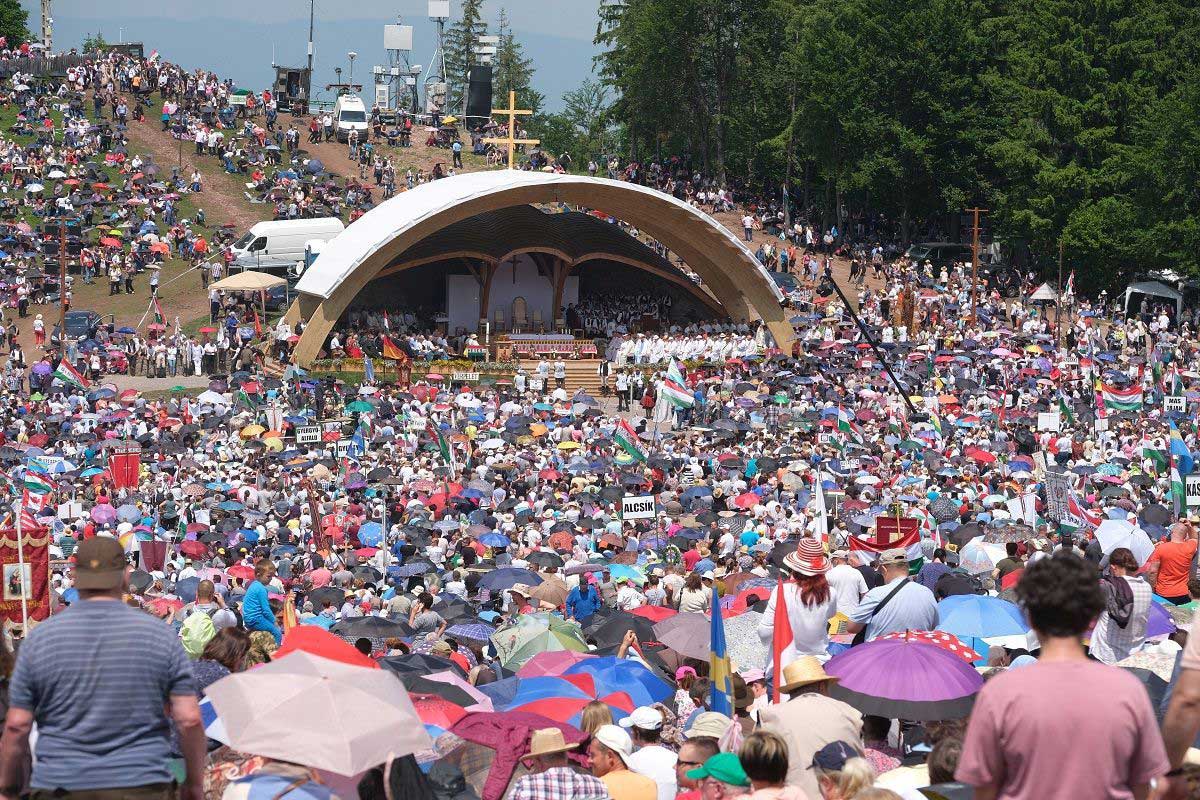
The Csíksomlyó Farewell is one of the most important religious events in Hungary, attracting tens of thousands of believers for centuries. Located in the heart of Szeklerland, the shrine is not only religiously significant, but also culturally and historically.
The origin of the farewell
The origins of the celebration of the Feast of St. Nicholas date back to the 15th century, when the Franciscan monks founded the monastery and church. Legend has it that in 1567, Prince János Sigismund of Transylvania tried to convert the Szeklers to Unitarianism, but they took up arms and clashed with the prince's army on Tolvajos Hill. They attributed their victory to the intercession of Our Lady, and every year at Pentecost they made a pilgrimage to Csíksomlyo to give thanks.
The importance of the farewell
Today, the farewell is not only a religious event, but also one of the most important symbols of Hungarian unity. Pilgrims come from all over the Carpathian Basin and the world to attend the Pentecost mass at the Hármashalom altar. During the pilgrimage, people seek spiritual replenishment and reaffirm their faith.
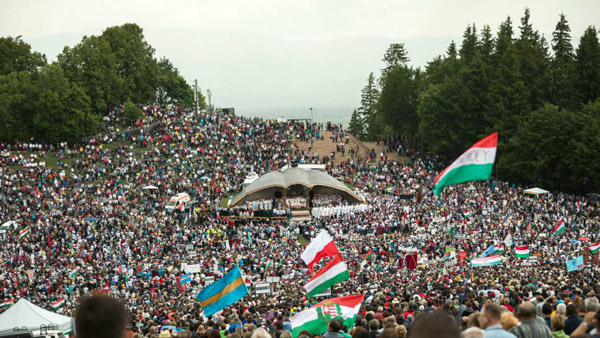
Today's farewell
In the modern world, farewell has also taken on a new meaning. In addition to the religious event, there are cultural programmes, folk music performances and community meetings. The event is an opportunity for both young and older generations to live and pass on their traditions.
For the Hungarians of Transylvania, the Feast of Csíksomlyó is more than a religious event: it is a living tradition that connects the past with the present and gives hope for the future.