
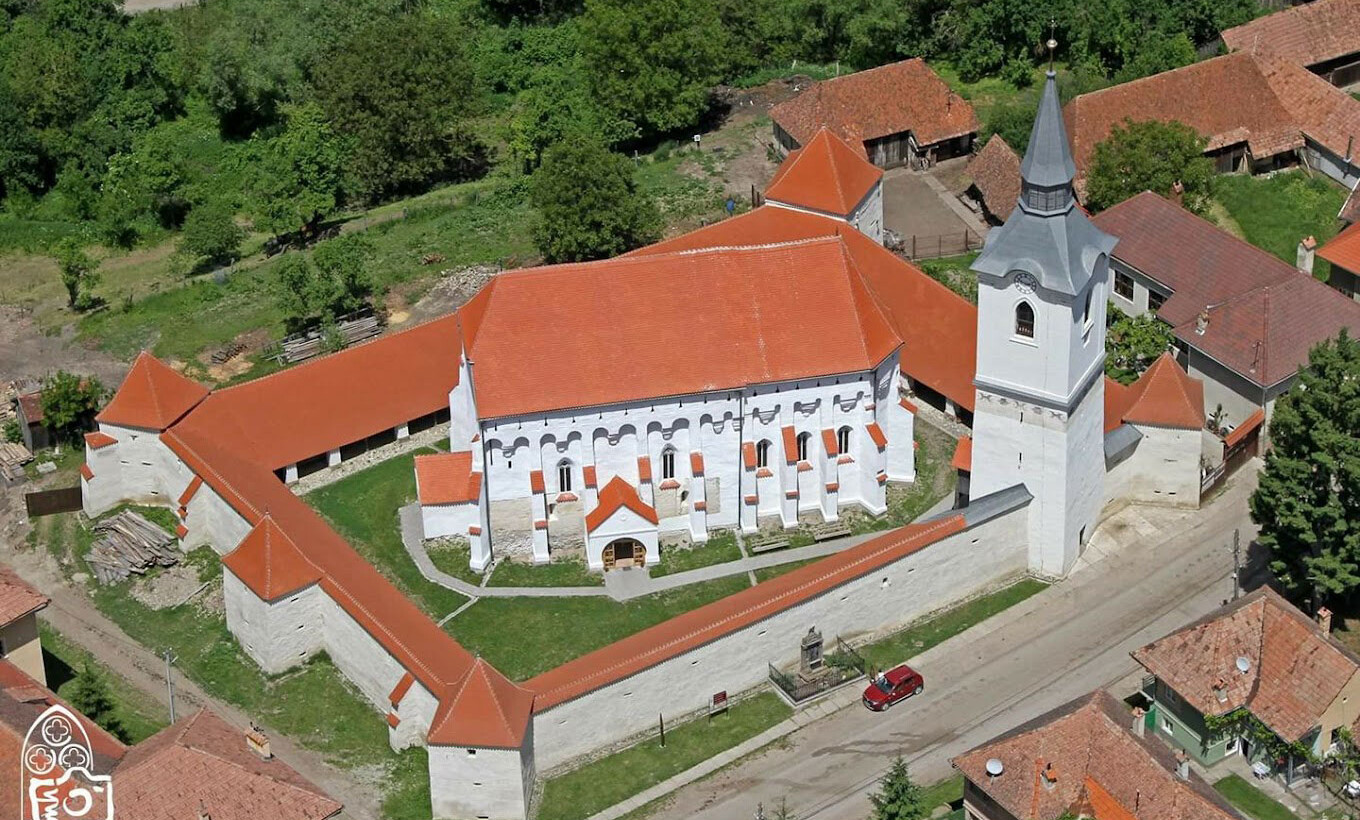
Unitarian Castle Church of Székelyderz
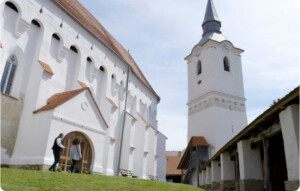
The monumental ensemble in the Udvarhely region is a UNESCO World Heritage Site. It was built in the 15th century and its ramparts date back to the 17th century. Its greatest value lies in the 15th-century wall paintings inside, of which the most significant is undoubtedly the one depicting the legend of St. Lazarus, painted in 1419 on the order of István Ungi's son, one of the best preserved paintings of St. Lazarus.
The inner side of the castle wall was once surrounded by a killing gallery, which was demolished in 1788 when it was no longer needed for defence. An interesting feature of the fortress wall is that inside it were built colours where the villagers could store their belongings and where the village's store of grain could be kept. The bastions were used to store bacon and smoked meat.
One of the interesting features of the church is the runic brick, which was discovered in 1929 and is still visible today. Experts date its creation to sometime between 1274 and 1431. The inscription on the brick is disputed, but one translation reads: 'Father-Priest Nicholas Derzsi'.
The inner side of the castle wall was once surrounded by a killing gallery, which was demolished in 1788 when it was no longer needed for defence. An interesting feature of the fortress wall is that inside it were built colours where the villagers could store their belongings and where the village's store of grain could be kept. The bastions were used to store bacon and smoked meat.
One of the interesting features of the church is the runic brick, which was discovered in 1929 and is still visible today. Experts date its creation to sometime between 1274 and 1431. The inscription on the brick is disputed, but one translation reads: 'Father-Priest Nicholas Derzsi'.
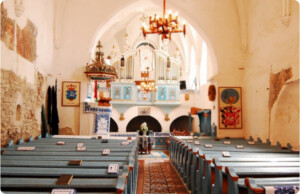
The vault of the sanctuary is decorated with carved stones. Moving to the right of the pulpit, above the priest's chair, there are two capstones representing a mocking face. The first stone bears the coat of arms of the Székelys, the second a plow in a shield, and the third the coat of arms of the Petky family, who played a major role in the history of the church.
City:
Székelyderzs