For centuries the churches of Székely Land were both places of prayer and places of refuge. The fortified churches built on hilltops and surrounded by stone walls and bastions are today the most characteristic architectural monuments of the landscape – and within their walls survive treasures of medieval painting with few equals in the Carpathian Basin.
Why were fortified churches built?
In the 15th–17th centuries the Székely villages often lay in the path of Tatar and Turkish raids and of internal wars. Lacking castles, the communities fortified their strongest building, the church and its churchyard: they surrounded it with a stone wall, raised bastions and a gate tower, and a wall-walk ran along the inside of the wall. In times of danger the villagers withdrew behind the walls with their food and valuables. In peacetime the bastions and the chambers built along the wall served as the village's common storerooms – in Székelyderzs, for example, bacon and smoked meat were kept in them.
Székelyderzs – World Heritage in the Homoród valley
The Unitarian fortified church of Székelyderzs has been part of the UNESCO World Heritage since 1999: of the seven sites of the “Villages with Fortified Churches in Transylvania”, it is the only Székely settlement, the other six being Saxon villages. The church was built in the 15th century and its fortifications date from the 17th century. Its greatest treasure is the St Ladislaus legend painted in 1419, one of the best-preserved examples of this type of image, but it is also worth looking for the brick with a runic inscription found in 1929 and the carved keystones of the sanctuary.
Nagyajta – guardian of the Crow's Nest
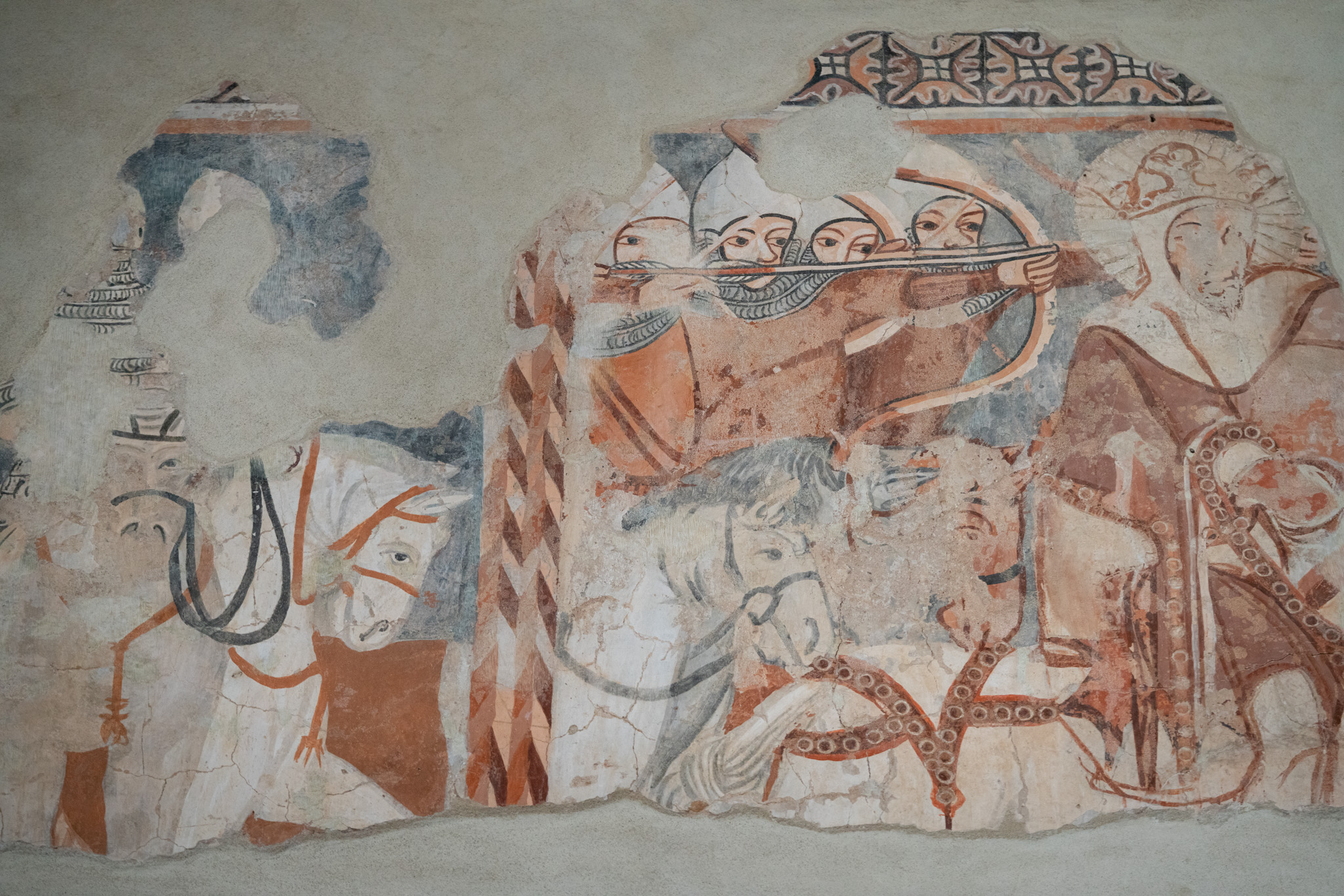
In Erdővidék, on the highest point of the village, on the hill called “Varjúfészek” (Crow's Nest), stands the Unitarian fortified church of Nagyajta. The five-metre wall, defended by two bastions, was built at the turn of the 16th and 17th centuries around the 14th-century Gothic church with net vaulting. Its carved stone, chalice-shaped pulpit is among the oldest pulpits in Transylvania. During the complete restoration of 2019–2021 a previously hidden mural also came to light: another part of the St Ladislaus legend.
Sepsiszentgyörgy – the town's fortified church
The Reformed fortified church of Sepsiszentgyörgy acquired its present late Gothic form in 1547, when its patron Pál Daczó had it rebuilt at his own expense. It was once surrounded by a double wall and two defensive towers; the outer wall was demolished in 1786. The arc of the fortifications facing the cemetery is now lined with more than seventy carved grave posts preserving the memory of deceased teachers and students of the Székely Mikó College.
The St Ladislaus legend: Székely Land's shared picture book
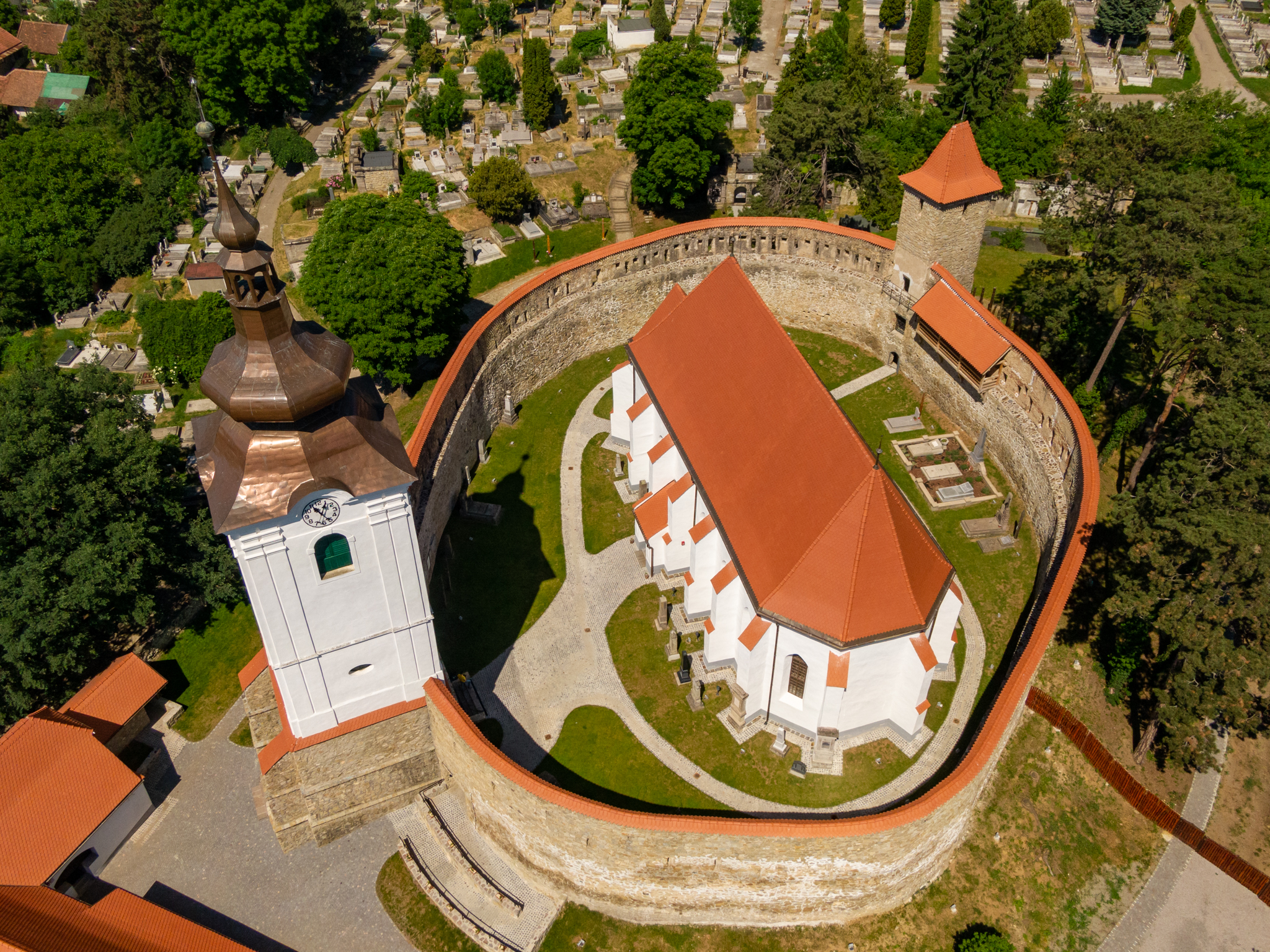
On the north walls of 14th–15th-century churches in Székely Land the same story unfolds again and again: King St Ladislaus rides out against the Cumans, pursues the Cuman warrior who has abducted a girl, wrestles with him and, with the help of the freed girl, defeats him. As defender of the borderland, the knight-king was especially dear to the Székelys, so the legend appeared in almost every significant medieval church. The finest cycles can be seen in Székelyderzs, Gelence and Homoródkarácsonyfalva – in the latter the cycle runs along the wall for more than eleven metres. In many places later whitewashing hid – and at the same time protected – the murals, so it was the 20th-century uncoverings that brought them back to light.
Gelence – frescoes and painted coffers
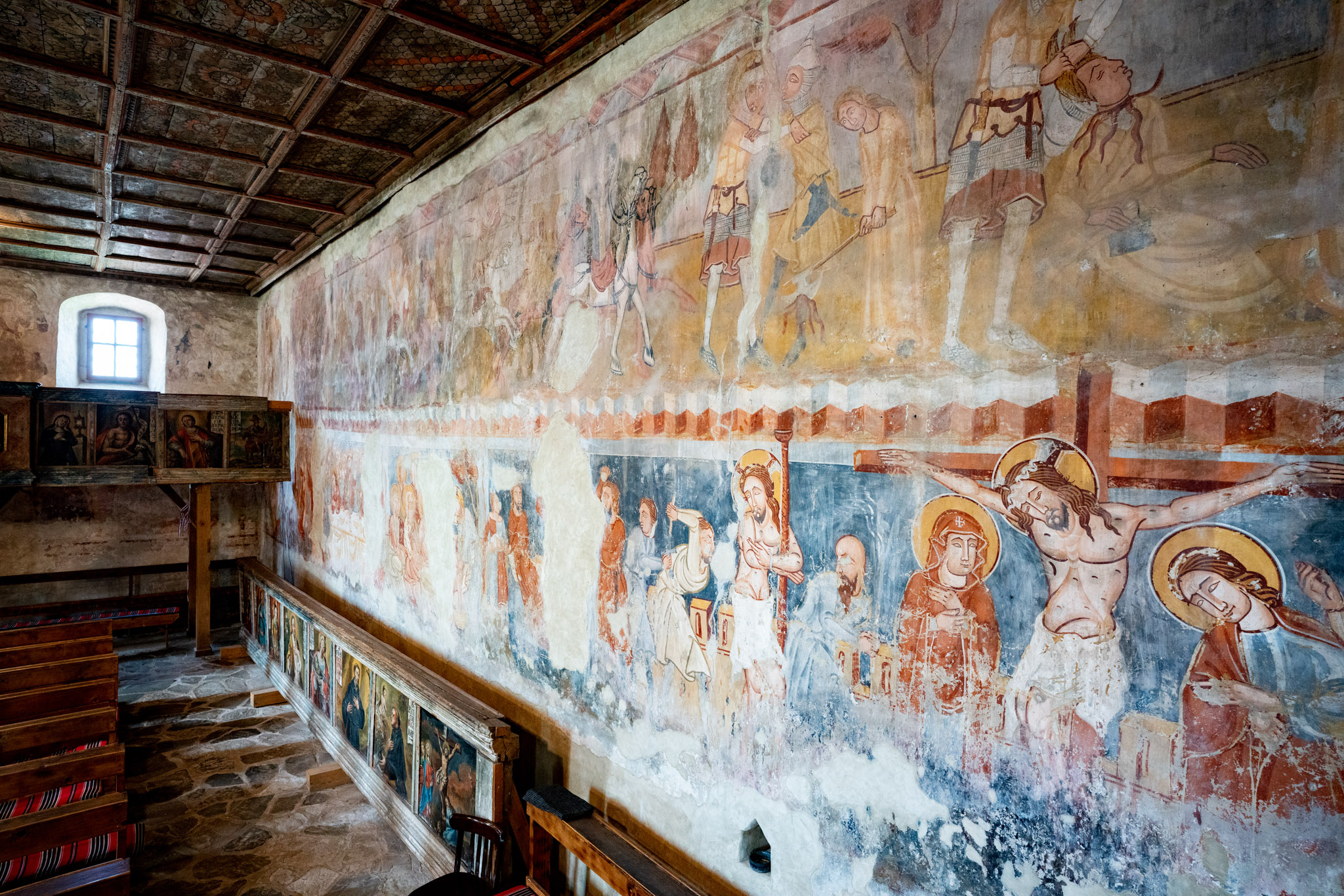
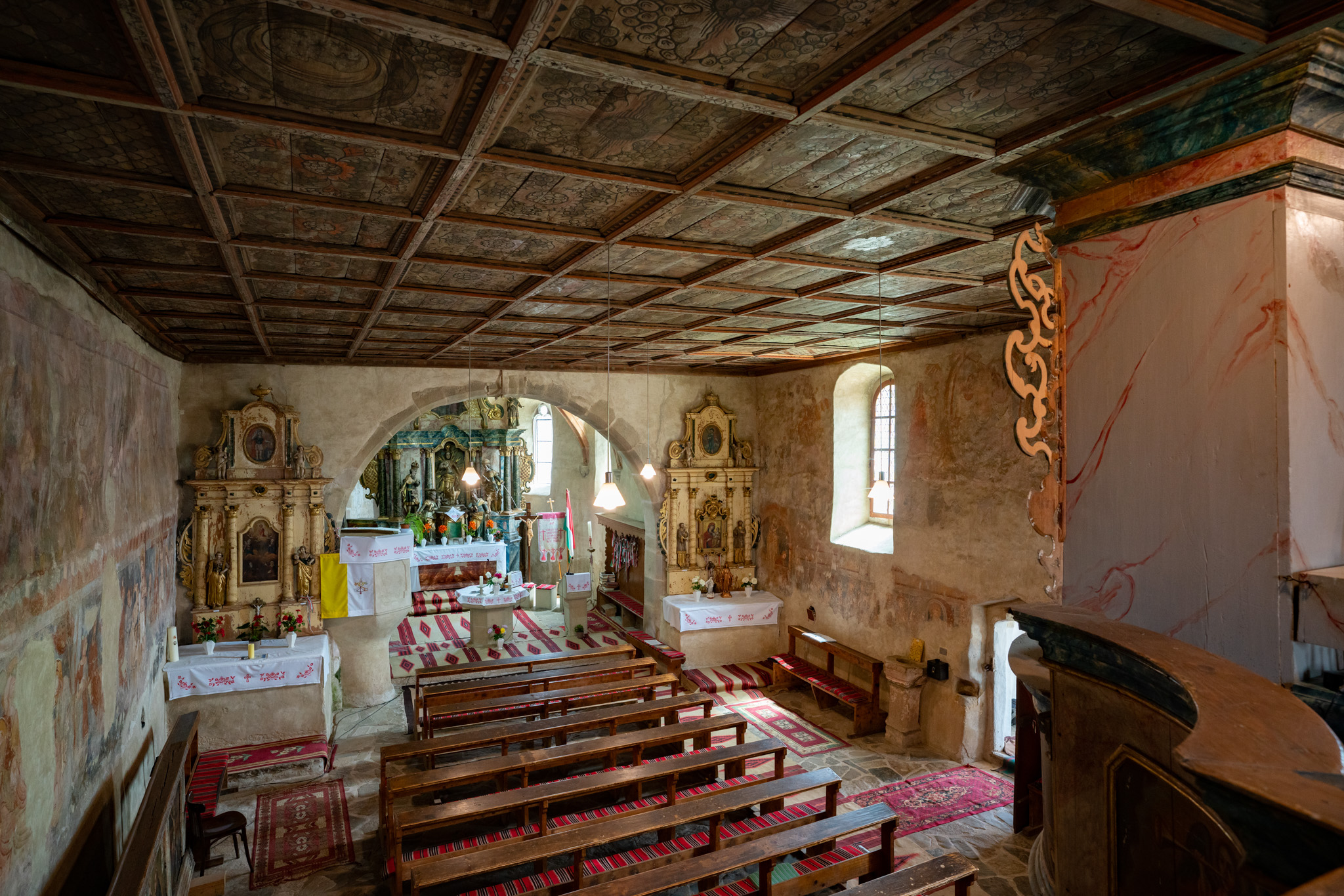
St Emeric's Church in Gelence is one of the most valuable monuments of Covasna County. Built in the 13th century, the church preserves Romanesque, Gothic, Renaissance and Baroque features alike. Its 14th–15th-century St Ladislaus legend is among the best-preserved murals in Transylvania, and the nave is covered by a ceiling of 103 individually painted panels made in the first third of the 17th century.
Tips for visitors
- Most churches are closed on weekdays; the key can usually be requested at the parish office, the parsonage or from the caretaker – it is worth phoning ahead.
- Visits are not possible during services and Mass; please wait until the ceremony has ended.
- The murals are sensitive to light: do not use flash.
- Dress appropriately for a sacred space, and support the upkeep of the monuments with a donation.
You will find detailed descriptions of the churches mentioned here on the Featured Sites page.