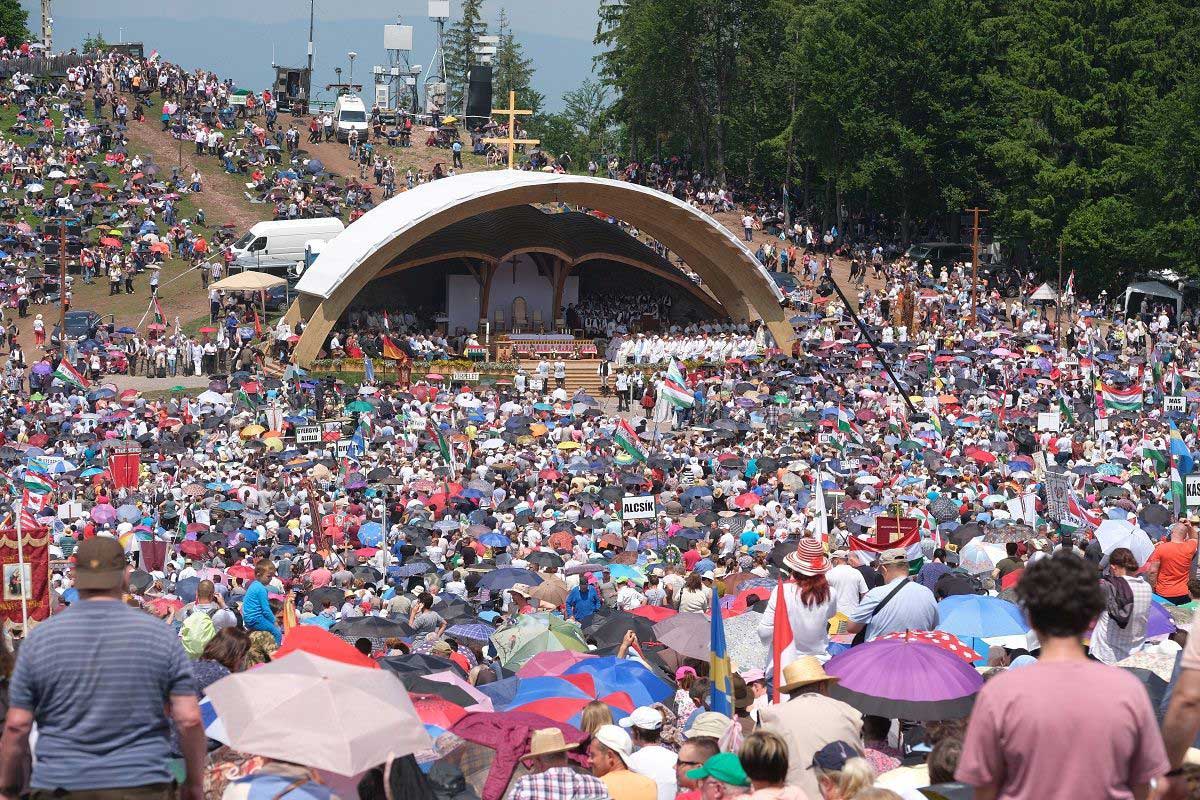
The Csíksomlyó pilgrimage is one of the most significant religious events of the Hungarian people, attracting tens of thousands of believers for centuries. Located in the heart of Székely Land, the shrine plays an outstanding role not only religiously but also culturally and historically.
The origin of the pilgrimage
The origins of the Csíksomlyó pilgrimage go back to the 15th century, when the Franciscan friars founded the friary and the church. According to the legend of 1567, John Sigismund, Prince of Transylvania, tried to convert the Székelys to the Unitarian faith, but they took up arms and clashed with the prince's army at Tolvajos-tető. They attributed their victory to the intercession of the Virgin Mary and therefore made a pilgrimage to Csíksomlyó every Pentecost to give thanks.
The significance of the pilgrimage
Today the pilgrimage is not only a religious event but also one of the most important symbols of Hungarian togetherness. Pilgrims come from every part of the Carpathian Basin and many parts of the world to attend the Whitsun Mass held at the Hármashalom Altar. During the pilgrimage people seek spiritual renewal and strengthen their faith.
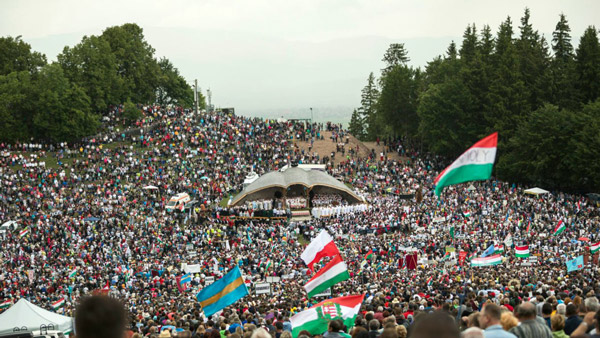
The pilgrimage today
In the modern world the pilgrimage has taken on new meanings as well. Alongside the religious event there are cultural programmes, folk music performances and community gatherings. The event gives both young and older generations an opportunity to experience and pass on traditions.
For the Hungarians of Transylvania, then, the Csíksomlyó pilgrimage is more than a religious event: it is a living tradition that links the past with the present and gives hope for the future.