Anyone who steps into a village church in Székely Land often looks up without thinking: the ceiling is covered with wooden panels painted with flowers, tendrils, stars and inscriptions. The painted coffered ceiling is one of the most characteristic genres of Transylvanian church art – an imprint of a whole village's faith and sense of beauty.
What is a coffered ceiling?
A coffered ceiling is a flat ceiling divided into recessed square or polygonal fields. In Transylvania the wooden panels were decorated with painting: the earliest examples date from the 15th–16th centuries, more and more were made from the second half of the 16th century, and the genre lived on until the mid-19th century. Few survive from the 16th century, but more than twenty painted ceilings are known from the 17th century and more than a hundred from the 18th.
A flower garden in the sky
The decoration of the panels is predominantly floral and plant ornament: tulips, carnations, pomegranates, rosettes and tendrils – a repertoire of motifs drawing on late Gothic and Renaissance models but developed according to local taste. Figurative scenes, Old Testament or emblematic subjects appear more rarely, and on many ceilings inscriptions record the year of making, the master and the donors. In the development of the genre, the joiners' guild of Kolozsvár played a decisive role throughout Transylvania in the 16th–18th centuries.
Énlaka – “God is One”
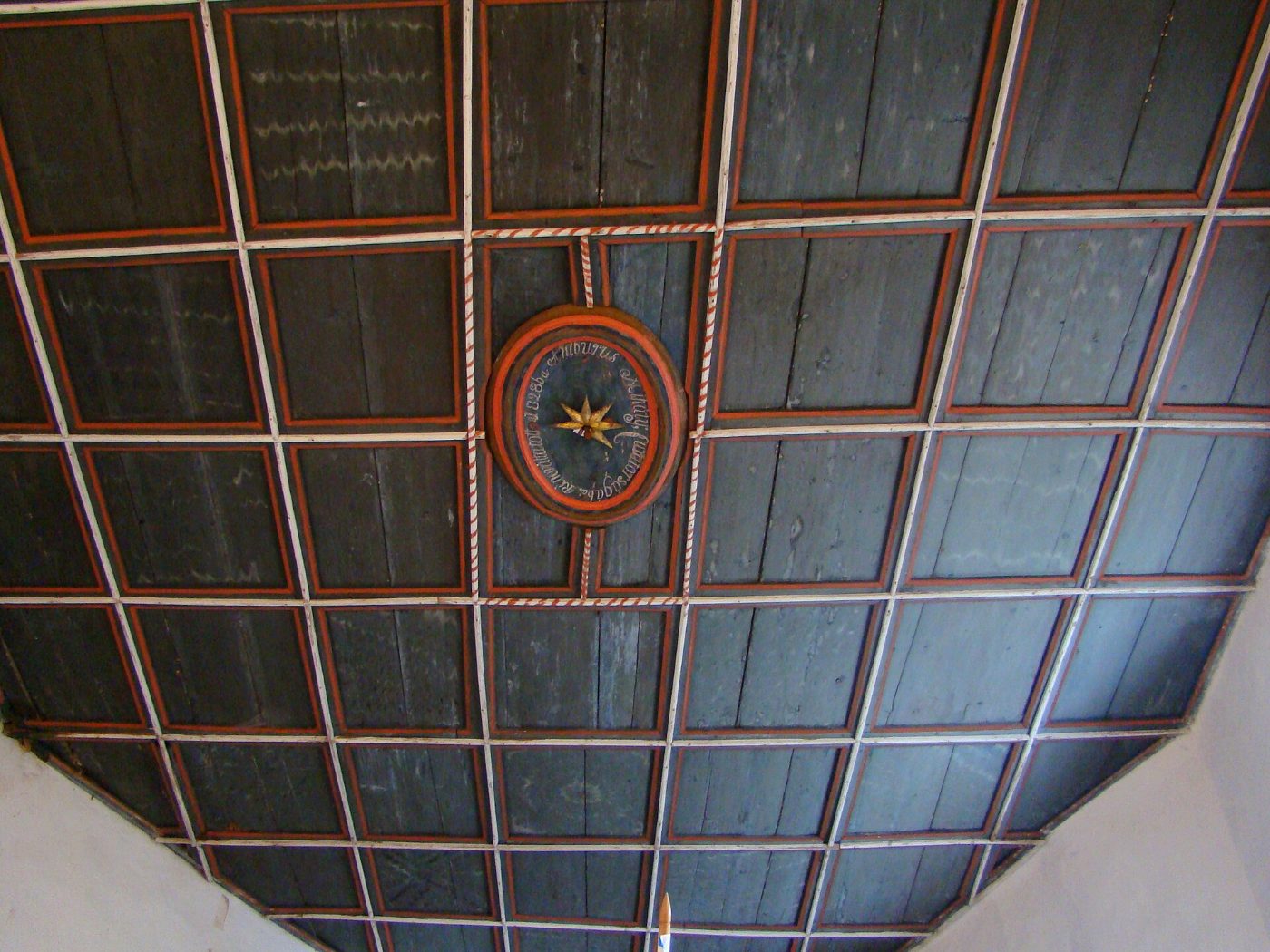
Perhaps the most famous painted ceiling in Székely Land is that of the Unitarian church in Énlaka: made in 1668, it consists of 88 panels and was painted by György Musnai Dakó. Ten of its panels bear inscriptions in Latin, in Gothic letters and in runic script, including “God is One” written in Székely runic script. Detailed description of the Énlaka church
Gelence – frescoes and coffers in one church
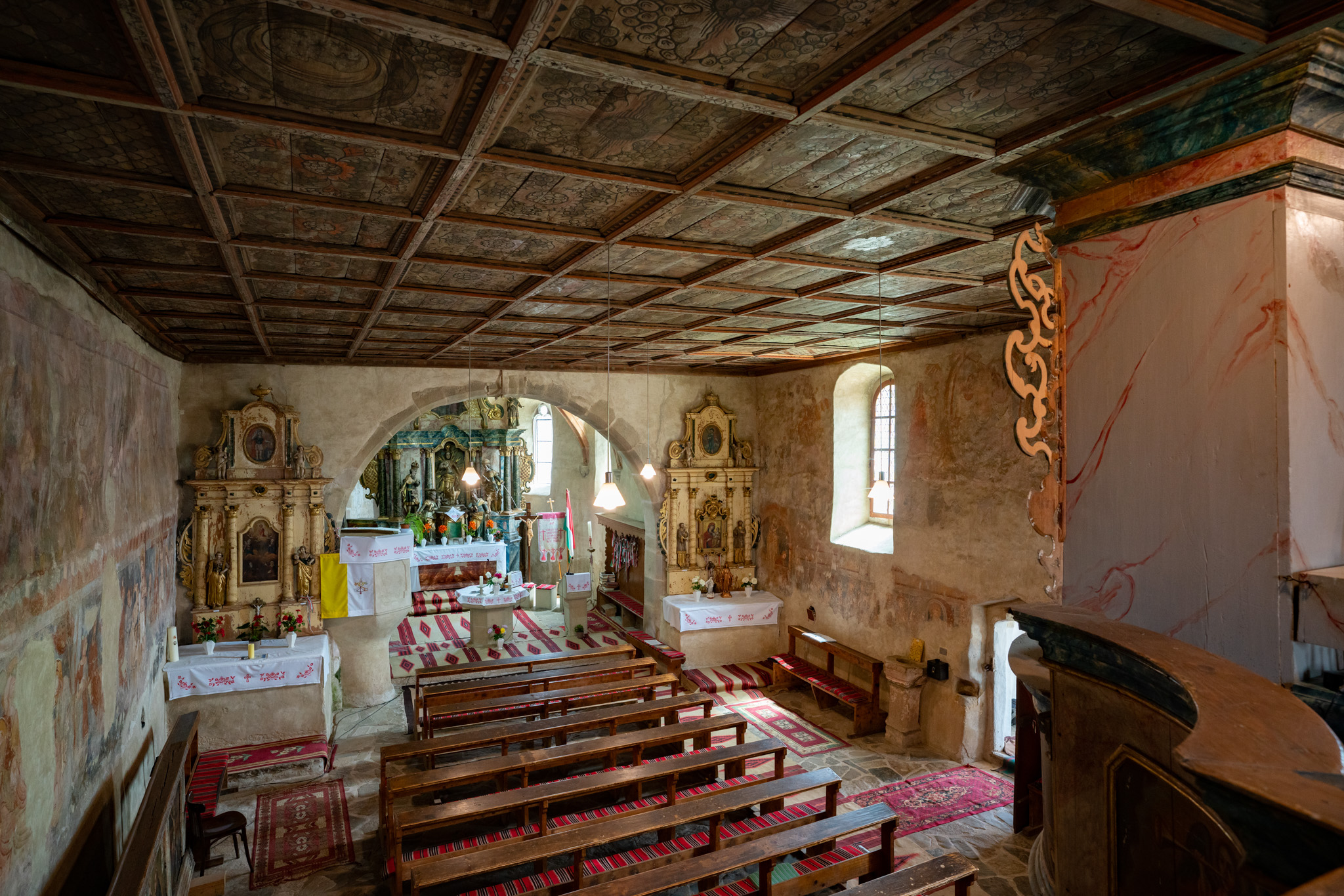
In St Emeric's Church in Gelence, the 14th–15th-century murals of the St Ladislaus legend can be seen together with a ceiling of 103 individually painted panels made in the first third of the 17th century – a rare chance to see both medieval and early modern church art in one building. Detailed description of the Gelence church
More painted ceilings in Székely Land
- Csíkdelne (1613) – one of the earliest dated examples of the Csík ceilings.
- Farcád (1629) and Székelydálya (1630) – monuments of early 17th-century painting in Udvarhelyszék.
- Bögöz – the Reformed church's inscribed ceiling of 1724 was recently restored; the church's medieval St Ladislaus murals are also famous.
- Homoródkarácsonyfalva (Crăciunel) (around 1752) – 96 panels, in the same space as the St Ladislaus legend uncovered in 2006. Details
- Homoródszentpéter – painted in the second half of the 18th century by András Elekes the Elder and the Younger.
- Sepsikilyén (1801) – a late, early-19th-century example of the genre.
How to look
- Bring a small pair of binoculars: the inscriptions and details will be easy to read.
- Painted wood is sensitive to light and moisture – do not use flash, and ask the parish's permission to take photographs.
- Most churches are closed on weekdays: you can ask for the key at the parish office or from the caretaker.
Source of the Énlaka photo: Țetcu Mircea Rareș / Wikimedia Commons, CC BY-SA 4.0.