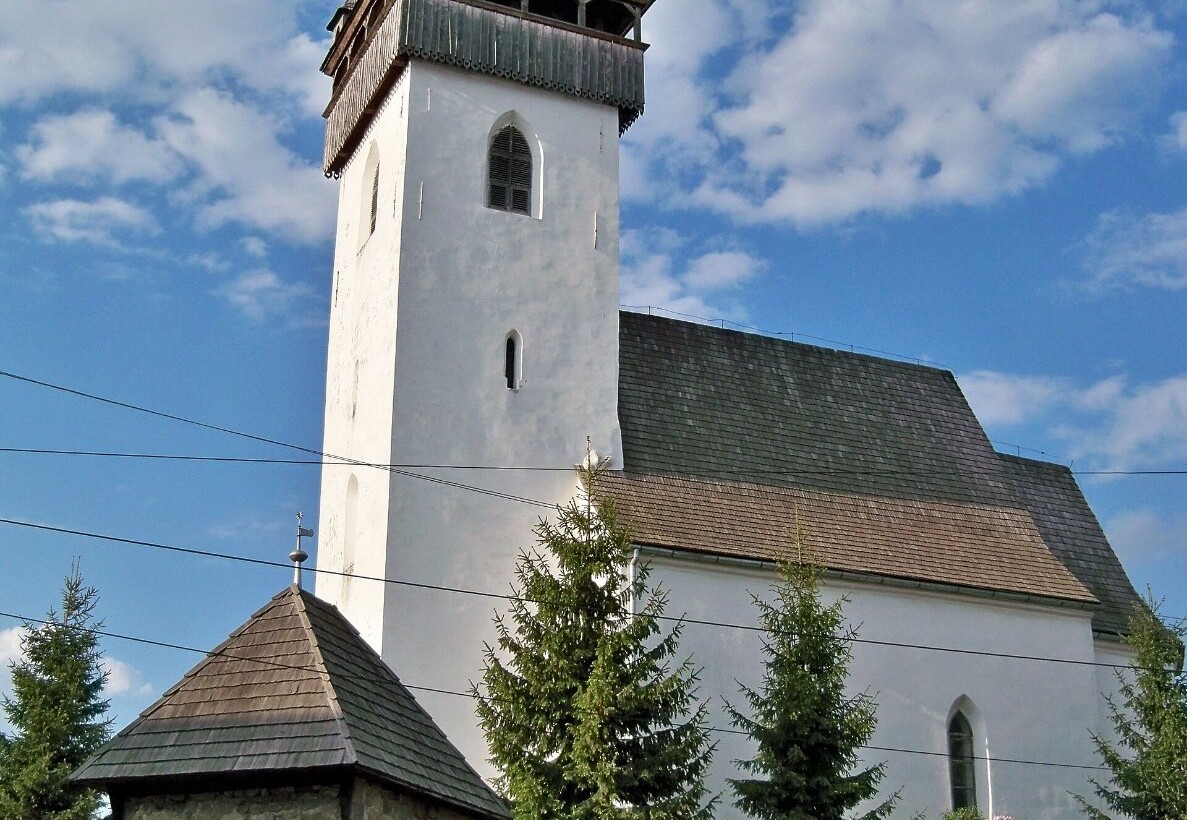
Reformed Church – Khust (Huszt)
The Gothic Reformed church of Khust is one of the oldest sacred buildings in Transcarpathia. Originally dedicated to St Elizabeth of Hungary, according to tradition it passed to followers of the Reformation as early as 1524.
The church was built in the Gothic style in the 14th century. During the Reformation, through the work of Tamás Lovász of Huszt, one of the earliest Reformed congregations in the Kingdom of Hungary was formed here. At the end of the 16th century the church was surrounded by a defensive wall, much of which still stands. In the 17th century it was supported by the Transylvanian princely circle: it was renovated by István Bethlen in 1638, by Prince George I Rákóczi in 1644, by Anna Lónyay, wife of Prince János Kemény, in 1661 and by Prince Michael I Apafi in 1670.
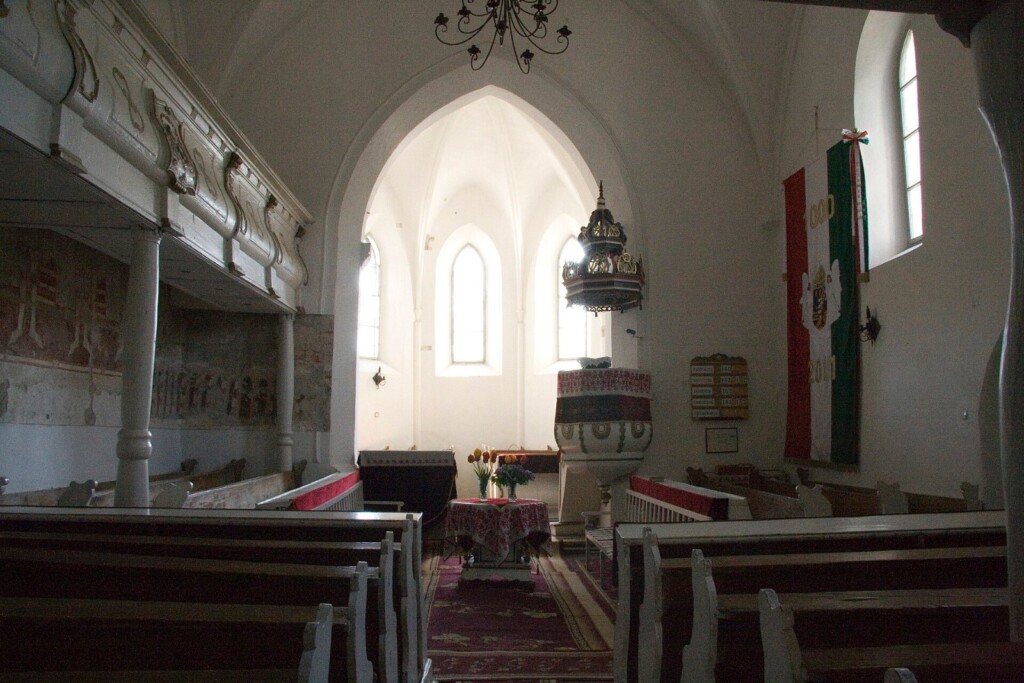
The four-pinnacled spire of the square bell tower was built in 1699. It was demolished in 1861, but in the early 2000s it was reconstructed on the basis of an old drawing. The interior walls were once covered with frescoes, which were whitewashed after the Reformation. Ottó Sztehlo copied some of them during the restoration of 1888, and more recent restoration has uncovered fragments of Gothic murals, including the figures of St Stephen, St Ladislaus and St Emeric.
Among its furnishings, the gallery and pulpit from the second half of the 18th century stand out, and the communion vessels include an Augsburg chalice from 1640, a gift of István Bethlen. According to tradition, the kuruc general Lőrinc Pekry and his wife Kata Szidónia Petrőczy, the first notable woman poet of the Hungarian Baroque, were buried in the church; a memorial plaque has commemorated them since 2006. The church is an architectural monument of national importance in Ukraine and is still used for worship by the local Reformed congregation.
Visiting: the church stands in the centre of Khust at Karpatskoi Sichi Street 17; carved wooden memorial posts and monuments in its garden recall the town's Hungarian past. The ruins of Khust Castle above the town can be reached on foot. Before travelling, check the current travel advice of your foreign ministry.
Sources: Wikipedia · Explore Carpathia · Karpaty.rocks
Photo: Neovitaha777 / Wikimedia Commons, CC BY-SA 4.0 · Photo: Dmytro Petishkin / Wikimedia Commons, CC BY 4.0
Town:
Khust (Huszt)