Reformed Church – Kotlina (Sepse)
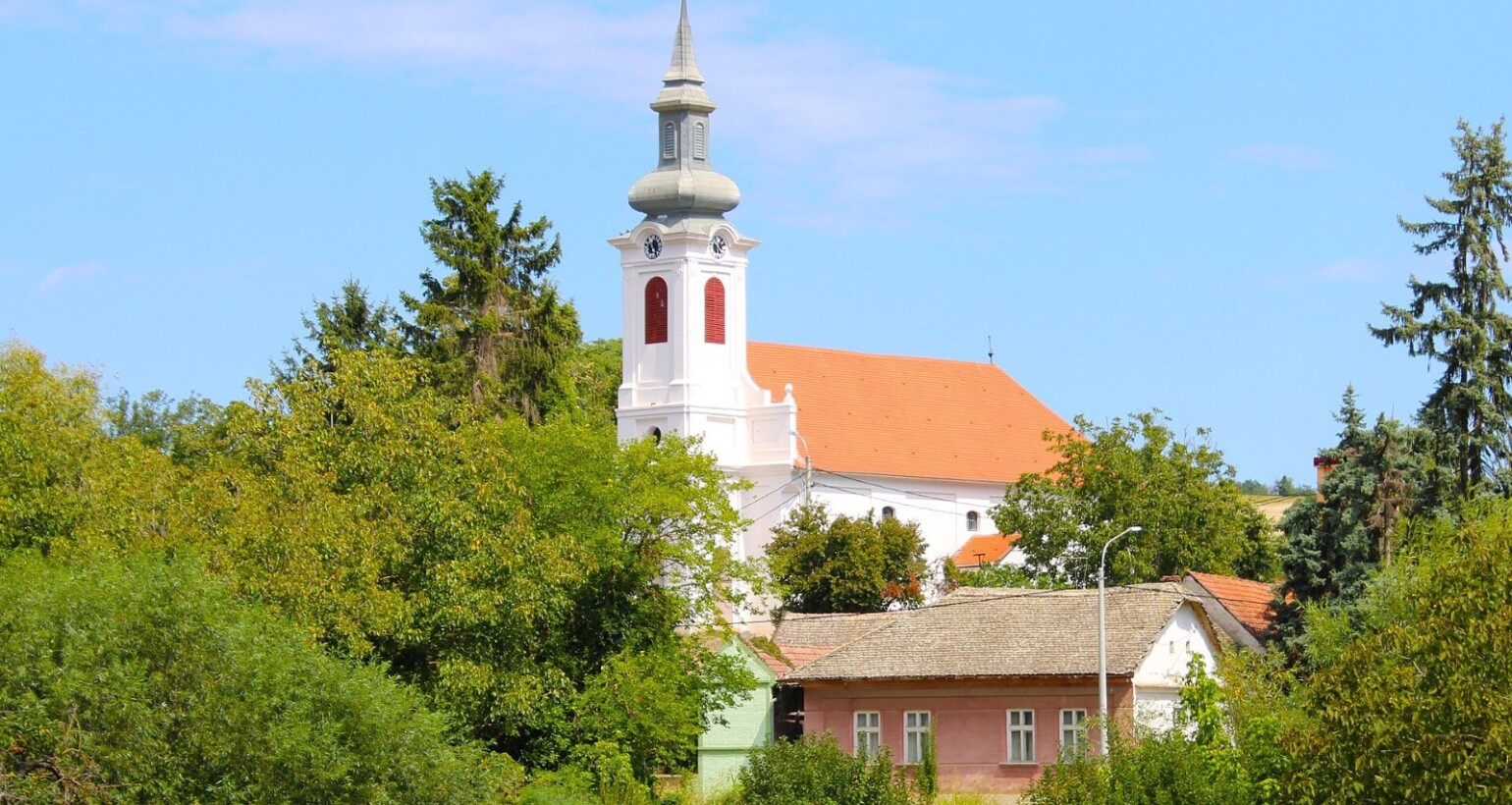
The Reformed church of Kotlina stands on a hilltop above the village, which lies in a vineyard-covered hollow in Drávaszög (Baranja); its Baroque-capped tower can be seen from afar. The great majority of the villagers are still Hungarian.
Kotlina is first mentioned in 1227, and according to the papal tithe register it already had its own parish in the 14th century. It remained inhabited during the Ottoman period, and according to the tax register of 1591 its inhabitants were Hungarian. After the expulsion of the Ottomans it became part of the Bilje estate, which was granted to Prince Eugene of Savoy for his military merits. The exact date of the founding of the Reformed congregation is unknown; it was probably established in the early 17th century. In 1848, 681 of the village's 734 inhabitants were Reformed, and in 1910, 1,034 of its 1,048 inhabitants declared themselves Hungarian.
The old church burned down in a fire in 1803. The new one was built between 1803 and 1806, not on the old site but on top of the hill, which is now reached by a brick-paved staircase. The single-nave brick church is 30 metres long and 12 metres wide; in front of its main façade rises the bell tower with a Baroque cap, and visitors enter through the porch on its ground floor.
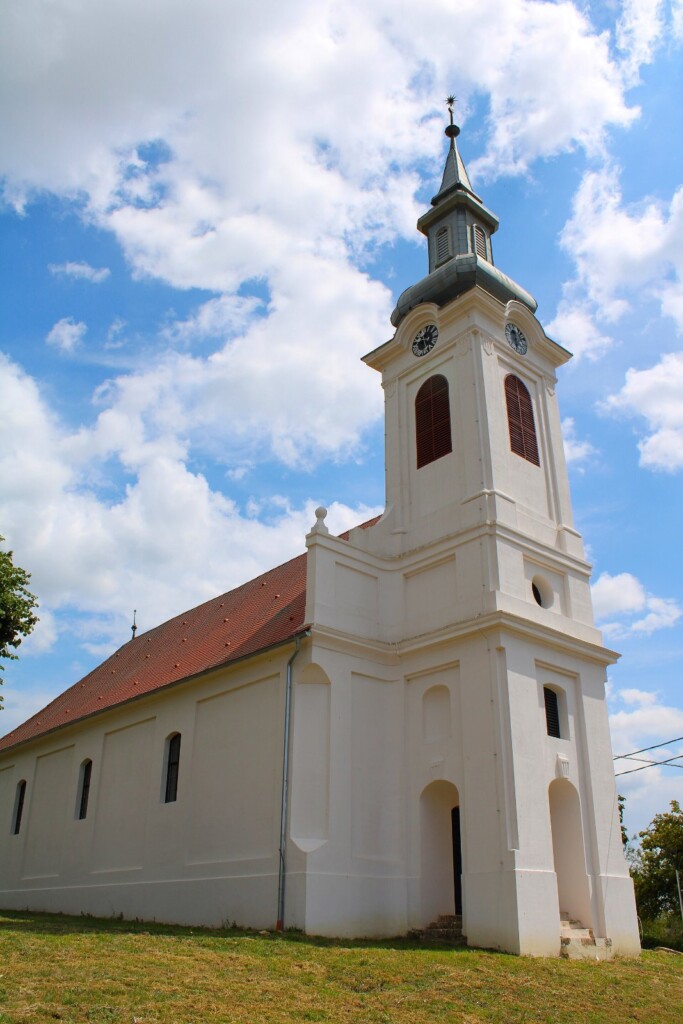
The church was renovated in 1856, 1882, 1963, 1984 and 2006. To its south stands the historicist parsonage, built in 1853 and enlarged in 1884, which together with the farm building of 1867 behind it forms a valuable architectural ensemble. The village, on the southern slopes of the Bansko Brdo hills, was once famous for its red wines, and grapes are still grown in its surroundings; its Croatian name, Kotlina, means "basin" or "hollow".
Visiting: Kotlina lies about 32 km north of Osijek by road, between Podolje and Kneževi Vinogradi, some 10 km from the Hungarian border; the church stands on the hill above the village and is reached by a flight of steps. It can easily be combined in a day with the Reformed churches of neighbouring Suza and Kneževi Vinogradi.
Sources: Wikipedia · Wikipedia (English) · Municipality of Kneževi Vinogradi
Photo: Roland Puskaric / Wikimedia Commons, CC0 · Photo: Roland Puskaric / Wikimedia Commons, CC0
Town:
Kotlina (Sepse)