Benedictine Abbey Church – Hronský Beňadik (Garamszentbenedek)
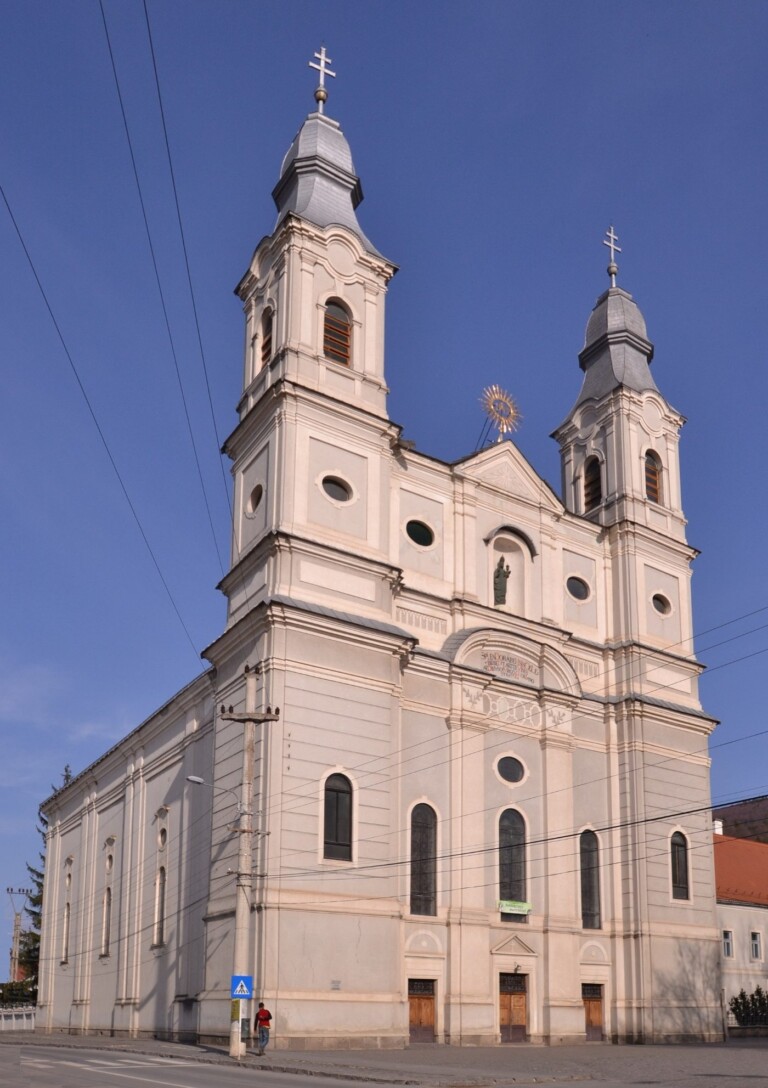
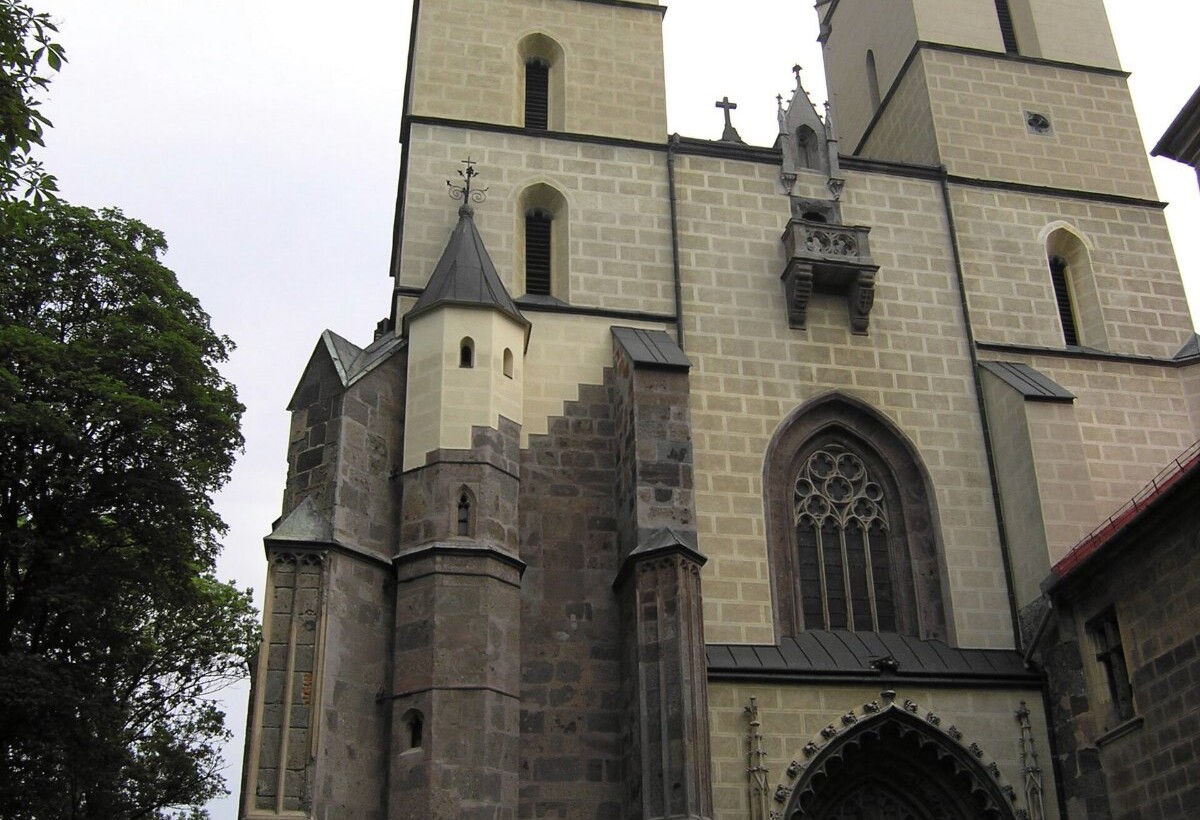
Standing in the Hron valley, the abbey of Hronský Beňadik (Garamszentbenedek) is one of the most important medieval monuments of present-day Slovakia: a Gothic church, a monastery and Renaissance fortifications. The church, dedicated to St Benedict, has been a minor basilica since 2019.
The Benedictine abbey was founded by King Géza I of Hungary and consecrated in 1075 in the founder's presence. In the foundation charter the king granted the monks extensive estates and privileges. Around 1100 the monks here wrote the Nitra Codex, the oldest Latin book from the territory of present-day Slovakia. The Romanesque church and monastery had fallen into ruin by the first half of the 14th century.
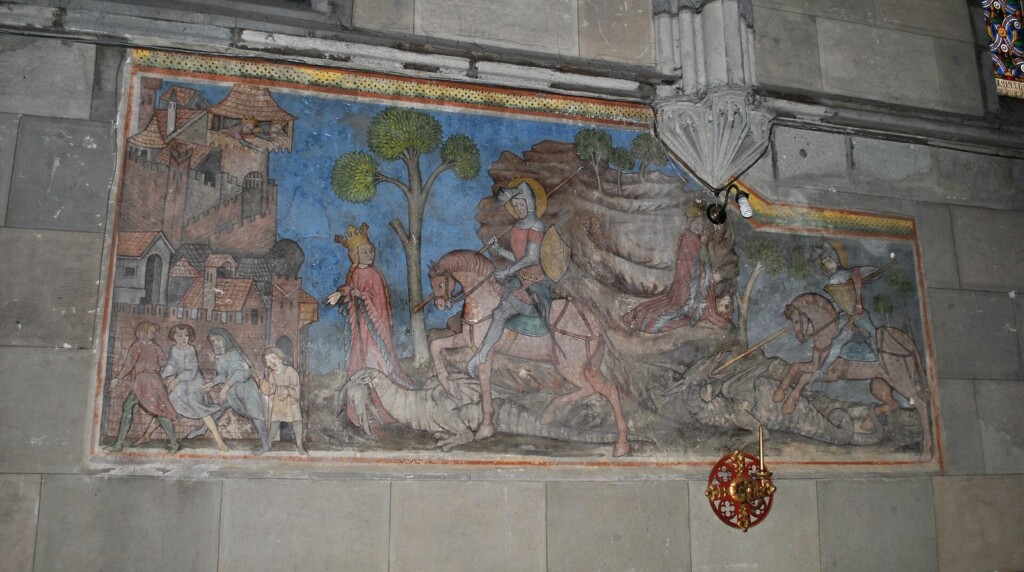
Work on the present Gothic church began in the 14th century, during the reign of King Louis the Great, and the western part of the three-aisled, twin-towered basilica was consecrated in 1483. In that year King Matthias Corvinus gave the Benedictines a relic of the Holy Blood – a piece of Veronica's veil – which he had received from Pope Paul II. On the north wall of the church is a fresco of the legend of St George, painted in the 1420s.
Because of the Ottoman threat, the Benedictines left the monastery in 1542 and it passed to the Esztergom chapter; in the 16th century it was fortified with Renaissance walls and bastions. István Koháry, who fell in the battle of Levice (Léva) in 1664, was buried in the church. After the fire of 21 July 1881 the complex was restored to plans by Ferenc Storno; several of its treasures were then taken to Esztergom, including the Holy Sepulchre of around 1480, whose figure of Christ can still be seen in Hronský Beňadik.
In 1950 the complex was turned into an internment camp for monks from the dissolved religious orders. It was declared a national cultural monument in 1970, and since 1999 it has been cared for by the Pallottine Fathers. A rare treasure of the church is its organ, built in 1714. The Holy Blood relic given by King Matthias is kept in the Chapel of the Holy Blood, which opens from the church.
Visiting: the abbey stands on the southern slopes of the Pohronský Inovec hills above the Hron valley, its two towers visible from afar (Hlavná 114/443). The village belongs to the Žarnovica district.
Sources: Wikipedia · Wikipedia – the Holy Sepulchre · Repository of Hungarian Values in Slovakia · GCatholic
Photo: Kwakinek, unknown architect / Wikimedia Commons, CC BY-SA 3.0 · Photo: Patrik Kunec / Wikimedia Commons, CC BY-SA 4.0
Town:
Hronský Beňadik (Garamszentbenedek)