Franciscan Church and Monastery – Güssing (Németújvár)
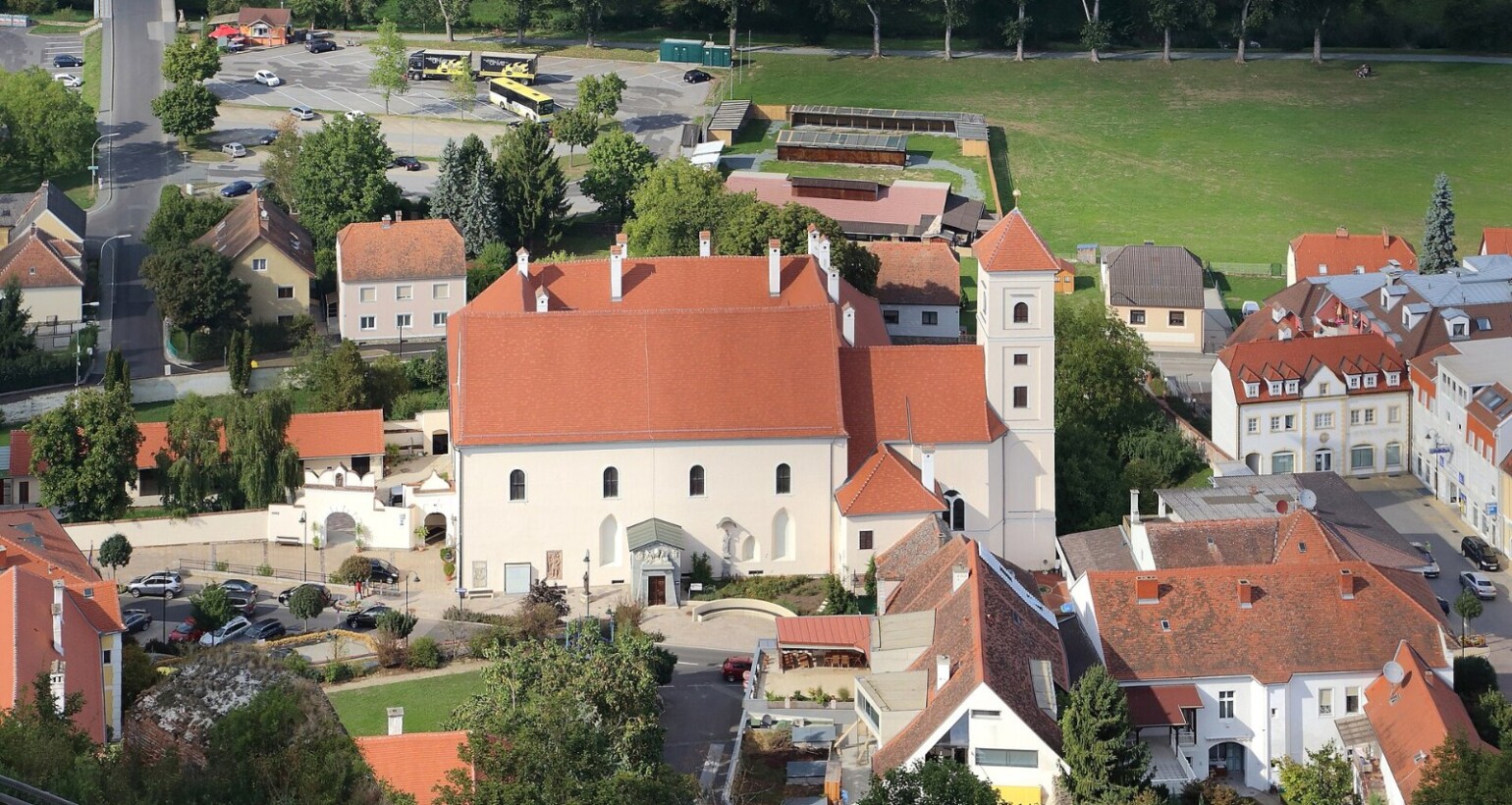
The Franciscan church and monastery of Güssing (Németújvár) is the spiritual centre of the Batthyány family: beneath it lies one of the largest family crypts in Austria, and the church holds the tomb of Blessed Ladislaus Batthyány-Strattmann, “the doctor of the poor”. Partly because of the pilgrims, most of whom come from Hungary, it was raised to the rank of minor basilica in 2013.
The monastery below the castle hill was probably built in the second half of the 15th century and given to the Augustinian Hermits; even then its church was dedicated to the Virgin Mary. Balthasar Batthyány, who had become a Protestant, expelled the friars in 1569, and between 1576 and 1634 the Protestants used the building as a church and school. Adam Batthyány, a convert to Catholicism, invited Franciscans to Güssing in 1638.
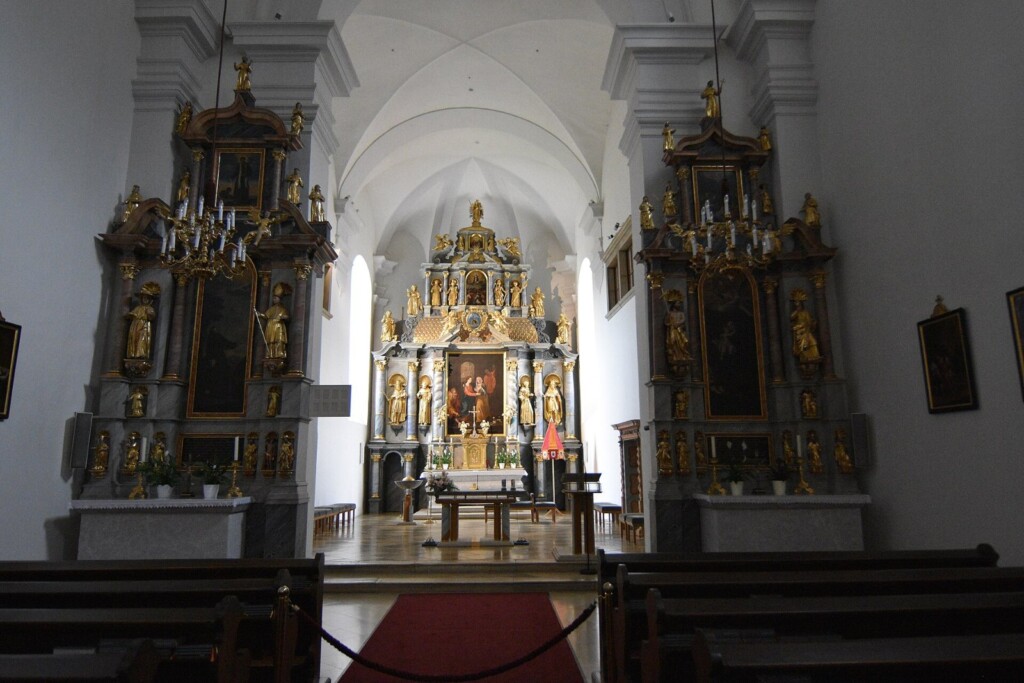
The new church was built between 1641 and 1647, probably to designs by the imperial court architect Filiberto Lucchese. The Franciscans moved in in June 1649, and on 7 April 1652 the church was consecrated in honour of the Visitation of Mary by János Püsky, Bishop of Győr and Archbishop of Kalocsa. The Baroque high altar was made in 1649 by two masters from Graz, the sculptor Matthäus Kern and the painter Wolfgang Resch.
By area, the Batthyány crypt beneath the church is the second largest burial vault in Austria after the Imperial Crypt in Vienna, and the largest by number of burials: in 2023 it held 95 coffins as well as urns and heart urns. The oldest coffins are those of the founding couple, Adam Batthyány and his wife Aurora Katharina Formentini. The coffin of the ophthalmologist Ladislaus Batthyány-Strattmann (1870–1931) was brought up from the crypt into the church in 1988; Pope John Paul II beatified him on 23 March 2003, and his relics have since been kept in a separate chapel of the church.
The monastery library was founded by Adam Batthyány himself. It holds 212 incunabula and several unique items, including a 13th-century missal and the Stirpium Nomenclator Pannonicus, a list of plant names by Carolus Clusius and István Beythe printed in Güssing in 1583.
Pilgrimage feast: the church's dedication feast is held on 2 August, linked to the Portiuncula feast; it was once a major pilgrimage day. Today pilgrims come above all to the tomb of Blessed Ladislaus Batthyány-Strattmann.
Visiting: the church and monastery stand in the centre of Güssing, at the foot of the hill of Batthyány Castle, close to the Hungarian border. Ask at the Franciscan monastery about visiting the crypt and the library.
Sources: Wikipedia (German) – the monastery and church · Wikipedia (German) – Ladislaus Batthyány-Strattmann · Diocese of Eisenstadt (martinus.at) – the Batthyány crypt · GCatholic – basilica (2013)
Photo: C.Stadler/Bwag / Wikimedia Commons, CC BY-SA 3.0 at · Photo: Nxr-at / Wikimedia Commons, CC BY-SA 4.0
Town:
Güssing (Németújvár)