Calvary – Banská Štiavnica (Selmecbánya)
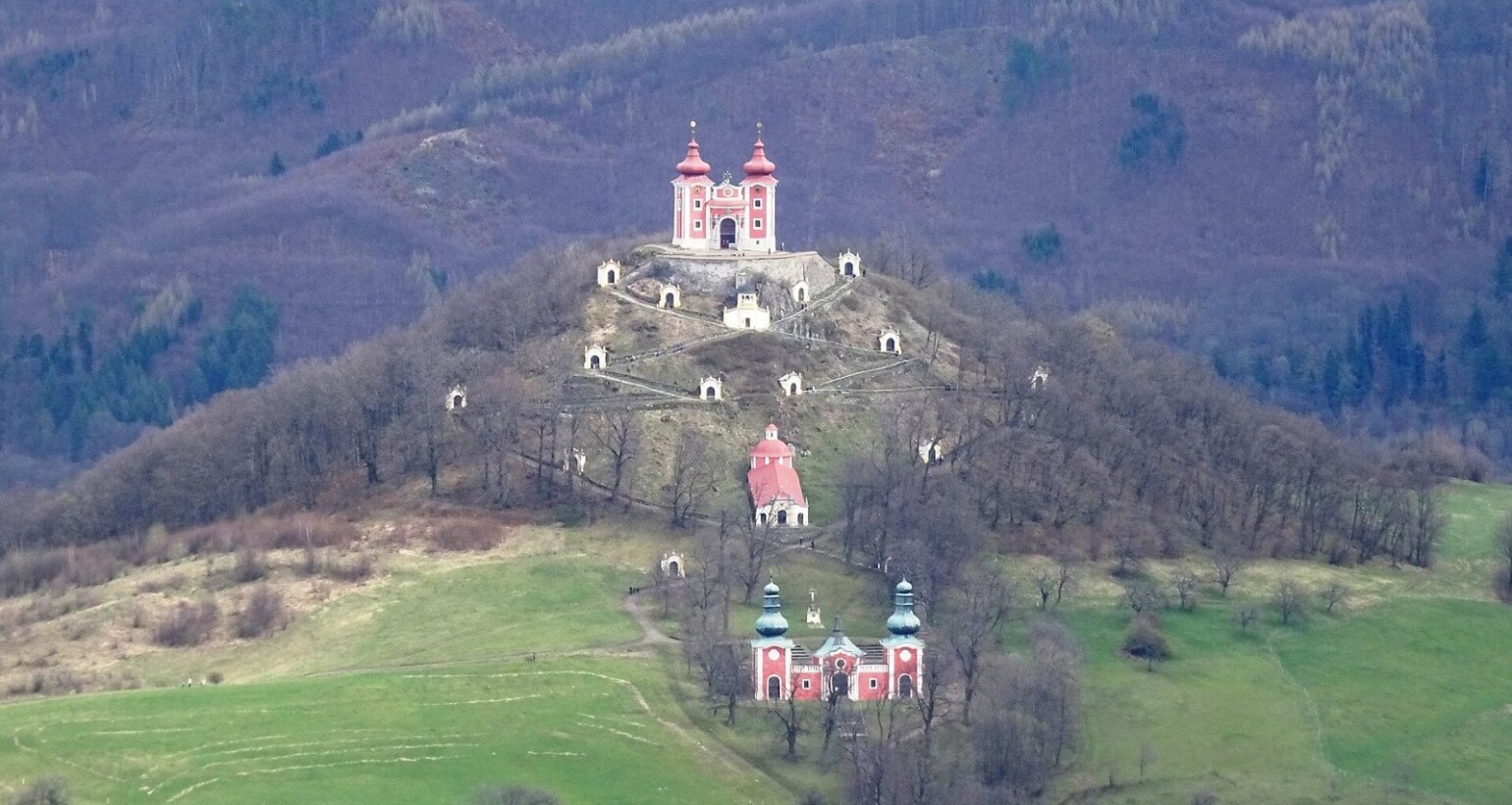
The Calvary of Banská Štiavnica (Selmecbánya) is regarded as the most important Baroque calvary of historic Hungary: a complex of three churches, chapels and Stations of the Cross on a volcanic peak. Built in the mid-18th century, it is now part of the Banská Štiavnica World Heritage Site.
The complex was initiated by the Jesuit Father Ferenc (František) Perger. The town council backed the plan on 13 March 1744, and after approval from Imre Esterházy, Archbishop of Esztergom, the foundation stone of the Upper Church was blessed on the Feast of the Exaltation of the Holy Cross, 14 September 1744. Construction was funded by donations from townspeople, mining officials and nobles, while ordinary miners contributed their labour; the coats of arms of the major donors – among them Emperor Francis I, husband of Maria Theresa – can be seen on the chapel façades. The whole complex was completed in less than seven years and solemnly consecrated on 14 September 1751.
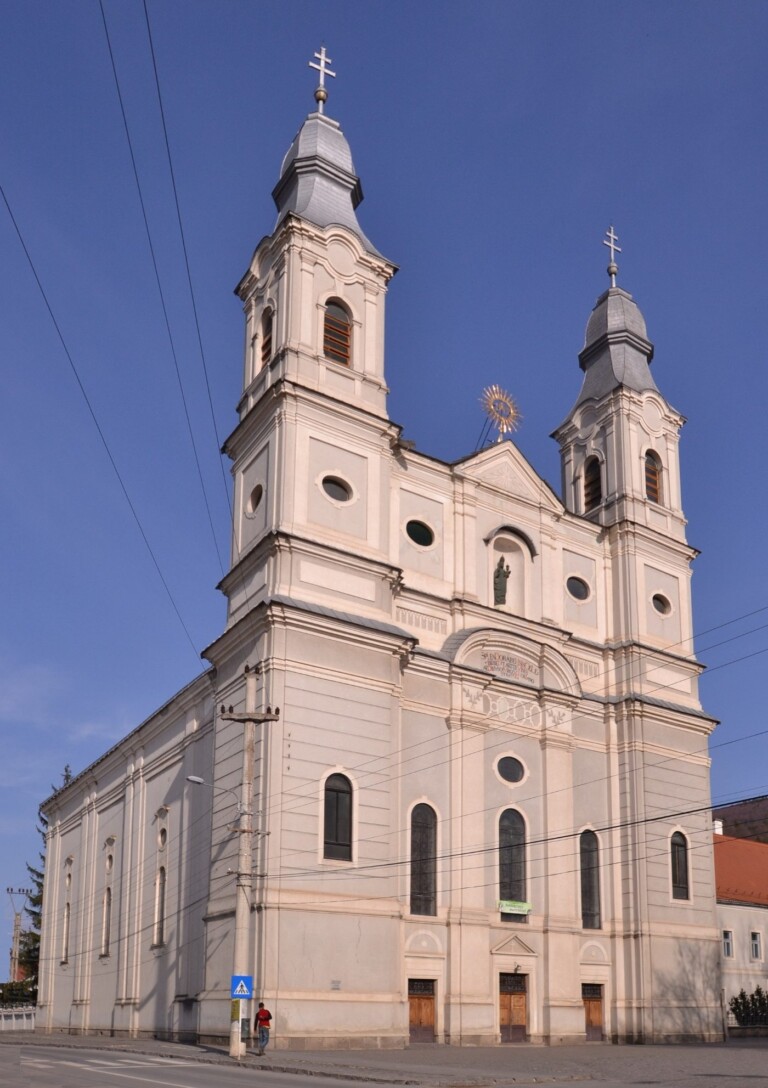
Climbing the western slope of the Scharffenberg (Slovak: Ostrý vrch), visitors pass the Lower Church, once the Slovak church (the Church of the Last Supper), the chapels of the Stations, the Middle Church housing the Holy Stairs, and on the summit the twin-towered Upper Church, once the German church, dedicated to the Holy Cross, with the Chapel of the Holy Sepulchre behind it. Services were once held in Hungarian, German and Slovak, and the inscriptions are still trilingual. Hungarian pilgrims used to climb the 34 steps of the Holy Stairs on their knees as an act of penance.
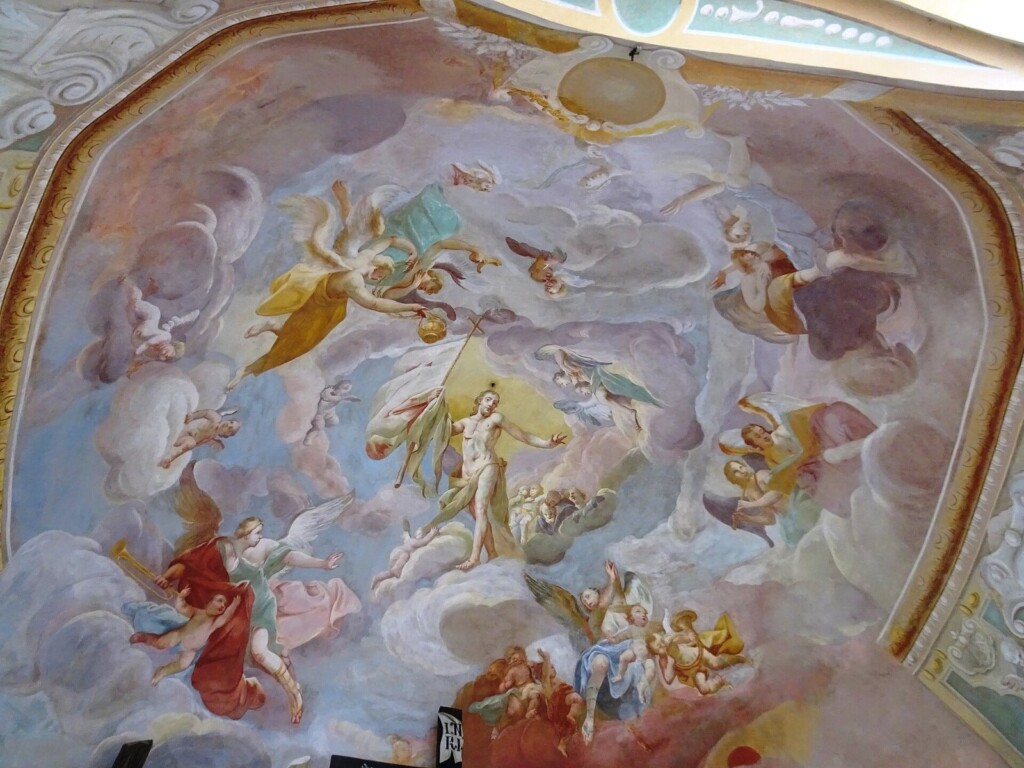
The wooden reliefs in the chapels are attributed to the workshop of Dionysius Stanetti of Kremnica, and the paintings of the Upper Church are by the Viennese-born Anton Schmidt, who settled in Banská Štiavnica. Damaged in the Second World War and nationalised in 1951, the Calvary fell victim to theft and vandalism after 1989, and in 2007 it was placed on the list of the world's 100 most endangered monuments. Since 2008 it has been restored under the leadership of the Calvary Fund (Kalvársky fond): the Lower Church was renewed by 2013 and the Upper Church by October 2018.
Pilgrimage feast: the Calvary's pilgrimage is traditionally linked to the Feast of the Exaltation of the Holy Cross (14 September); according to the ethnographer Gábor Barna, the largest procession climbs the hill on the Sunday (or Saturday) after the feast.
Visiting: Calvary Hill rises east of the old town of Banská Štiavnica; the complex is freely accessible all year round, and there is an information centre at the foot of the hill. The chapels are usually closed, but you can look inside through their grilled doors. From the summit there is a view over the whole town and the Štiavnica Mountains.
Sources: Repository of Hungarian Values in Slovakia · Wikipedia (English) · Wikipedia (Slovak)
Photo: Palickap / Wikimedia Commons, CC BY 4.0 · Photo: Palickap / Wikimedia Commons, CC BY 4.0
Town:
Banská Štiavnica (Selmecbánya)