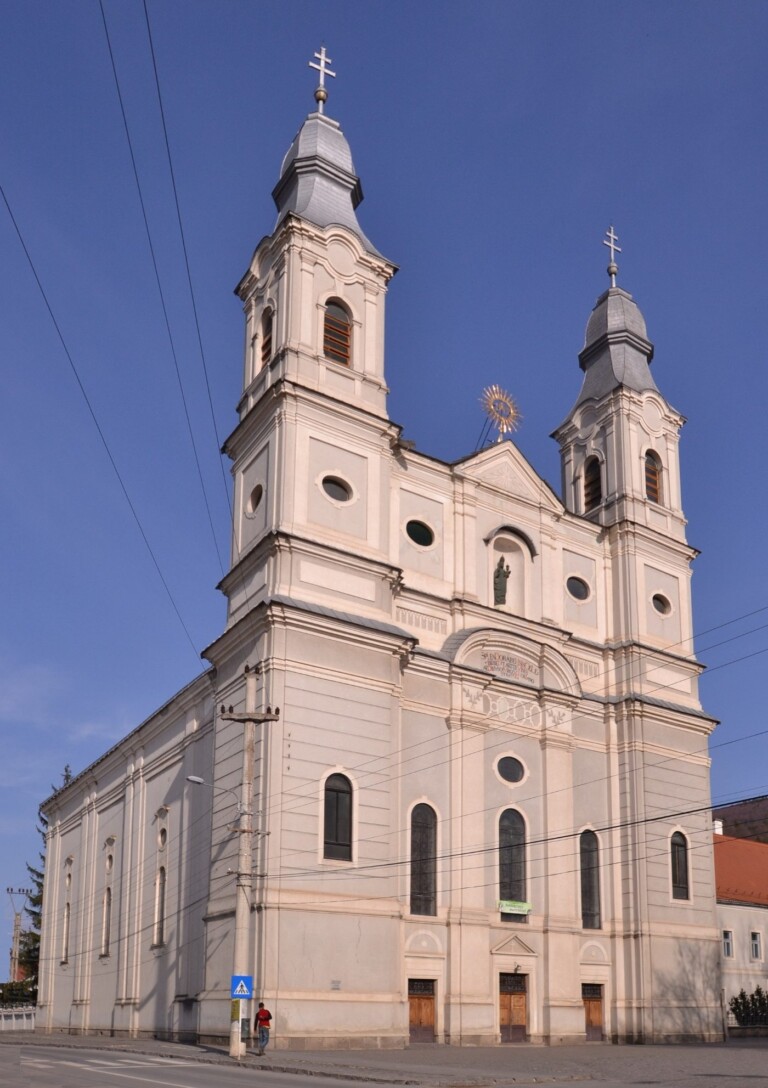
Reformed Church – Vyshkovo (Visk)
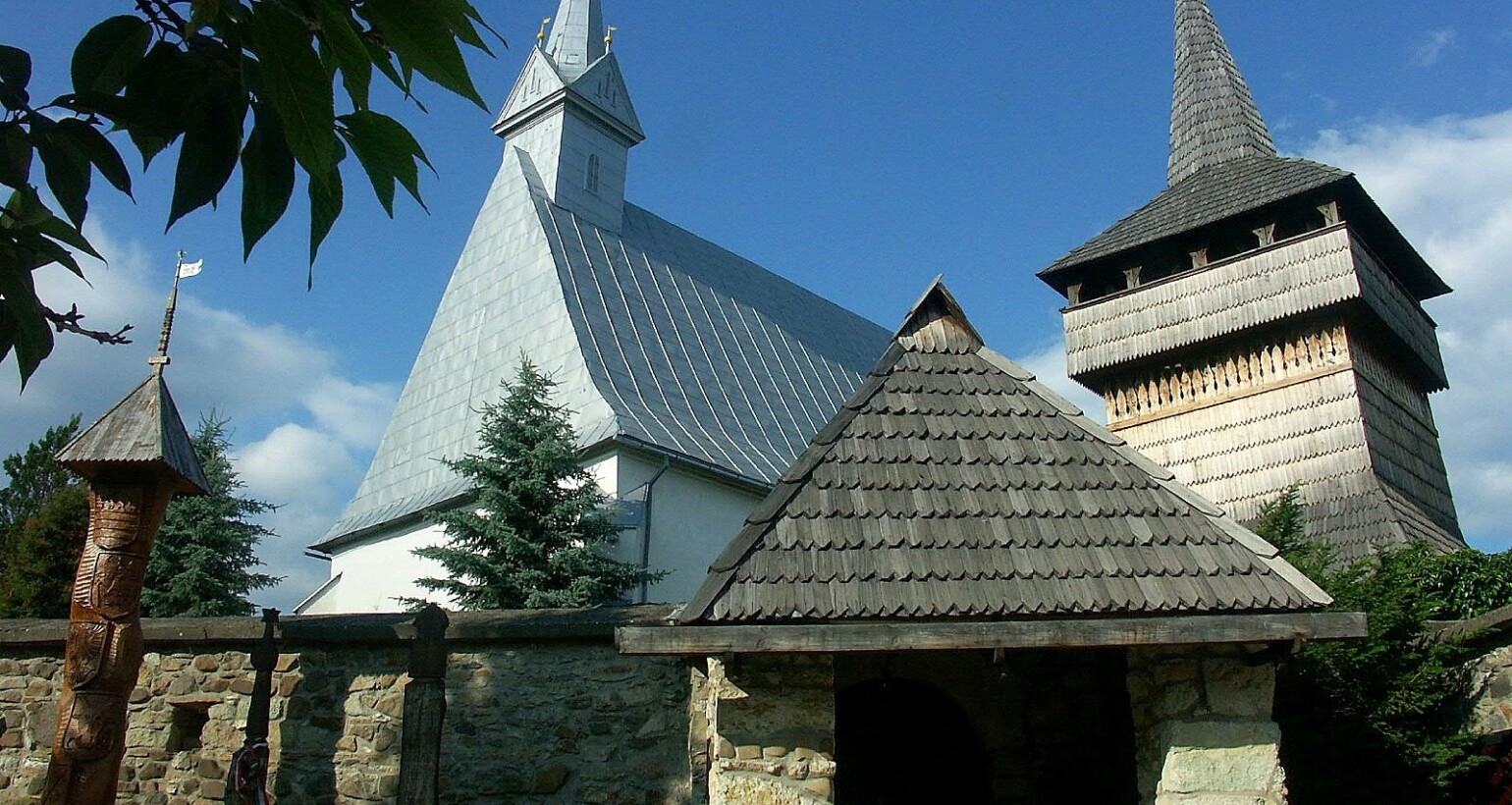
The Reformed Church of Vyshkovo (Visk) is one of the oldest stone churches in the Tisza valley of Maramureș: its Gothic walls date from the Middle Ages and it is still surrounded by a defensive wall. Its interior is made special by a painted wooden ceiling, painted pews and a 19th-century Gothic Revival organ.
Visk was the largest of the five royal towns of Maramureș; in 1329 King Charles Robert granted it privileges, including the right to elect its parish priest freely. The exact date of the church's construction is unknown: scholars place it in the second half of the 13th century or in the 14th century. Its priest is mentioned in the papal tithe registers of the 1330s. In the 16th century the congregation joined the Reformation, becoming first Lutheran and then Reformed. In 1657, under Prince George II Rákóczi, the Diet met in Visk, and according to tradition its opening service was held in this church.
In 1717 invading Crimean Tatars set the church on fire, and it lay in ruins for decades. It was restored around 1789, when it acquired its Baroque features and its flat wooden ceiling. In 1868 a tall spired tower was added and the nave was painted by Ferenc Schulz. The Gothic Revival organ, built in 1880 in the Budapest workshop of Sándor Országh, still survives.
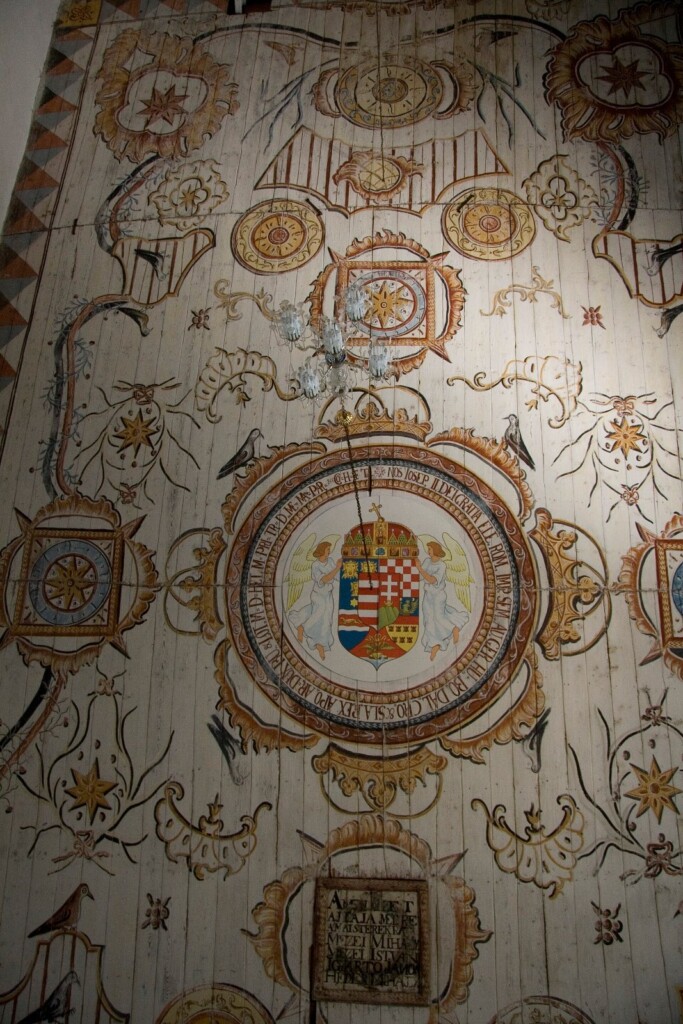
The single-nave church has walls of rubble stone, with dressed stone used for the window and door frames and for the buttresses strengthening the corners. Its five-sided chancel is narrower than the nave and has a crypt beneath it; one of its two-light pointed windows has kept its original form. The plank ceiling is decorated with floral motifs and a central medallion bearing a coat of arms. As early as 1874 Flóris Rómer noted that wall paintings were hidden beneath the limewash, and the 2005 renovation uncovered the former Gothic door of the sacristy and a sacrament niche. The church is enclosed by a stone wall about 140 metres long, and an 18th-century wooden bell tower stands beside it.
Visiting: Vyshkovo lies in the Tisza valley, about 20 km south-east of Khust; the church stands in the southern part of the village, in a garden enclosed by the stone wall. The churchyard is also home to one of the larger collections of conifers and other gymnosperms in Transcarpathia. Before travelling, check the current travel advice of your foreign ministry.
Sources: Wikipedia · Wikipedia (Ukrainian) · Karpaty.rocks · Wikipedia – Hungarian heritage sites in Ukraine
Photo: Thaler Tamas / Wikimedia Commons, CC BY-SA 4.0 · Photo: Dmytro Petishkin / Wikimedia Commons, CC BY 4.0
Town:
Vyshkovo (Visk)