Reformed Church – Velyki Berehy (Nagybereg)
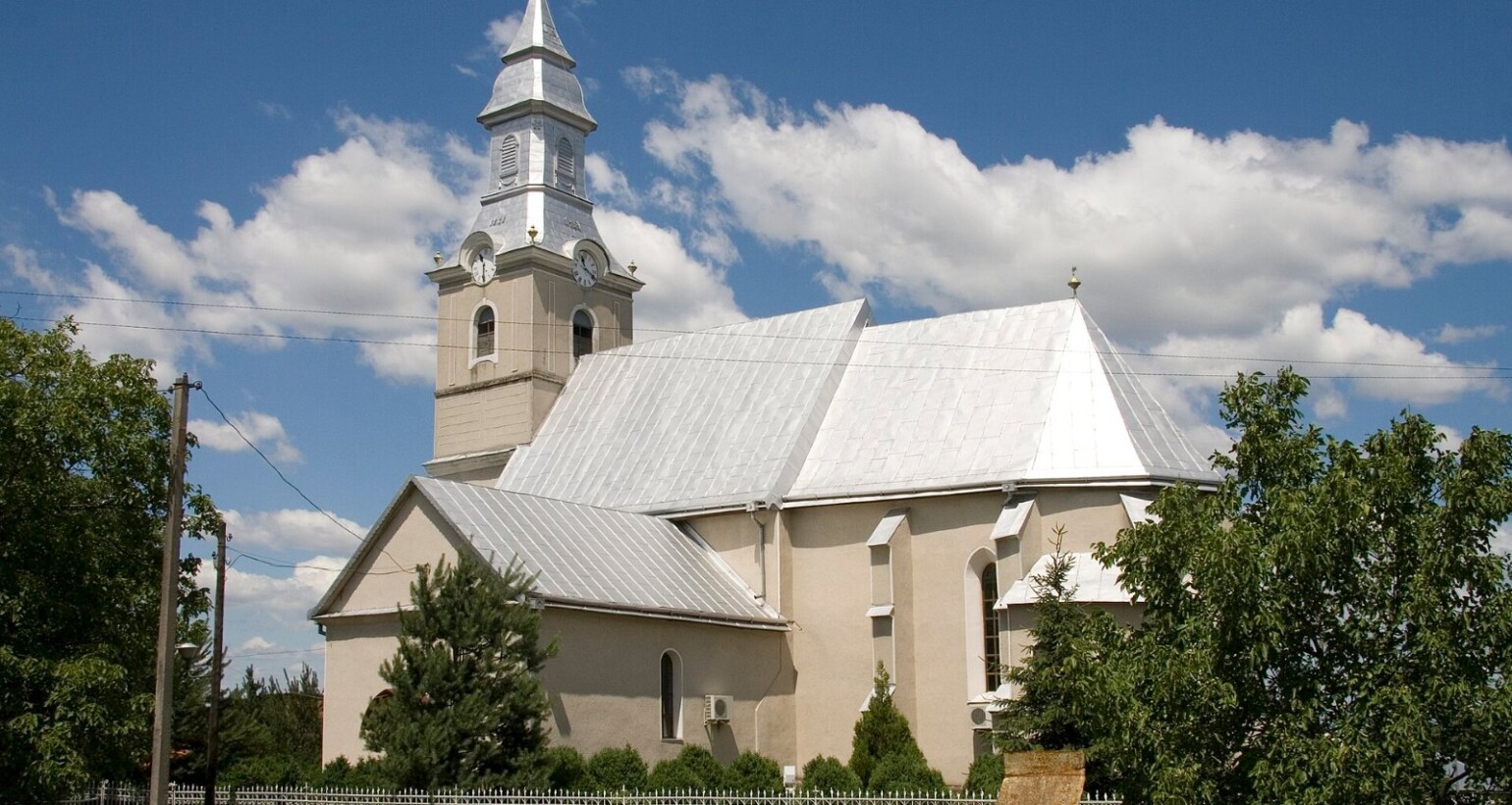
The Reformed Church of Velyki Berehy (Nagybereg) is an important medieval monument of the Bereg region: the Gothic church, already standing in the 14th century, has kept its rib-vaulted chancel through repeated destruction and rebuilding. Its congregation is the spiritual centre of this Hungarian-speaking village and also runs a Reformed lyceum.
In the Árpád era Velyki Berehy was the centre of the royal forest estate of Bereg; it is first mentioned in 1214. Here King Andrew II confirmed the Agreement of Bereg in 1233, and after the Mongol invasion King Béla IV had a castle and palace built in the settlement, which remained the county seat until 1271. In 1329 Queen Elizabeth founded a monastery on a rise above the Borzhava river, and by 1397 Bereg was recorded as a market town. Its coat of arms with a bull's head first appears on a seal of 1567 and was officially approved in 1904.
The church was already standing in 1335 and was rebuilt in 1405. It was built by Catholics before the Reformation and passed to the Reformed congregation in 1554. In 1657 the Polish troops of Prince Lubomirski destroyed it together with the village; it was rebuilt in the second half of the 17th century. Its tower was built between 1817 and 1824, and the church was enlarged in 1869. Despite many alterations it has kept its Gothic character and is listed in Ukraine as a monument of local importance. According to Elek Fényes's description of 1851, the vast majority of the villagers – 1,575 people – were Reformed.
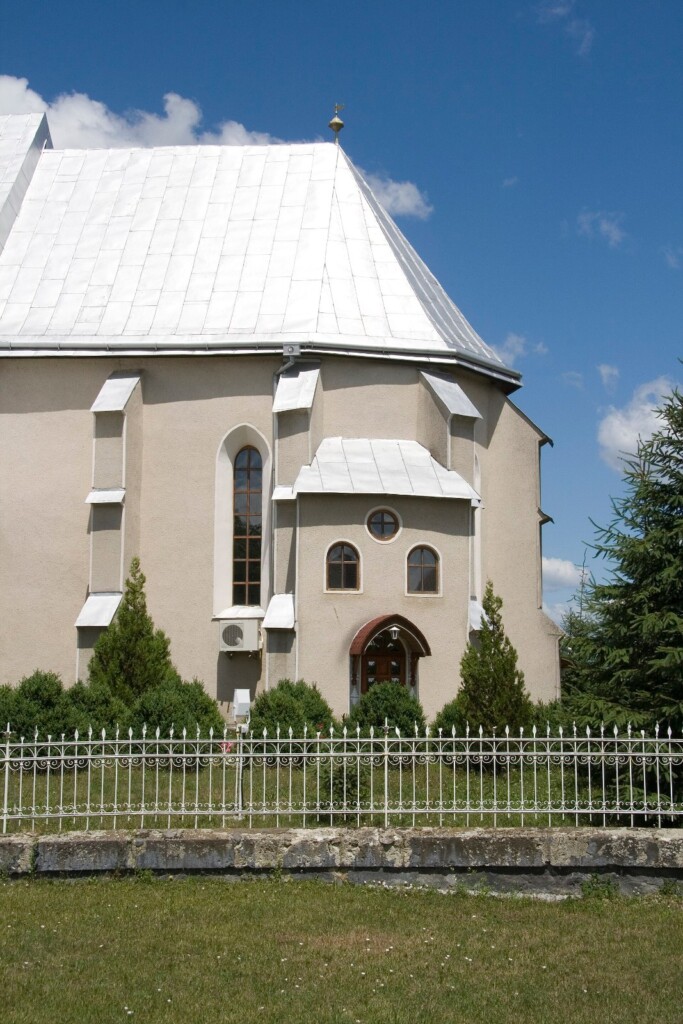
The polygonal chancel of the single-nave church, reinforced with buttresses, is covered by a Gothic rib vault; according to researchers, this type of vault is related to those of the churches in Berehuiffalu (Beregsurány), Khust and Velyki Muzhiievo (Nagymuzsaly). Education plays an important part in the life of the congregation: since 1993 the Nagybereg Reformed Lyceum has been housed in a building erected as a grammar school in 1895. The village is one of the centres of Bereg weaving, and many still practise the traditional craft.
Visiting: Velyki Berehy lies about 10 km east-north-east of Berehove, along the Borzhava river; the church stands in the village centre, close to the main road. A visit combines well with the churches of Berehove and Chetfalva (Csetfalva). Before travelling, check the current travel advice of your foreign ministry.
Sources: Wikipedia · Wikipedia (Ukrainian) · Karpaty.rocks · Teleki László Foundation – Heritage protection in the Carpathian Basin (2022) · KMEDSpace – Ibolya Szamborovszky-Nagy: Fragmentary relics of a community with a long past (2019)
Photo: Dmytro Petishkin / Wikimedia Commons, CC BY 4.0 · Photo: Dmytro Petishkin / Wikimedia Commons, CC BY 4.0
Town:
Velyki Berehy (Nagybereg)