Reformed Church – Sâncraiu (Kalotaszentkirály)
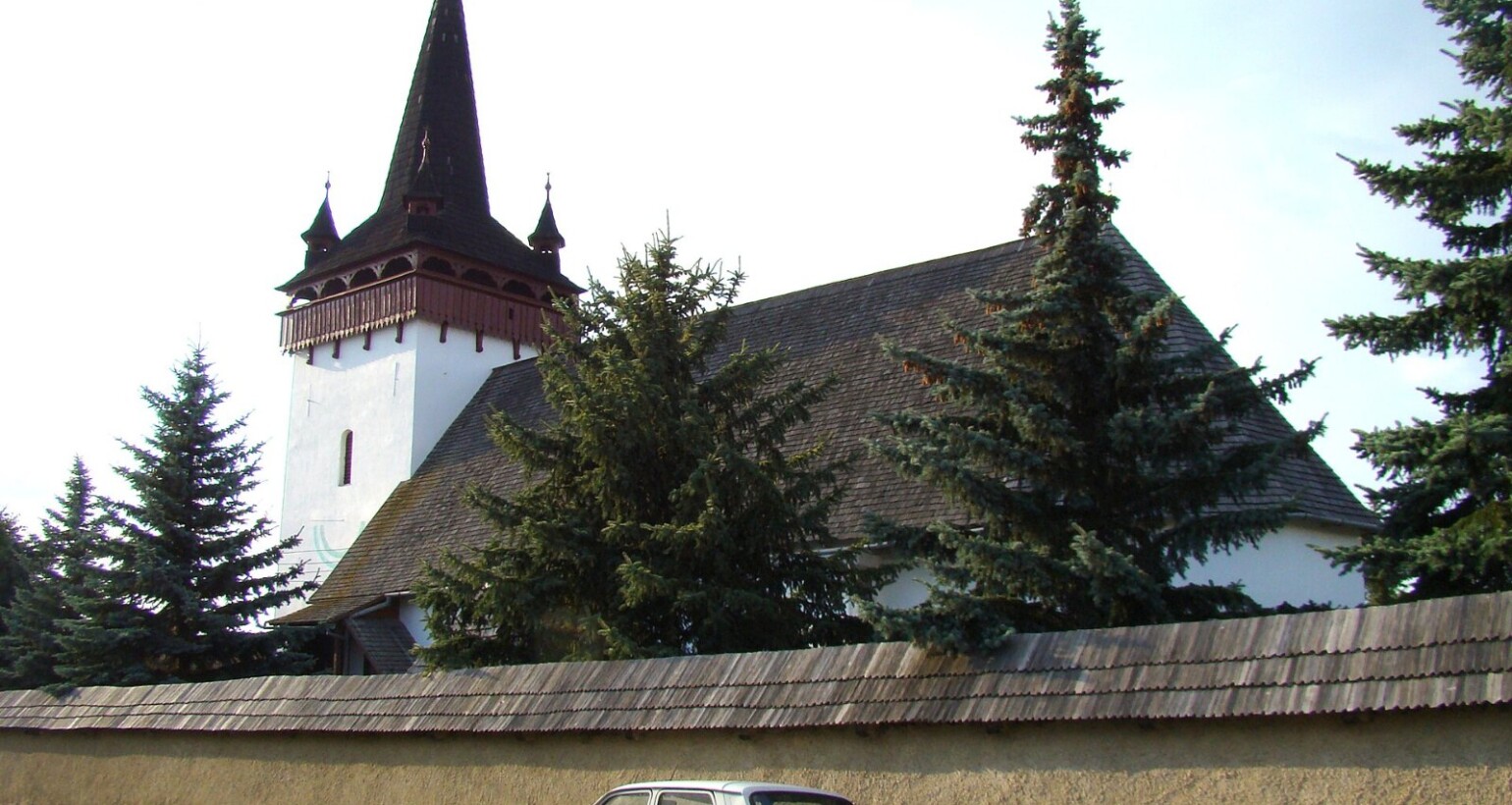
The Reformed church of Sâncraiu (Kalotaszentkirály) is one of the most characteristic churches of the Kalotaszeg region, standing on a walled hilltop with a tower that is a landmark of the Călata valley. The 13th-century Gothic church reached its present form after repeated destruction, and since 1994 its interior has been adorned with 220 ceiling panels painted with Kalotaszeg motifs.
Sâncraiu – together with Zentelke, now merged with it – was already a parish in the 13th century and an important settlement of the archdeaconry of Kalota; Zentelke is recorded as a mother church in 1291, and the village itself in 1288. The church was built in the Gothic style in the 13th century, possibly on 12th-century foundations; its roof burned during the Mongol invasion of 1241 and was soon repaired. The chancel dates from the 15th century, and the oldest of its three bells was cast in 1481, in the reign of King Matthias – it now hangs on a small carved bell frame in the churchyard.
During the revolution of 1848–49, insurgents descending from the mountains burned Sâncraiu and Zentelke to the ground, and the church went up in flames too. The new church was completed in 1850, incorporating the surviving parts – the 15th-century chancel and the tower built in 1762. The building was renovated in 1926, when the door and window frames were altered; of the medieval stonework, only the frame of the west doorway survives in its original form.
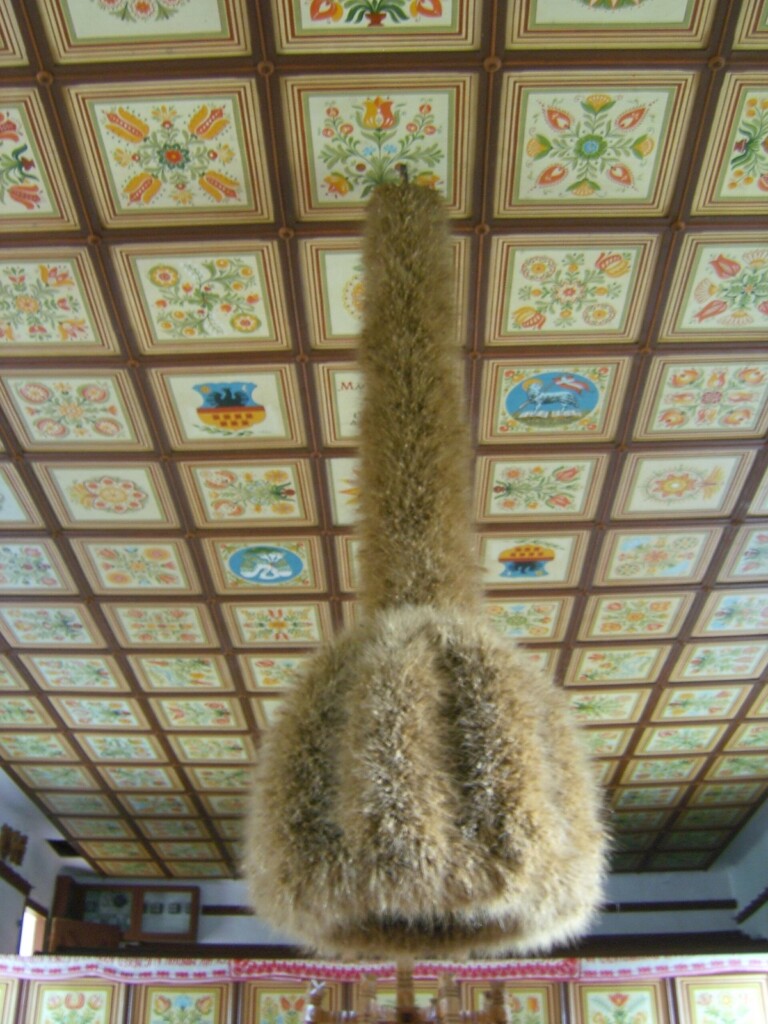
The interior is enriched by the organ built in 1876 by István Kolonics of Târgu Secuiesc, the crown above the pulpit donated by Count Miklós Bánffy and the minister's wife's pew given by Baroness Sámuel Jósika. The ceiling, burned in 1848 and later painted white, was replaced in 1994 with a coffered ceiling made with the support of the Illyés Foundation: each of the 220 panels was individually painted with Kalotaszeg floral motifs. A stone wall with three gates surrounds the church. The sight of the congregation in folk costume leaving this church inspired Endre Ady's poem “On the banks of the Kalota” (1914), whose memory is still bound up with the place.
Visiting: the church stands in the centre of the village, on the hill above the Călata stream, about five kilometres south of Huedin (Bánffyhunyad) on the road into the Kalotaszeg villages. Sâncraiu is one of Transylvania's centres of rural tourism, with many guesthouses; to see the church, it is best to enquire in advance at the Reformed parish office. At Sunday services the traditional Kalotaszeg costume can still be seen.
Sources: Wikipedia · Wikipedia (Romanian)
Photo: Țetcu Mircea Rareș / Wikimedia Commons, CC BY-SA 3.0 ro · Photo: Petru suciu / Wikimedia Commons, CC BY-SA 3.0
Town:
Sâncraiu (Kalotaszentkirály)