Wooden Church of the Holy Spirit – Kolochava (Alsókalocsa)
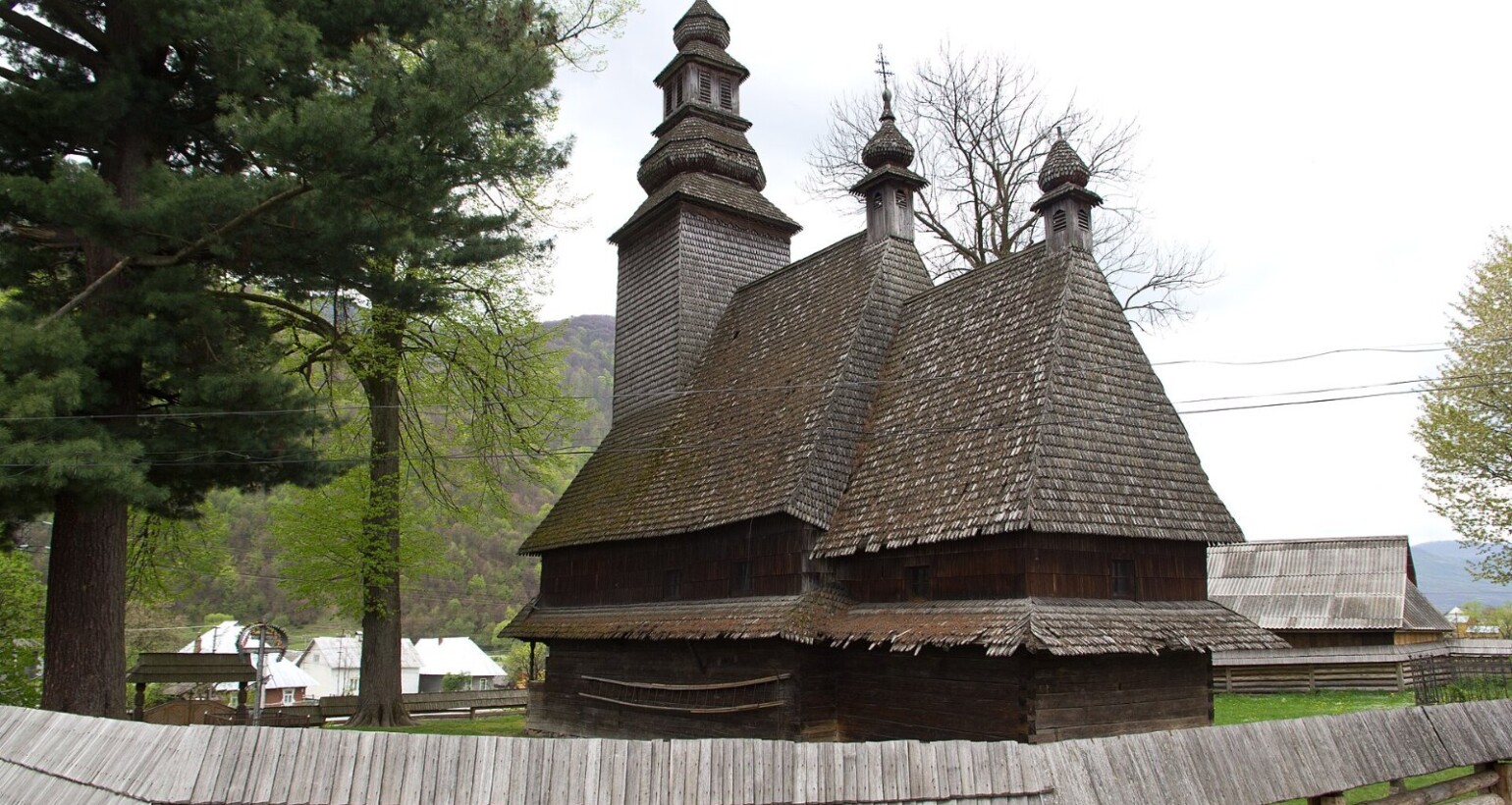
The wooden Church of the Holy Spirit in Kolochava (Alsókalocsa) is one of the loveliest timber buildings of the Tereblia valley: it was carpentered in 1795, in a year of great famine, and its Baroque-flavoured tower and three-part body represent the peak of wooden church architecture in the Maramureș highlands. The Greek Catholic church was closed in Soviet times and turned into a museum of atheism; today it houses the village's local history museum, so its interior can also be visited.
Kolochava lies about 20 km south-east of Mizhhiria, where the Kolochavka stream joins the Tereblia; first mentioned in 1365, it belonged to Khust Castle from 1526 and, until the Treaty of Trianon, to the Ökörmező district of Máramaros county. According to the inscription carved into the door frame, the church was completed in 1795, in the time of parish priest Ioann Popovych and under Emperor Francis II, by the master Ferenc Tekka, "when there was a great famine". The episcopal visitation of 1801 already recorded two wooden churches in the village, including this mother church with room for three hundred worshippers.
The church follows the Transcarpathian type of three-part wooden church with a western tower, but its proportions and ornament show the influence of the Baroque. Its hexagonal sanctuary, square nave and rectangular narthex rise in steps towards the west; all three parts are girded by eaves resting on carved brackets, which on the west front become an open arcaded porch on carved posts and continue around the gallery. The tower rising from the tall shingled roof ends in a polygonal onion dome, a lantern and a bulbous finial, and smaller lanterns accent the ridges of the nave and sanctuary. Inside, the nave is covered by a barrel vault and the narthex by a flat plank ceiling.
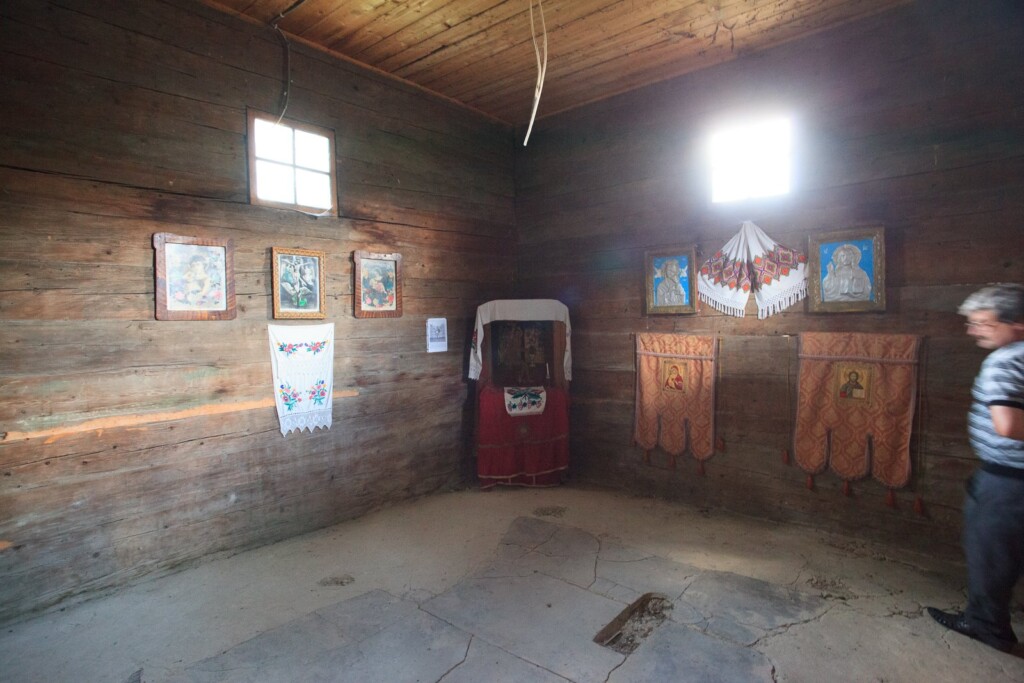
The authorities struck the church off the register of functioning churches on 9 January 1953; its icons were taken to Uzhhorod and built into the iconostasis of the Shelestovo church at the open-air museum, while portraits of Soviet leaders were put up in place of the icon screen. The two-tier timber belfry was moved next to the new Orthodox church nearby and clad in tin, whereas the wooden church, kept closed as a "museum of atheism", survived stripped but in its original beauty. Church and belfry were restored in 1969–70, and since 2018 the church has been a monument of national importance in Ukraine. It now houses the village's local history museum, which also keeps the memory of the local outlaw Mykola Shuhai and of Ivan Olbracht, who wrote a novel about him; in the churchyard are Czech soldiers' graves, old local burials and a bronze memorial to the 18th-century manuscript hymnal of the Kolochava cantor Ivan Luhosh.
Visiting: the wooden church stands in the central part of Kolochava, in the hamlet of Horb, on a knoll beside the road from Khust, within the Synevyr National Nature Park. The village has a dozen further museums, among them the Stare Selo open-air museum of highland life, the narrow-gauge railway exhibition and the bunkers of the Árpád Line. The church museum is run by the local community, and it is advisable to arrange a visit in advance. Before travelling, check the current travel advice of your foreign ministry.
Sources: Wikipedia – Alsókalocsa (Kolochava) · Wikipedia (Ukrainian) – Church of the Holy Spirit, Kolochava · Karpatium – Church of the Holy Spirit in Kolochava · Wooden Route Carpathians · Wikimedia Commons – Holy Spirit church, Kolochava
Photo: Dmytro Petishkin / Wikimedia Commons, CC BY 4.0 · Photo: Klymenkoy / Wikimedia Commons, CC BY-SA 4.0
Town:
Kolochava (Alsókalocsa)