Church of the Finding of the Holy Cross – Zmajevac (Vörösmart)
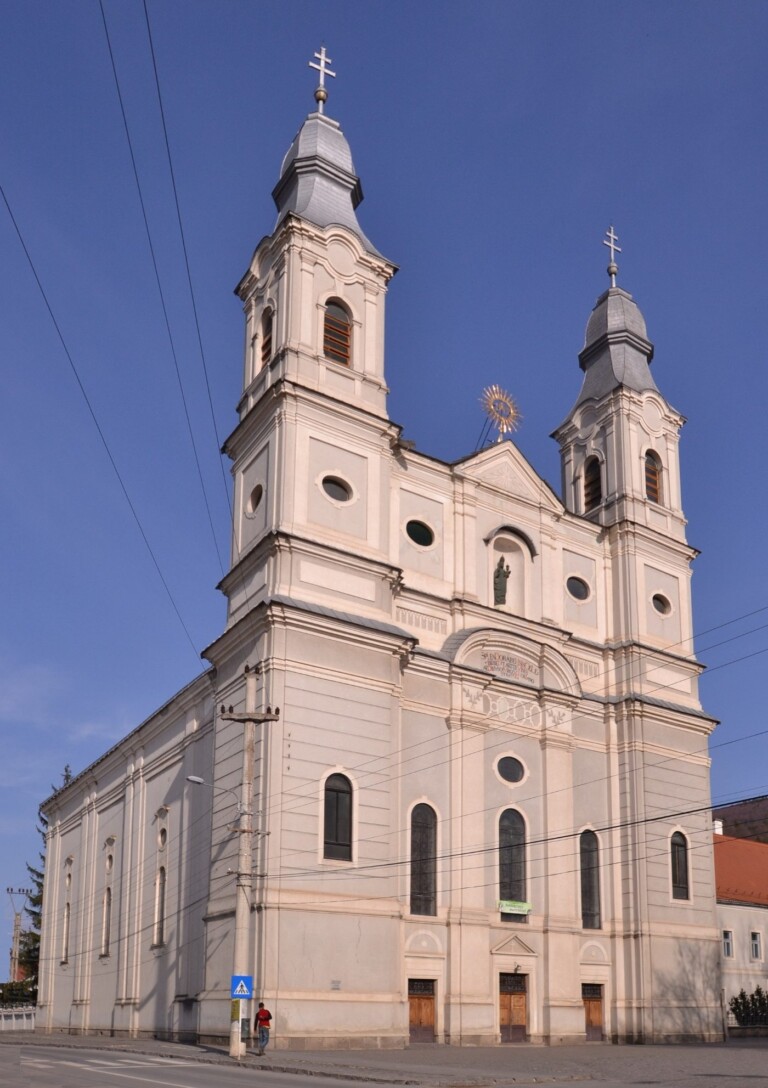
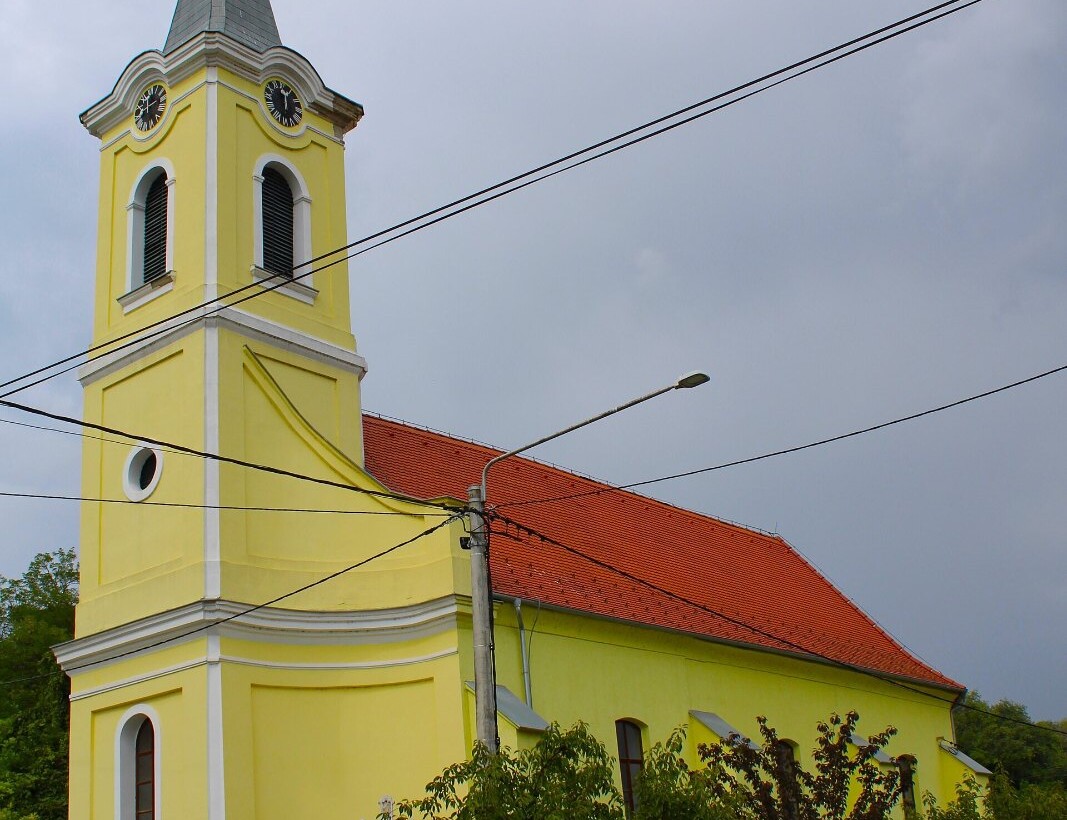
The Church of the Finding of the Holy Cross in Zmajevac (Vörösmart) is the Catholic parish church of a Hungarian village famous for its wines, built on the loess hills above the Danube in the north-eastern corner of Baranja. The Baroque church begun in 1752 traces its origins to a 14th-century Pauline monastery, and the 'Catholic gorge' that starts at the church is the largest surviving row of wine cellars in Baranja.
In Roman times the fort of Ad Novas, an outpost of the Danube limes, stood on the site of Zmajevac; the village is first mentioned in 1246 as 'Verusmorth', and its lords were the Garai family and, at the end of the 15th century, Péter Geréb, a relative of King Matthias. The local history of the Catholic Church begins in 1304, when two brothers, Samuel and David, founded a Pauline monastery on the village's land towards Suza; the place is still called the Brothers' Land (Zemlja braće). By 1333 the Paulines had a church here, and the inhabitants of the nearby, since vanished village of Csatár made shields. The village remained inhabited under Ottoman rule, when its people were Hungarian Calvinists.
After the expulsion of the Ottomans Zmajevac became part of the Belje estate, and around 1719 German and, a few decades later, Hungarian Catholics settled alongside the Reformed Hungarians. In 1733 the Catholics still had only a chapel of timber and wattle, daubed with mud and thatched with reed, dedicated to St Joseph; the villagers still call its site the 'church place'. Construction of the present parish church began in 1752 with the support of the estate. In 1851 Elek Fényes recorded eight hundred Catholic and eleven hundred Reformed inhabitants, with a Catholic and a Reformed mother church, in the settlement that had gained market-town rank in 1841.
The Baroque church stands in the village centre on a rise above the main street, its façade tower dominating the view of the Danube-side settlement from afar; a carved stone calvary cross stands in its churchyard. The Catholic gorge begins at the church: on both sides of the valley cut into the loess stand press houses and cellars built in the second half of the 19th and early 20th centuries, with characteristic double doors and varied in size and decoration – the largest surviving group of cellars in Baranja. The village's other cellar row, the Reformed gorge, opens from the Reformed church; that church, built in 1866–1871, and its pewter jug dated 1711 are the community's other ecclesiastical treasures.
Pilgrimage feast: the church's titular feast is the Finding of the Holy Cross, 3 May.
Visiting: Zmajevac lies 36 km from Osijek by road and 10 km from the Hungarian border, between Suza and Batina on the southern slopes of the Bansko brdo; it belongs to the municipality of Kneževi Vinogradi. The church stands in the middle of the village beside the main road; from there the cellar row of the Catholic gorge, where the winemakers of Zmajevac welcome visitors, can be explored on foot. St Valentine's Church in neighbouring Batina and the Danube bridge there, as well as the Reformed churches of Suza and Kotlina, fit into the same excursion.
Sources: Wikipedia – Vörösmart (Zmajevac) · Wikipedia (Croatian) – Zmajevac · Municipality of Kneževi Vinogradi – Zmajevac
Photo: Roland Puskaric / Wikimedia Commons, CC0 · Photo: Pasztilla aka Attila Terbócs / Wikimedia Commons, CC BY-SA 4.0
Town:
Zmajevac (Vörösmart)