Reformed Fortified Church – Ilieni (Illyefalva)
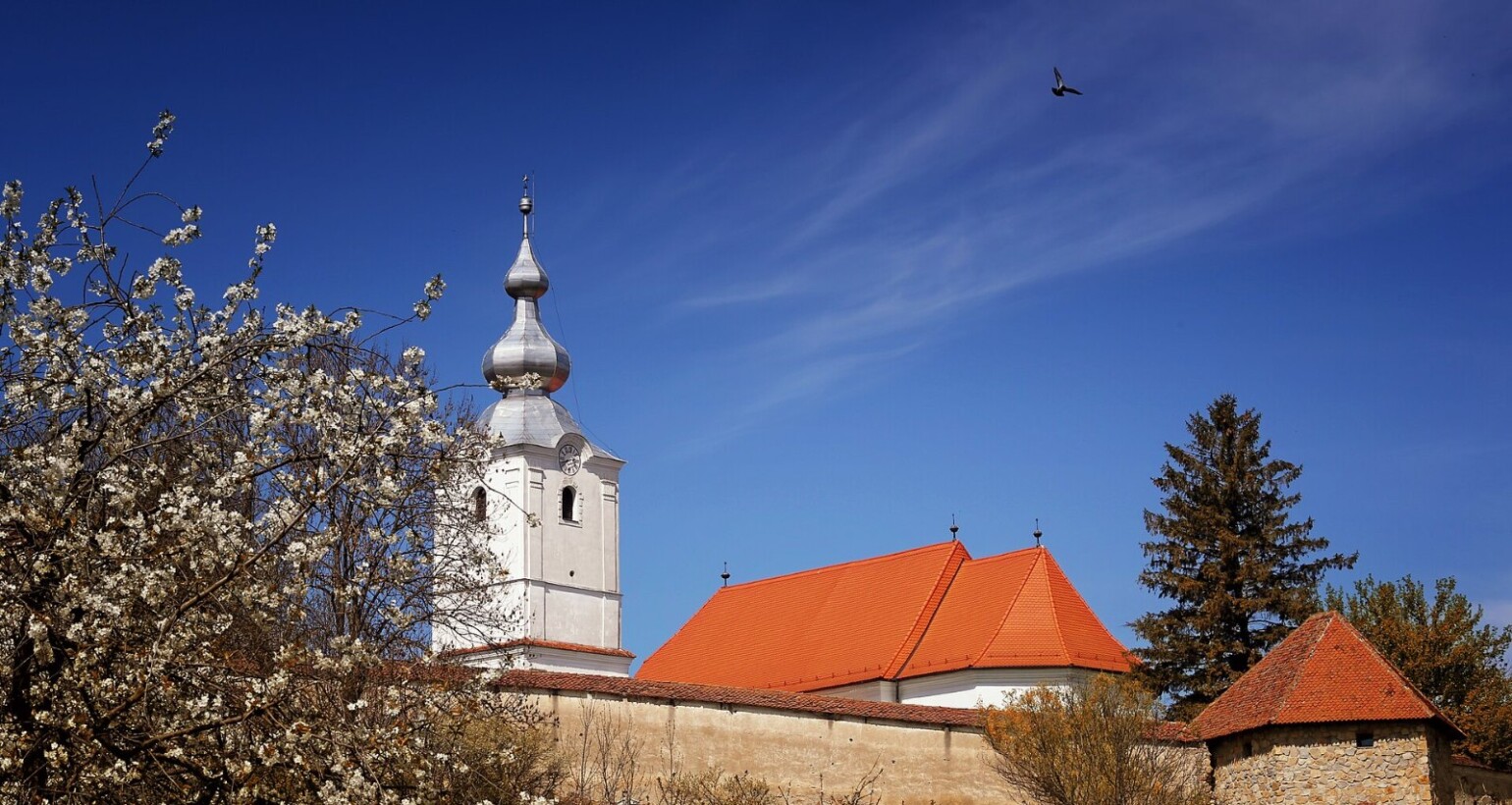
The Reformed fortified church of Ilieni (Illyefalva) is one of the most spectacular church fortresses of Háromszék: the church on the hill above the village is protected by a double wall, five corner bastions and a gate tower. The village itself takes its name from the medieval patron of the church, the prophet Elijah (Illés).
The settlement is recorded as Villa Helye in the papal tithe register of 1332, when its priest Paul paid the tithe. In the early 14th century a small Romanesque church still stood in the middle of the present fortress courtyard; around 1443 a Gothic church dedicated to St Elijah was built for the growing congregation. Ilieni was granted market-town status in 1578 and was governed for nearly three centuries by its own judge and twelve jurors. The 15th-century church was defended by a single-towered wall, which was reinforced at the end of the 16th and the beginning of the 17th century with an outer wall, bastions and towers.
The defences were soon put to the test: in 1612, in the time of Prince Gábor Báthory, the fortress was besieged by the Saxon troops of Brașov led by Michael Weiss, and in 1658 and 1661 it was ravaged by the Tatars. After the earthquake of 1738 the damaged medieval church was demolished in 1782, and by 1786 the present church, a nave-and-chancel building in the vernacular Baroque style, was completed and furnished with a coffered ceiling and painted furniture. The earthquake of 1802 brought down the bell tower, rebuilt between 1816 and 1819; the earthquakes of 1940 and 1977 and artillery fire from the nearby front in 1944 also damaged the walls, and restoration was completed in 1978.
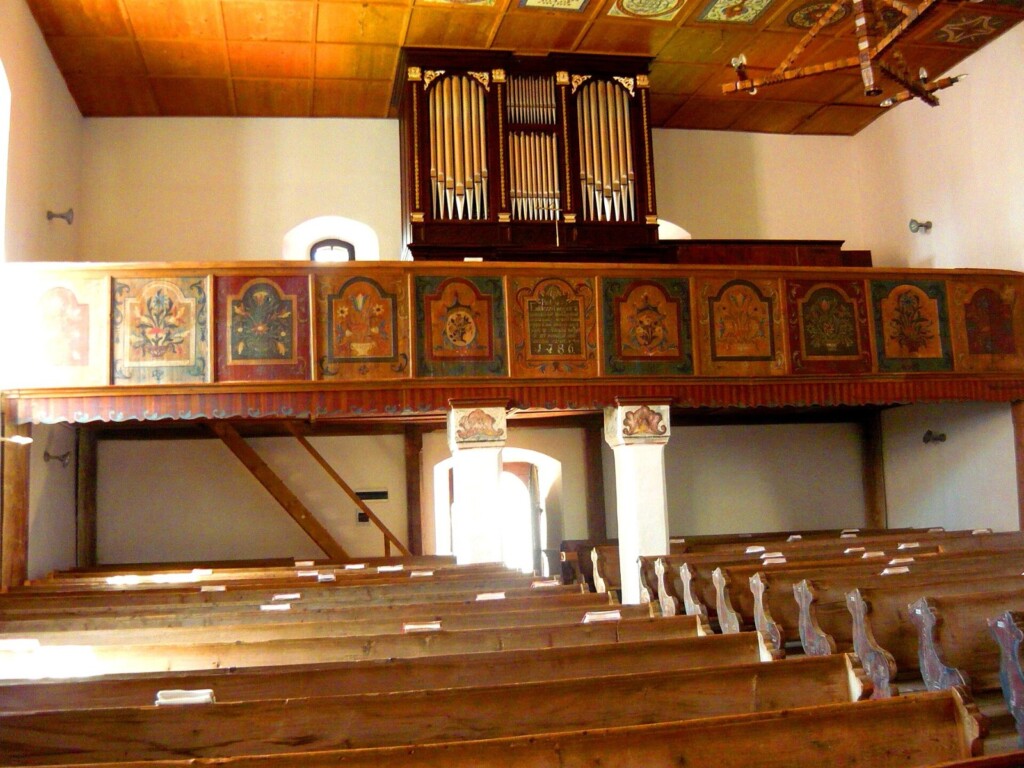
The outer wall forms an irregular hexagon with five bastions – three pentagonal and two square – and its curtains are 5.5–6.5 metres high and 1.6–1.7 metres thick at the base; a wall-walk once ran around the inside, with loopholes and brick-vaulted machicolations opening from it. On the south side of the Renaissance inner wall, the way into the courtyard leads beneath a square, two-storey gate tower. The plain exterior of the church is relieved by arcaded porches over the south and west doors. Inside, the coffers in blue, brown and natural tones are painted with sunflowers, tulips and roses, and the motif of bouquets set in jugs or baskets recurs on the gallery parapets and the sides of the pews; the pulpit canopy and the painted wooden doors were made in 1786.
Visiting: Ilieni lies 8 km south of Sfântu Gheorghe (Sepsiszentgyörgy) on the right bank of the Olt, close to the DN12 main road towards Brașov; the fortified church stands on the edge of the hill in the north-western part of the village, and enquiries about seeing the interior should be made at the pastor's office. The village also has statues of the writers Mór Jókai and Kálmán Mikszáth, both once its members of parliament, and a Mikszáth memorial room in the Séra manor.
Sources: Wikipedia – Reformed church of Illyefalva · Wikipedia – Illyefalva (Ilieni) · Wikipedia – Fortified churches of Székely Land
Photo: Neighbor’s goat / Wikimedia Commons, CC BY-SA 3.0 ro · Photo: Diegisro / Wikimedia Commons, CC BY-SA 3.0 ro
Town:
Ilieni (Illyefalva)