Basilica of Our Lady of the Seven Sorrows – Šaštín (Sasvár)
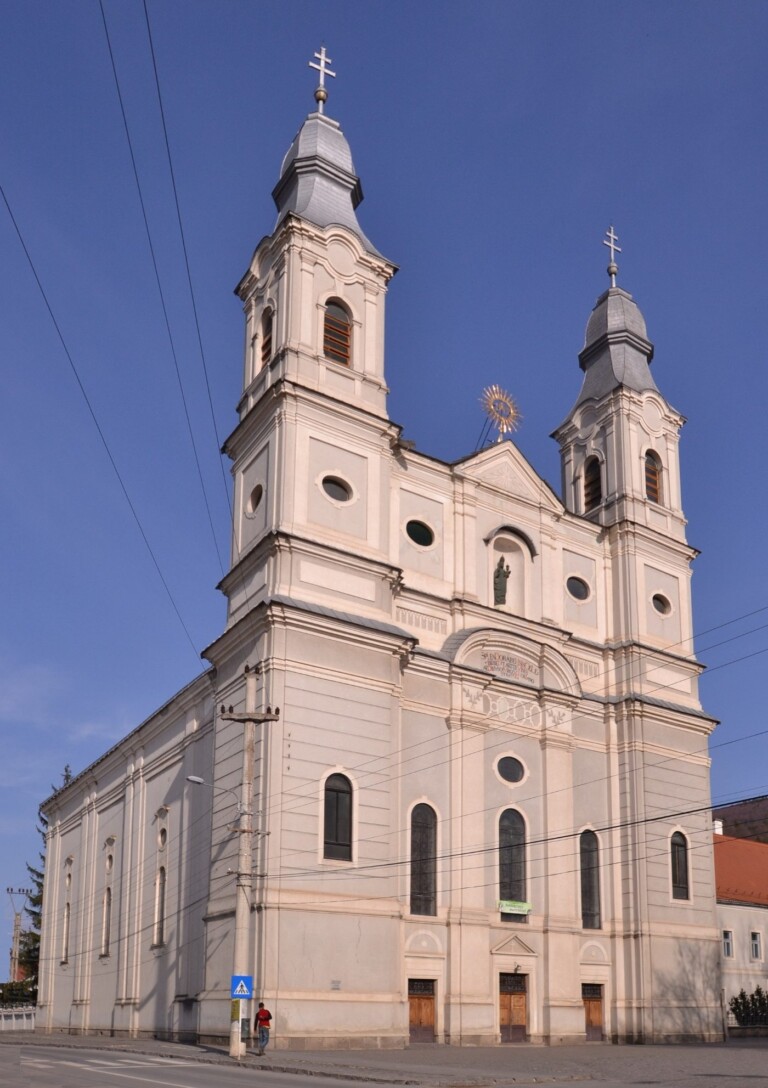
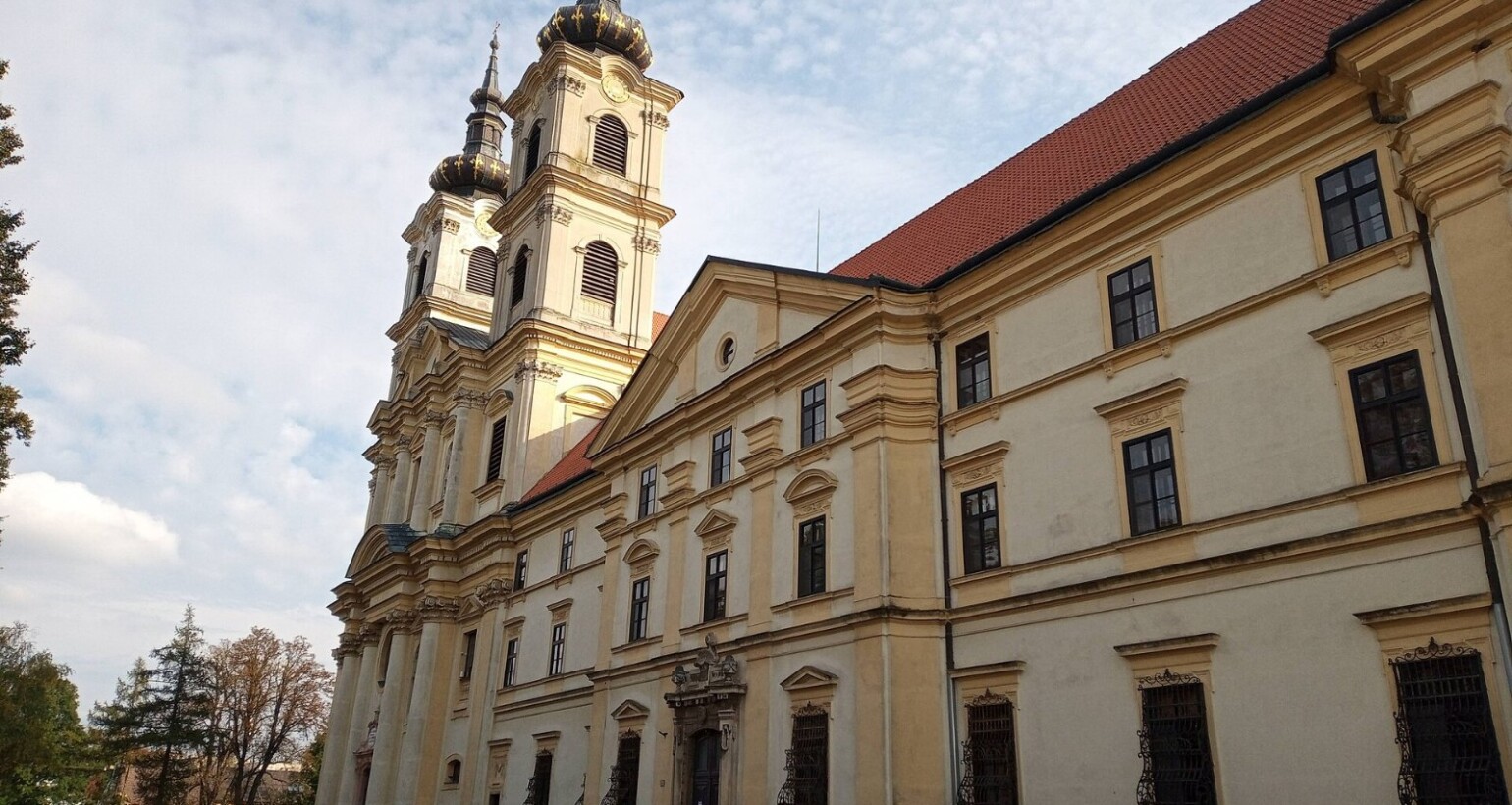
The Basilica of Our Lady of the Seven Sorrows in Šaštín (Sasvár) is a twin-towered Baroque pilgrimage church on the Záhorie plain near the River Morava and the national shrine of Slovakia. The Paulines built it in the 18th century around a Pietà dating from 1564, and it still hosts the largest pilgrimage in Slovakia on the feast of Our Lady of Sorrows, 15 September.
Šaštín – seat of the former Sasvár county, mentioned in 1323, and centre of the border-guard district along the Morava – belonged to the Czobor family from the 15th century. According to tradition, in 1564 Angelika Bakics, wife of Imre Czobor, commissioned the statue of the Sorrowful Virgin in thanksgiving after her marital strife was resolved through her prayer to the Virgin; a triangular chapel was built for the late Gothic wooden statue by an unknown master. After investigating the miraculous healings, Archbishop Imre Esterházy of Esztergom officially recognised the devotion in 1732 and declared Šaštín a place of pilgrimage; in 1733 he entrusted the statue to the Pauline order.
The Paulines began building the pilgrimage church and monastery in 1736, to plans attributed to the Pauline monk-architect Máté Vépi. The church, able to hold some six thousand worshippers, was consecrated in 1762, and on 15 August 1774 the statue was moved to its present place on the red marble high altar. The ceiling frescoes were painted between 1754 and 1757 by Jean Joseph Chamant, a Viennese court painter of Lorraine origin, and the side altarpieces are by Johann Lucas Kracker and Joseph Ignaz Mildorfer. After the dissolution of the Pauline order in 1786 the shrine was served by diocesan priests; the towers were raised in 1862, and in 1864, on the 300th anniversary of the statue, some one hundred thousand pilgrims came to Šaštín under the leadership of Cardinal János Szcitovszky.
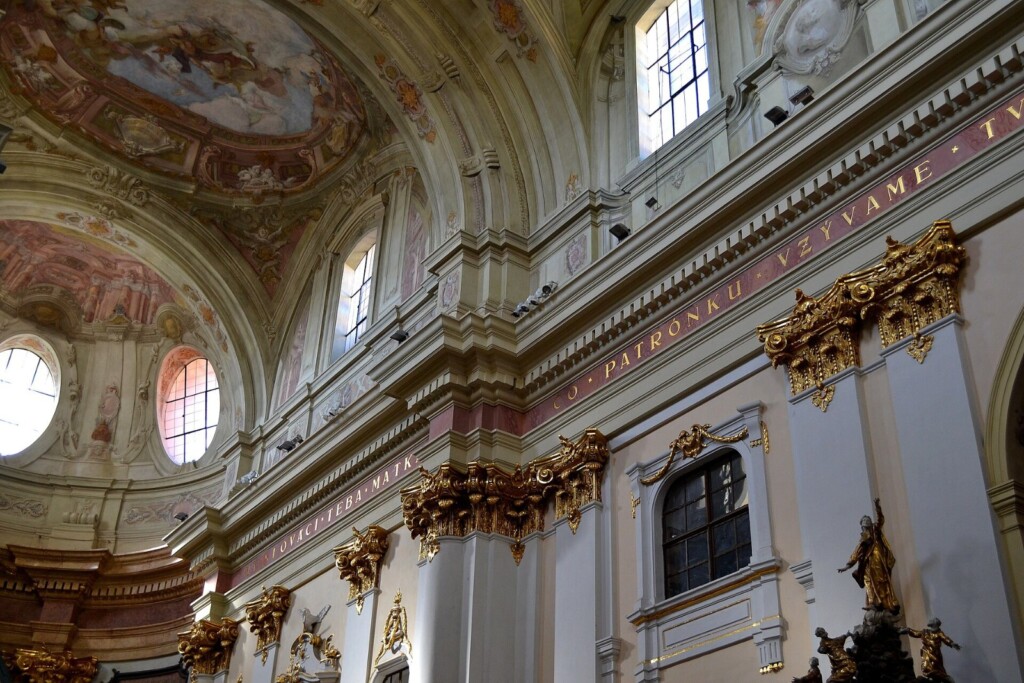
In 1924 the apostolic administrator of Trnava entrusted the shrine to the Salesians, who returned in 1990 after the enforced break of the communist decades. In 1927 Pope Pius XI declared Our Lady of the Seven Sorrows patroness of Slovakia, making Šaštín a national shrine; in 1964, on the 400th anniversary of the statue, Pope Paul VI raised the church to the rank of minor basilica. A high point in the shrine's history was the visit of Pope Francis on 15 September 2021, who celebrated Mass on the square in front of the basilica. An arcaded corridor links the three-winged former monastery to the church; the 13-metre-wide nave is closed by the Baroque shrine altar, where beneath the Pietà the inscription “Mater dolorosa, consolare nos peccatores in te sperantes” can be read.
Pilgrimage feast: 15 September, the feast of Our Lady of the Seven Sorrows – Slovakia's national pilgrimage – and also at Pentecost.
Visiting: Šaštín lies about 65 kilometres from Bratislava and 18 from Senica on the Záhorie plain, reachable by car and by the Kúty–Trnava railway; the basilica stands on Kláštorné námestie in the Šaštín part of the town, its towers visible from afar. The shrine is run by the Salesians and the church is generally open to visitors for prayer during the day; on the great pilgrimage days Mass is celebrated on the square in front of the church, so it is worth arriving early.
Sources: Wikipedia · Hunektár – Hungarian heritage register of Upper Hungary · Wikipedia (Slovak) · Wikipedia (English)
Photo: Qwerty Qwertik / Wikimedia Commons, CC BY-SA 4.0 · Photo: Ľuboš Repta / Wikimedia Commons, CC BY-SA 4.0
Town:
Šaštín-Stráže (Sasvár)