Holy Trinity Church (Minorite Church of Kanta) – Târgu Secuiesc (Kézdivásárhely)
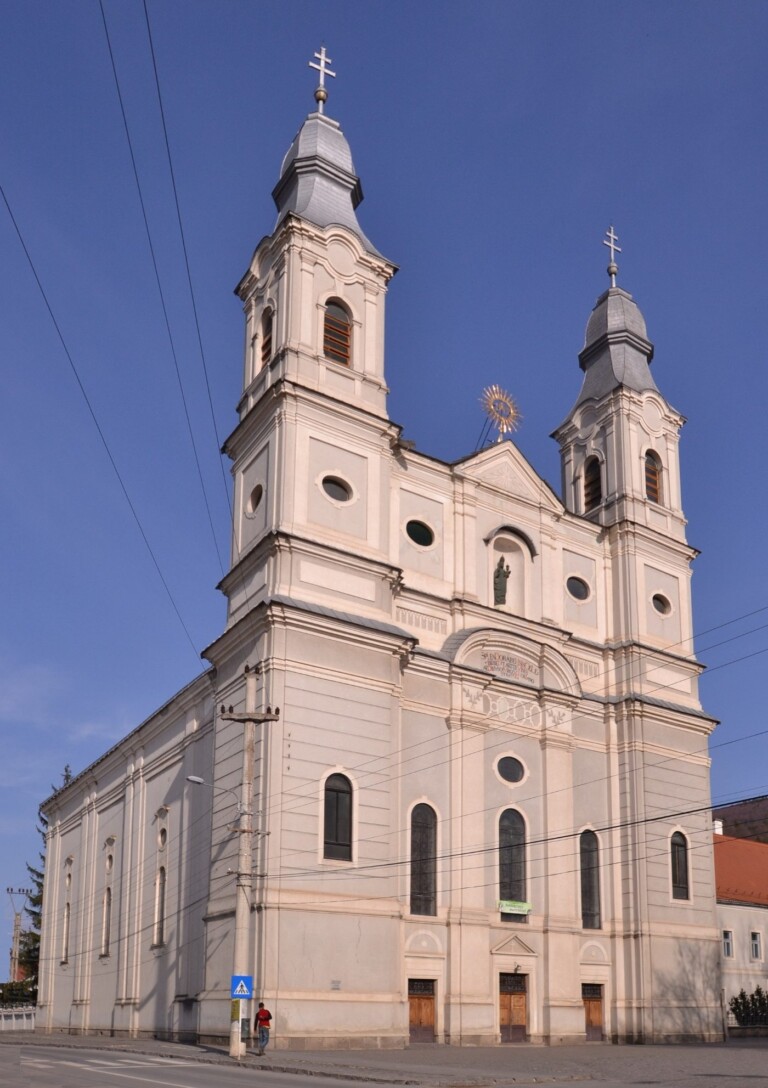
In the Kanta quarter of Târgu Secuiesc (Kézdivásárhely) stands the Baroque church of the Minorites, dedicated to the Holy Trinity, one of the most important Catholic ensembles of Háromszék. The church, the two-storey friary attached to it and the neighbouring school all go back to the foundation of the parish priest Mózes Nagy, who settled the Minorite order here at the end of the 17th century.
Kanta was once an independent, entirely Catholic village on the floodplain of the Torja stream, and it merged with the predominantly Reformed town of Târgu Secuiesc only in 1849. In 1680 Mózes Nagy, a priest born in Estelnic (Esztelnek), founded a school in his native village – the oldest educational institution in today's Covasna County – and asked the Minorite fathers to run it. In 1696 the school moved to Kanta, where Nagy had a school, a friary and a church built; construction of the church began in 1701. The founder, who died in Zagon (Zágon) in 1709, was buried beneath the chancel of the church.
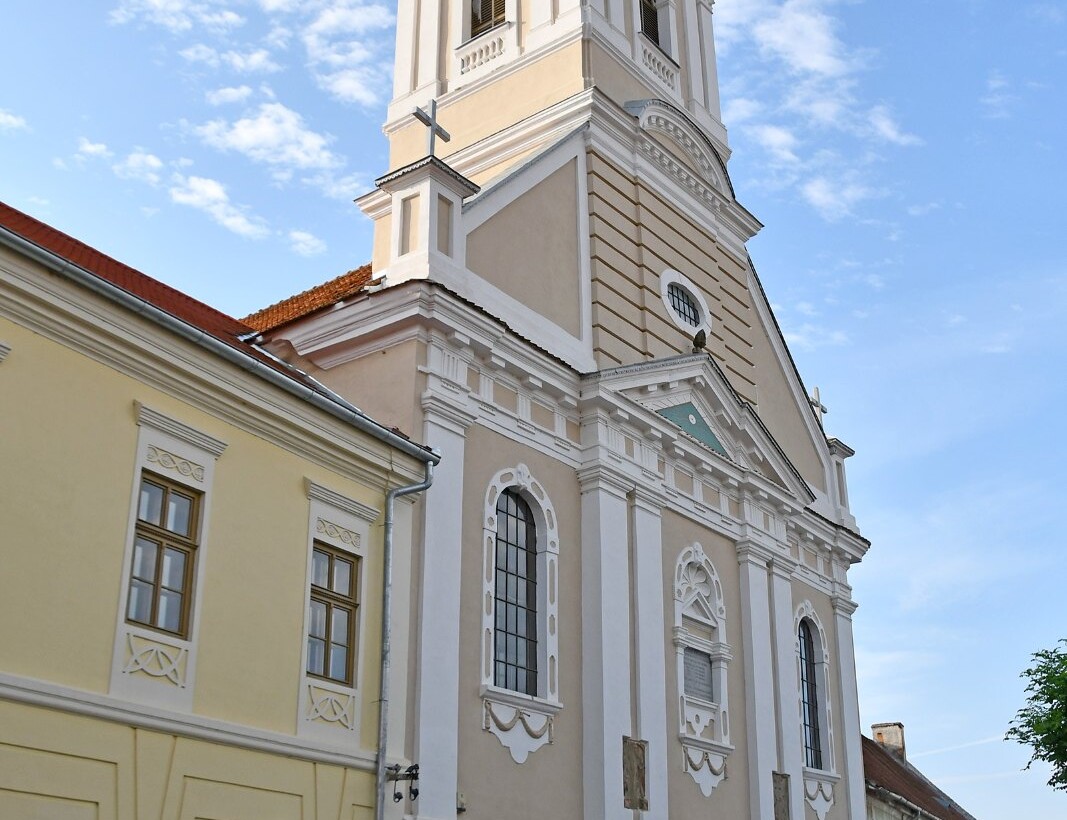
The church seen today is the result of a long building history: its nave was erected between 1779 and 1795, and in 1796 Ignác Batthyány, Bishop of Transylvania, consecrated it to the Holy Trinity. The earthquake of 1802 damaged the tower, which had to be lowered, and in 1823 Illés Mizó had it rebuilt. The foundation stone of the friary, which adjoins the church and encloses a square inner courtyard, was laid in 1722; its rear wings were completed by 1795 and its street wing by 1828. The Minorites were expelled in 1949, and after nationalisation the friary steadily decayed; today it is a listed monument awaiting full restoration.
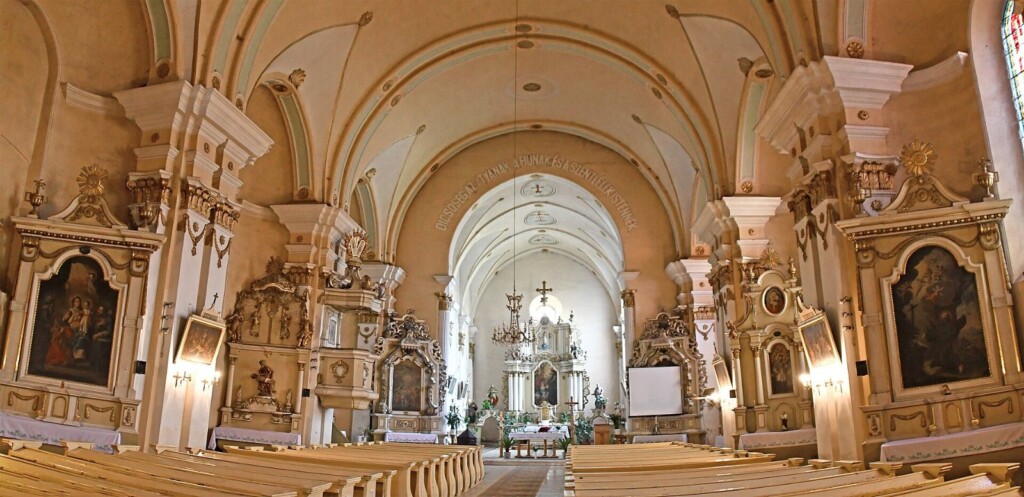
The church is a single-nave Baroque building with a slender tower rising from its façade, which bears a statue of Mary and memorial plaques. The interior is furnished with a Baroque high altar and side altars, among them an altar of St John of Nepomuk – in 1740 the Minorites also built a separate chapel to the saint at the Kanta bridge, demolished in 1974. On the north wall of the chancel the clergy of Háromszék placed a memorial plaque in 1980, on the 300th anniversary of the school's foundation. The imposing neighbouring school building, opened in 1906, today houses the Nagy Mózes Theoretical Lyceum, and a statue of the founder has stood in front of it since 2010.
Pilgrimage feast: the church's feast is held on Trinity Sunday, the Sunday after Pentecost.
Visiting: the church stands a few minutes' walk north of the main square of Târgu Secuiesc, in the Kanta quarter next to the Nagy Mózes Lyceum; the friary can be viewed from outside. A visit is easily combined with the town's unique main square with its courtyard-lanes, the Incze László Guild History Museum and the statue of Áron Gábor. For Mass times, enquire at the Kanta parish office.
Sources: Wikipedia – Kanta · Wikipedia – Minorite monastery of Kézdivásárhely · Wikipedia – Kézdivásárhely (Târgu Secuiesc) · Explore Carpathia – Holy Trinity former Minorite church and monastery
Photo: Pasztilla aka Attila Terbócs / Wikimedia Commons, CC BY-SA 4.0 · Photo: Pasztilla aka Attila Terbócs / Wikimedia Commons, CC BY-SA 4.0
Town:
Târgu Secuiesc (Kézdivásárhely)