Lutheran Church – Hodoš (Őrihodos)
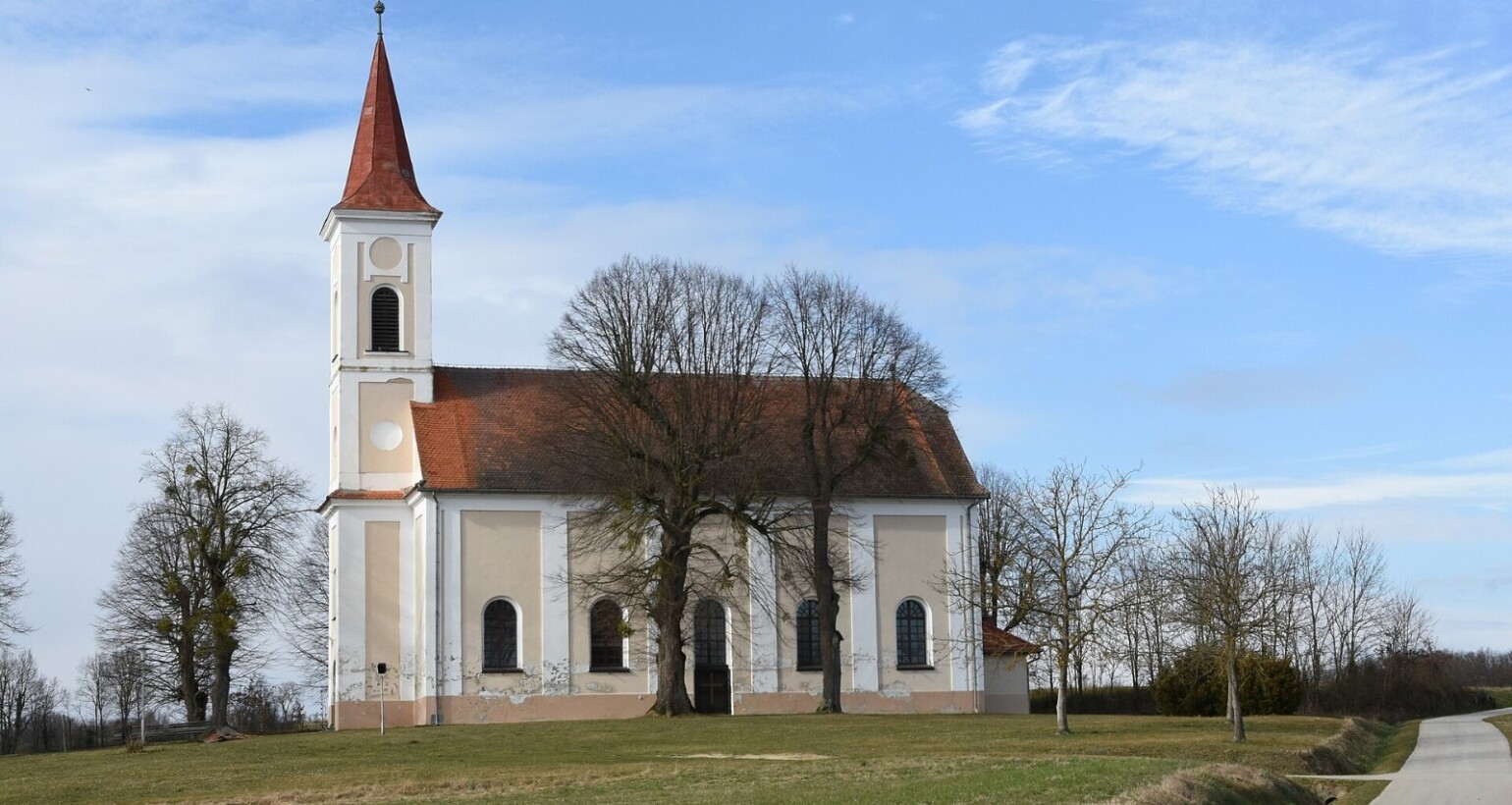
The Lutheran church of Hodoš (Őrihodos) is the most important religious building of the Hungarian community in the Slovenian part of the Őrség. Built between 1840 and 1842 from bricks made by the parishioners themselves, the late Baroque church is home to a congregation that has united Hungarian and Slovene Lutherans since the Edict of Toleration, and whose pastor was János Kardos, a major figure of Prekmurje Slovene literature.
Hodoš is one of the ancient villages of the Őrség, recorded in 1452 as 'Hodos in districtu Ewrseg'. Its medieval church, dedicated to St Andrew, probably dates from the 13th century; the village turned Protestant at the end of the 1500s, first following the Reformed line like the other Őrség villages, then joining the Lutherans around 1678 under the preacher Bálint Perenyei. In 1732 the old church was taken from the Protestants by military force and handed to the Catholics, but it burned down in 1826; its ruins were carted away at the end of the 19th century and its foundations were excavated by archaeologists in 1993.
The Lutheran congregation could reorganise after Joseph II's Edict of Toleration of 1781: it built its first church in 1783, when its school also opened, the second of the revived Lutheran schools in Prekmurje. The decaying first church was replaced in 1823, in the time of pastor Juri Cipot, by a new timber prayer house on brick foundations. Work on the present, third church began in 1840: the parishioners made the bricks themselves, donated the timber and did the hauling and manual work. The building was finished in 1842 and consecrated in 1843.
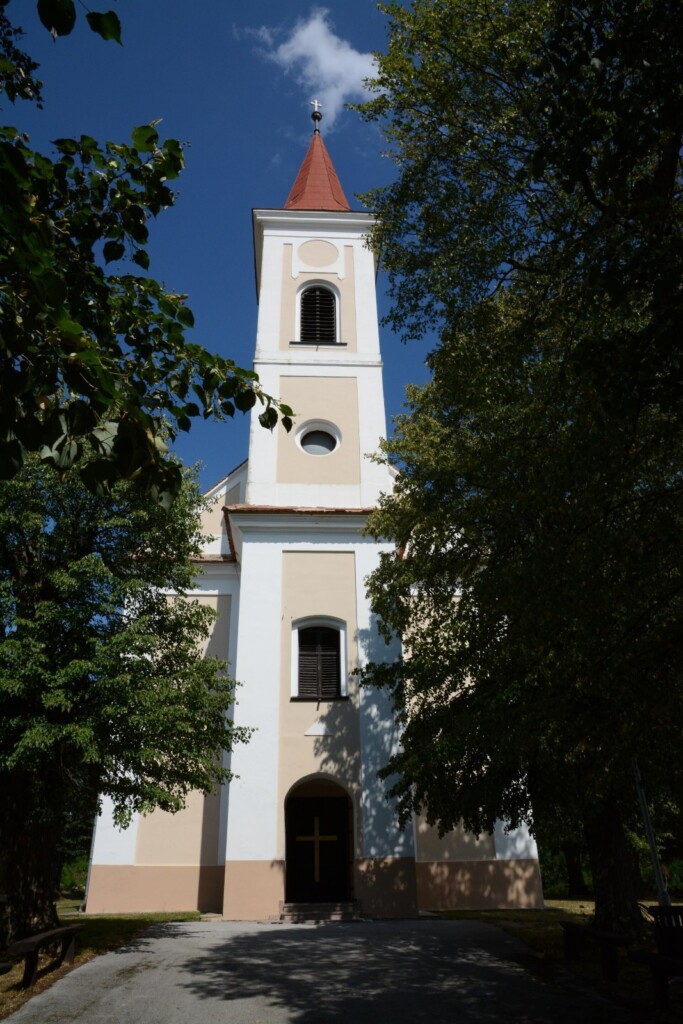
The church is a late Baroque single-nave building, with its tower on the west and sacristy on the east; the façade is articulated by pilasters and a cornice, and a row of lime trees surrounds it. The interior was renewed in 1964 and 1992; in 1985, on the 200th anniversary of the congregation, it was blessed again after a complete exterior and interior restoration, and in 1993 the church's 150th jubilee was celebrated. The congregation built a school in 1845 and, in 1875, a new parsonage from eighty thousand home-made bricks; a modern parish hall followed in 1976, whose consecration also marked the 175th anniversary of János Kardos's birth.
János Kardos (1801–1875) wrote and translated most of his works as pastor of Hodoš: although his congregation was mostly Hungarian, he compiled a hymnal in Prekmurje Slovene that is still used with minor changes, and he also edited school textbooks. His tomb stands in the village's old cemetery. The congregation remains bilingual today, uniting the Hungarian Lutherans of Hodoš and Krplivnik with the Slovene Lutherans of Šalovci, Budinci and Dolenci.
Visiting: Hodoš lies directly on the Slovenian–Hungarian border, just west of Bajánsenye; from Hungary it is reached on road 7416 from Lenti, and it has a railway station on the Zalaegerszeg–Murska Sobota line. The church stands on the edge of the village in open ground among lime trees. It is worth visiting János Kardos's grave in the old cemetery as well, and a nature trail runs around the nearby Hodoš lake.
Sources: Wikipedia – Őrihodos (Hodoš) · Wikipedia (Slovenian) – Evangeličanska cerkev, Hodoš · Wikipedia – János Kardos
Photo: Iswoar / Wikimedia Commons, CC BY-SA 4.0 · Photo: Zeitblick / Wikimedia Commons, CC BY-SA 3.0
Town:
Hodoš (Őrihodos)