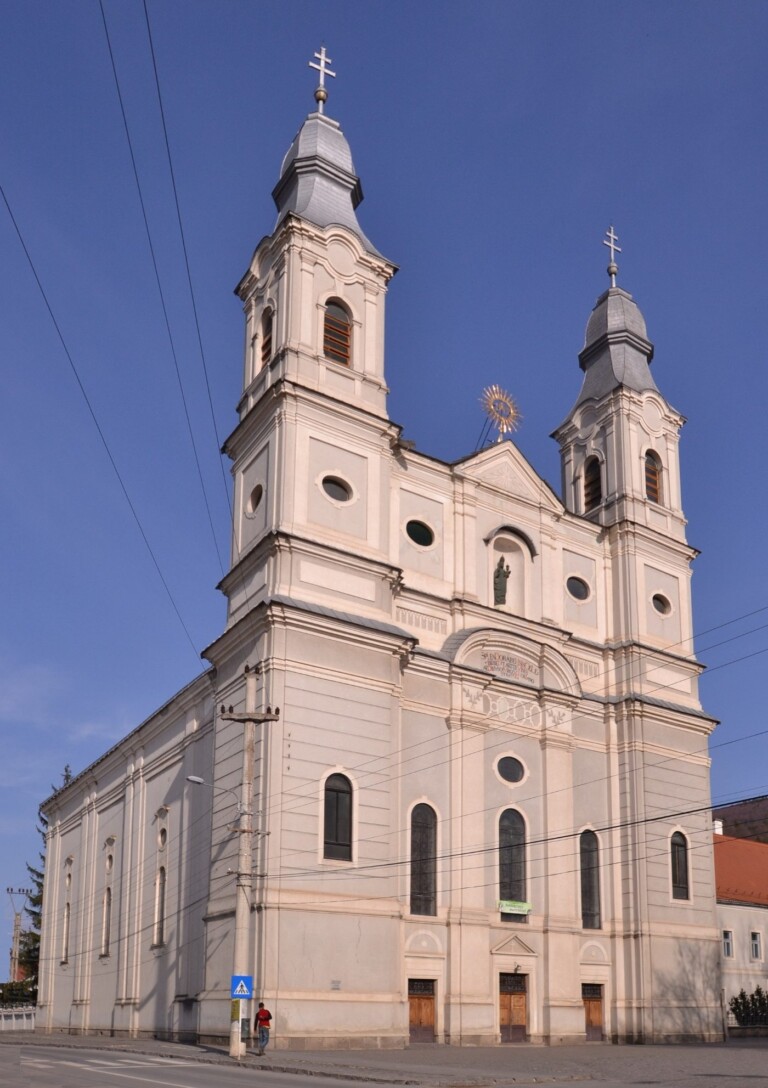
Reformed Church on Farkas Street – Cluj-Napoca (Kolozsvár)
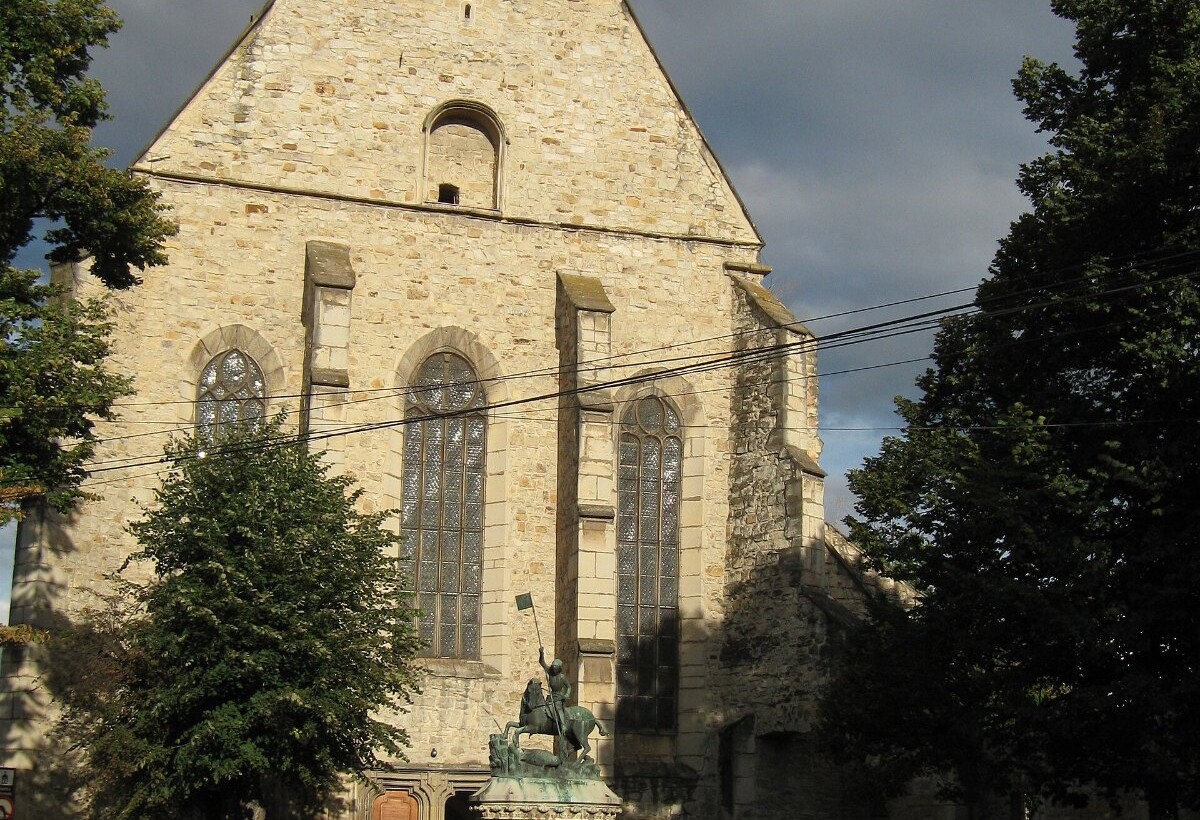
The Reformed Church on Farkas Street is the most characteristic monument of Transylvanian Hungarian Gothic architecture: its massive buttresses and austere simplicity have made it one of the symbols of Cluj-Napoca. It is widely regarded as the principal church of the Transylvanian Reformed Church, since bishops were traditionally installed here.
The first document concerning its construction dates from 9 September 1486, when, by order of King Matthias Corvinus, the town granted the Franciscan friars a plot beside the Tailors' Bastion. The king bore the costs of the work, and after his death Vladislaus II also supported the building; the church, dedicated to the Blessed Virgin Mary, was complete by 1503. As there was little room inside the walls, it was built where the southern and eastern town walls met, which is why it still stands in the middle of the street.
After the spread of the Reformation the Franciscans had to leave the town in 1556, and later Stephen Báthory gave the building to the Jesuits. In 1603 an angry crowd stormed the church and smashed its furnishings, and part of the vault collapsed. In 1622 Gabriel Bethlen gave the ruined building to the Reformed community; its reconstruction began in 1638 with the support of Prince George I Rákóczi, when the new vault and all the furnishings were made. After the fire of 1798 it had to be restored once again.
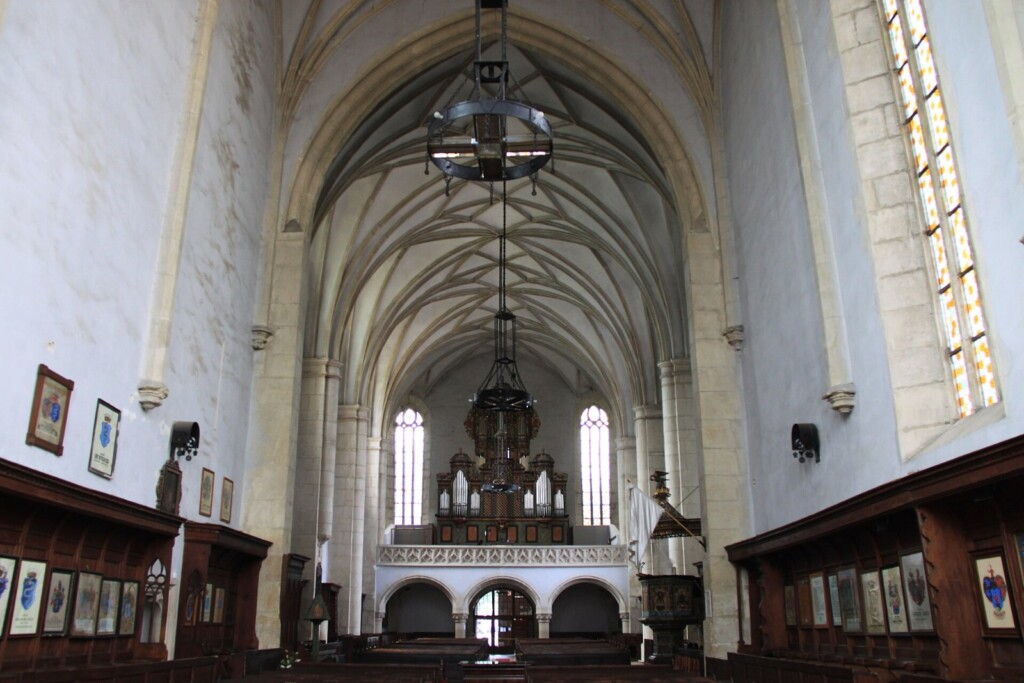
The single-nave church without a transept is 60 metres long in total, and its vault rises to 19 metres. The furnishings date from the reconstruction: the Renaissance high-backed pews of 1646 were carved by joiners from Bistrița and Sighișoara, and the stone pulpit on its hexagonal base, also completed in 1646, is one of the first works of the Transylvanian floral Renaissance. The pews and walls are decorated with 117 coats of arms and funerary memorial panels from the 17th to the 20th centuries.
Prince Michael I Apafi of Transylvania and his wife Anna Bornemisza, together with their son Michael II Apafi and his wife Kata Bethlen, are buried in the church. Their remains were brought here from the church of Mălâncrav (Almakerék) in the early 1940s, and their tomb was designed by Károly Kós. Thanks to its excellent acoustics, the church has regularly hosted organ concerts since the 1960s.
Visiting: the church stands in the centre of Cluj-Napoca, on Farkas Street (Strada Mihail Kogălniceanu), next to the Reformed College. In front of it is a copy of the statue of St George slaying the dragon, made in 1373 by the brothers Martin and George of Kolozsvár, the original of which stands at Prague Castle. It is a few minutes' walk from the main square.
Sources: Wikipedia · Hungarian Lexicon of Romania – Monuments
Photo: Cluj Napoca / Wikimedia Commons, CC BY 2.0 · Photo: Cristian Bortes from Cluj-Napoca, Romania / Wikimedia Commons, CC BY 2.0
Town:
Cluj-Napoca (Kolozsvár)