Reformed Church – Tysobyken (Tiszabökény)
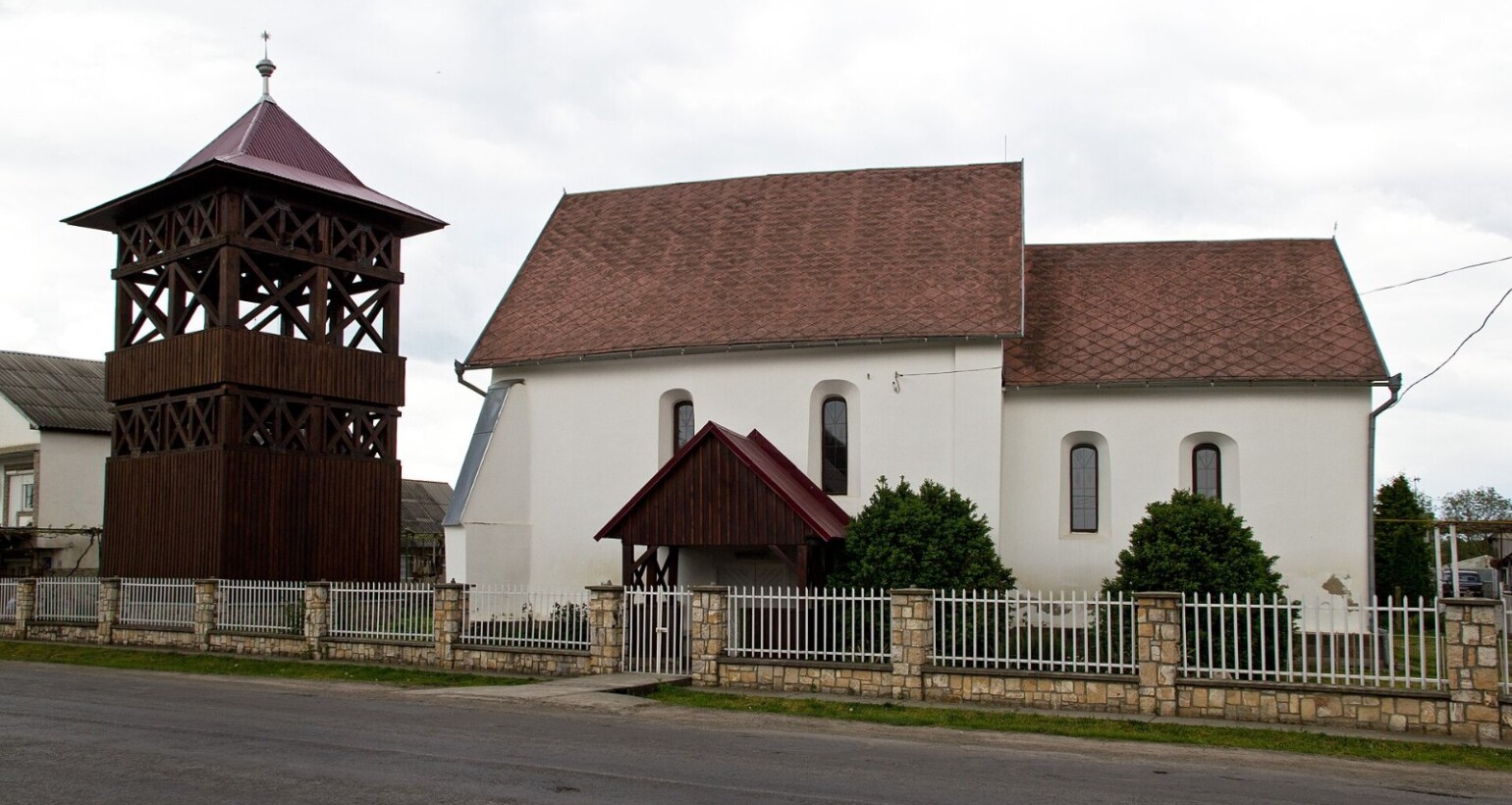
The towerless Reformed church of Tiszabökény (Tysobyken) is one of the oldest sacred buildings of the Transcarpathian Tisza plain: it was raised in the late 13th or early 14th century, and although floods and wars forced several rebuildings, its medieval walls, pointed-arched west portal and narrow windows survive. Its special features are the 18th-century coffered wooden ceiling painted with flowers and the timber belfry standing in front of the church.
The village was the first of the lesser-noble settlements of Ugocsa county to appear in a charter, in 1230, as "Buken", when King Andrew II granted land here to his retainer Farkas. The church was built as a Roman Catholic one and, according to tradition, not by professional masters but by the serfs of the village; it bears no building date. Since the Reformation it has served the Reformed congregation. In the 15th century the village belonged to the Bökényi and later the Bay families; it was devastated by Tatars in 1717 and decimated by cholera in the 19th century.
The single-nave building has a straight-ended chancel that is lower and narrower than the nave. The west gable front is strengthened by buttresses and holds the stone-framed, pointed-arched portal; on the south side are splayed, round-headed windows and a later entrance sheltered by a wooden porch. After the ravages of floods the church was restored to its present form in the first half of the 18th century, when the coffered, flower-painted wooden ceiling was made; the gallery was added in 1876. The tomb of József Újhelyi is set into the north wall. The roof was shingled in 1865 and tiled in 1880, and the harmonium was bought from the congregation's donations in 1881.
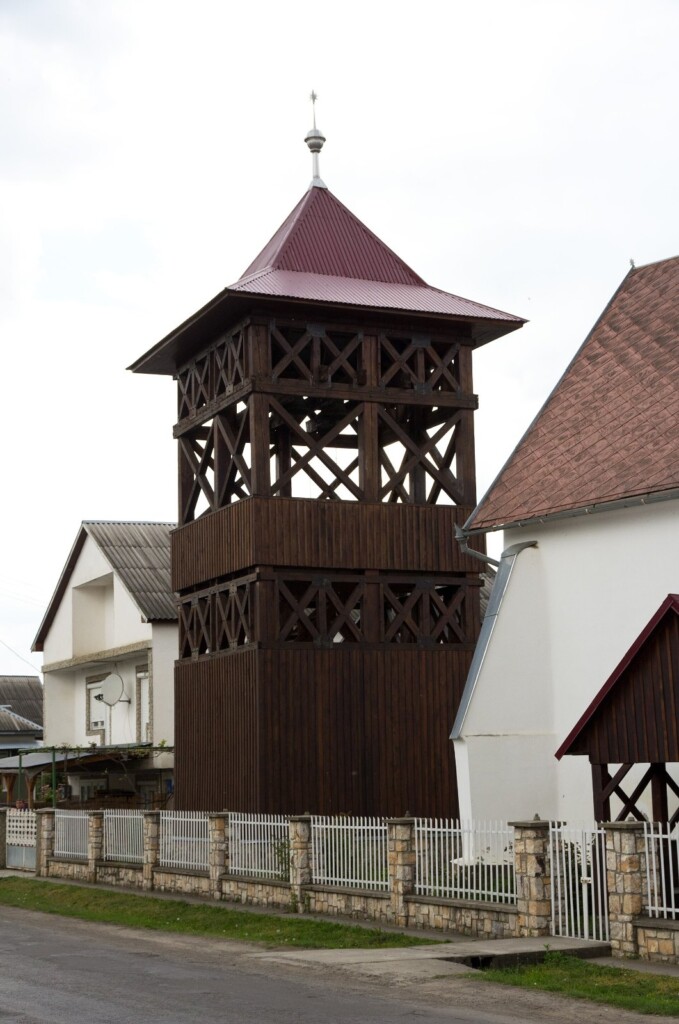
The timber belfry north-east of the church is a galleried, shingle-roofed structure typical of the Transcarpathian and Szatmár countryside. Its predecessor was probably raised in the period when Protestants were not allowed to build towers onto their churches; the present belfry was rebuilt by the congregation and dedicated with a thanksgiving service in July 2011. Of its two bells the larger weighs 200 kg and the smaller 104 kg; the small bell was cast in 1795. The great Tisza flood of 1998 damaged the church, which has since been repaired. The village also has Greek Catholic, Orthodox and Roman Catholic churches, and the Fogarassy manor house in the Tiszafarkasfalva part of the village houses the Tisza Plain Museum, the open-air ethnographic collection of the Hungarians of Transcarpathia.
Visiting: Tysobyken lies on the left bank of the Tisza, right on the Hungarian border, next to Vylok (Tiszaújlak) and about 20 km from Vynohradiv; it is a few minutes' drive from the Tiszabecs border crossing. The church stands in the central part of the village and can be seen outside service times by arrangement with the congregation. It is worth combining with the Tisza Plain Museum and the Turul monument at Vylok. Before travelling, check the current travel advice of your foreign ministry.
Sources: Wikipedia – Tiszabökény · Wikipedia (Ukrainian) – Тисобикень · Wikimedia Commons – Reformed Church in Tysobyken
Photo: Dmytro Petishkin / Wikimedia Commons, CC BY 4.0 · Photo: Dmytro Petishkin / Wikimedia Commons, CC BY 4.0
Town:
Tysobyken (Tiszabökény)