Holy Well – Doroslovo (Doroszló)
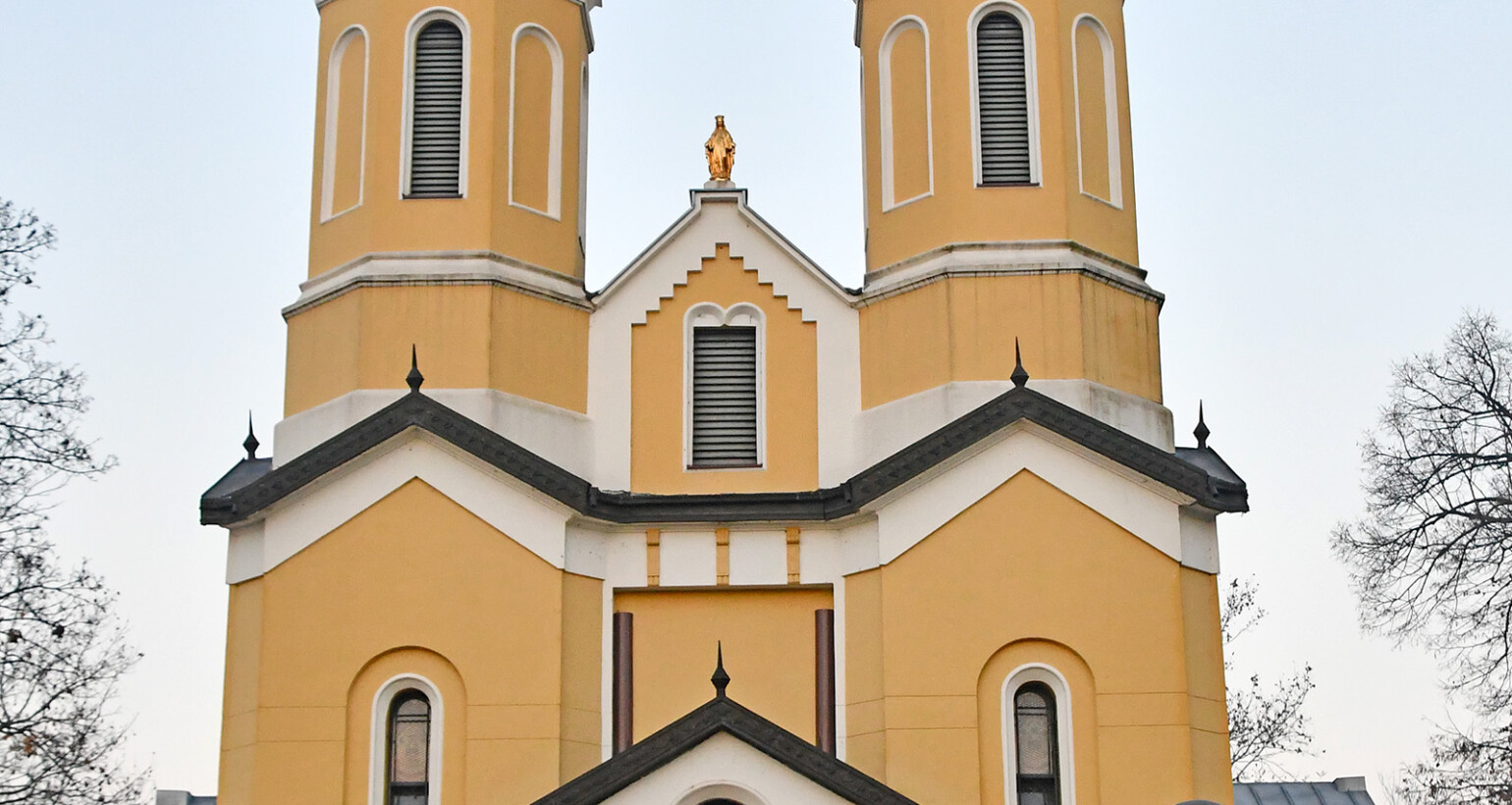
The Holy Well of Doroslovo (Doroszló) is the central pilgrimage site of the Diocese of Subotica and the best-known shrine of the Hungarians of Vojvodina. On the feast of the Nativity of Mary tens of thousands make the pilgrimage to the spring, the statue of Mary and the small shrine church.
In the Middle Ages the place was called Bajkút: between 1173 and 1183 King Béla III settled Premonstratensian canons here and had a monastery built for them.
The present-day pilgrimages date back to 1792. According to the Historia Domus kept from 1807, in that year János Zablóczki, a blind man from Bogojevo (Gombos), regained his sight after washing in the water of the well; the chronicle records more than eighty miraculous healings. Pilgrimages then grew into mass events, and the site became an official pilgrimage place of the Archdiocese of Kalocsa-Bács.
The small shrine church was created by rebuilding and enlarging, in 1874–1875, a brick chapel built in 1823–1825. The statue of Our Lady of Hungary by the spring was completed in 1861, and the ornate well-house with its washing basin in 1909. The Diocese of Subotica declared it an official shrine in 1968, and an open-air altar was built in 1973.
Pilgrimage feast: The main pilgrimage is on the Nativity of Mary, 8 September – pilgrims arrive the day before. Every year 15–20 thousand people come, and during the two-day feast Masses are celebrated in Hungarian, Croatian, German and Slovak. Larger pilgrimages are also held at Pentecost and on the Assumption (15 August).
Visiting: The Holy Well lies on the southern edge of Doroslovo, between the Sombor–Odžaci road and the Danube–Tisa–Danube canal.
Sources: Wikipedia · Magyar Kurír
Photo: Pasztilla aka Attila Terbócs / Wikimedia Commons, CC BY-SA 4.0
Town:
Doroslovo (Doroszló)