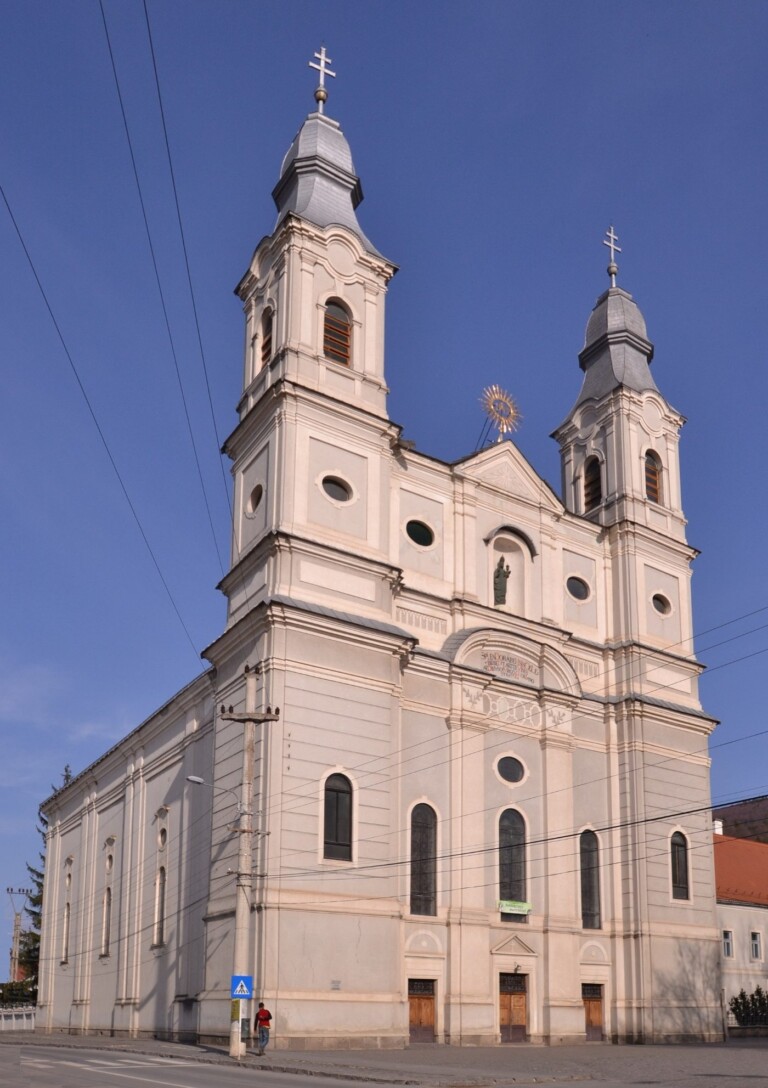
Reformed Fortress Church – Aiud (Nagyenyed)
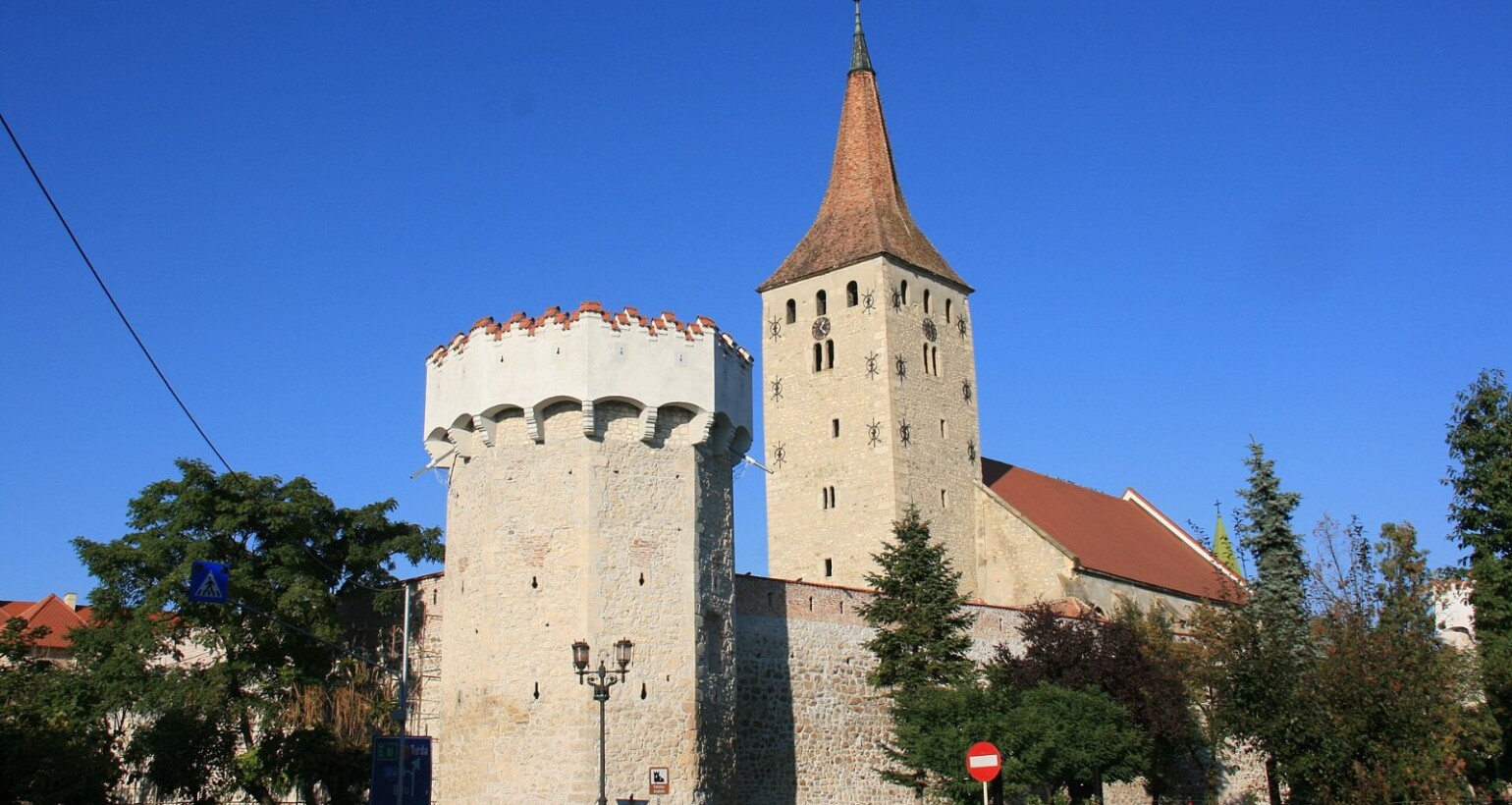
The Reformed fortress church of Aiud (Nagyenyed) stands in the heart of the town of the Bethlen Gábor College, embraced by the medieval town walls, and is one of the most important memorial sites of Transylvanian Calvinism: here the Lutheran and Calvinist churches separated in 1564, and here the first bishop of the Hungarian Reformed Church of Transylvania was elected. Its 61-metre tower is the oldest structure in the town.
The first church of Aiud was dedicated to St Giles – both the Romanian and the Hungarian name of the town derive from his name. The west tower of the present church was originally built as the citadel's watchtower between 1222 and 1239; the citadel is first mentioned in a privilege issued by King Ladislaus IV on 7 November 1293. A late Gothic church replaced the Romanesque church of around 1200 in the 15th century, and its nave was joined to the tower in 1480. The citadel, an irregular pentagon with a perimeter of 350 metres, was strengthened by bastions defended by the guilds.
The town joined the Reformation in 1551, when its first minister signed the Lutheran confession. At the synod held in April 1564 under the presidency of Giorgio Biandrata, the prince's envoy, the Lutheran and Calvinist currents in Transylvania parted ways, and Ferenc Dávid was elected bishop. In 1599 the general synod ordered that the winter synod should always be held at Aiud, and in 1682 the Supreme Consistory of the Transylvanian Reformed Church, forerunner of today's governing board, was set up within these walls. Between 1780 and 1849 the town was the episcopal seat of the Transylvanian Reformed Church District.
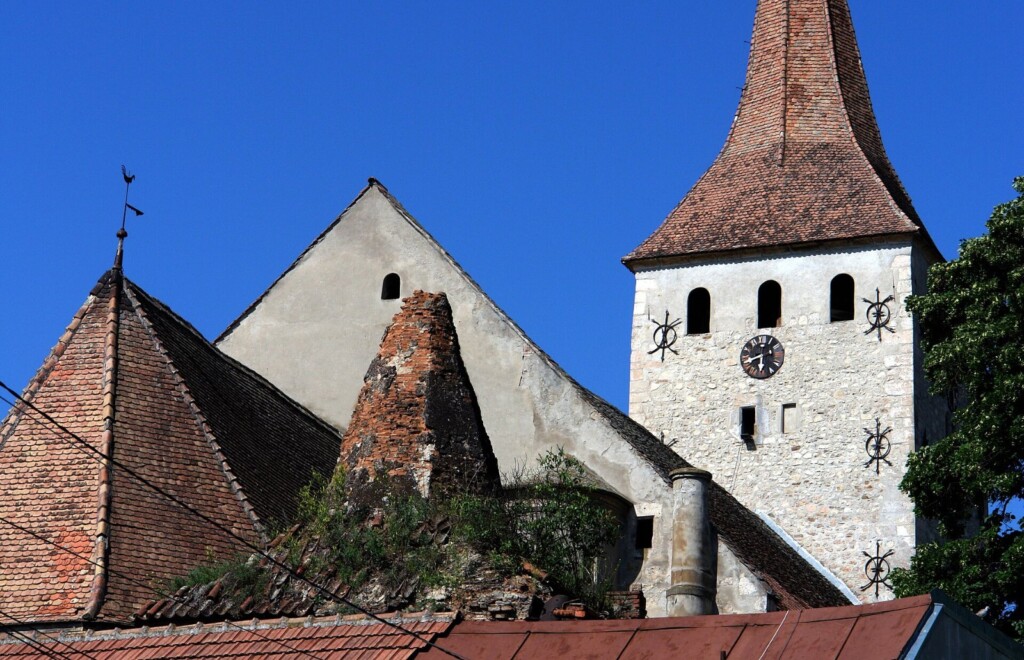
The church was destroyed five times together with the town: by the Mongols in 1241–42, by the troops of Michael the Brave in 1600, by the Ottomans in 1658, by the forces of the imperial general Rabutin on 16 March 1704 – when the Gothic vault of the nave collapsed – and finally during the massacre of January 1849. After the fire of 1704 the church remained exclusively Reformed, and the Saxon Lutherans built their own church within the citadel. The present three-aisled late Baroque interior took shape during the rebuilding of 1794–1804, when the gallery was added; the organ followed in 1811. Only the chancel and the outer walls survive from the original building. A spiral staircase with Gothic doorways leads up the eight-storey tower. The church was completely restored between 2018 and 2023 and ceremonially reopened on 27 October 2024.
Visiting: the fortress church stands in the centre of Aiud, in the citadel courtyard beside the main square, a few steps from the Bethlen Gábor College, founded in 1622 and based here since 1662. The town lies on the main road and railway between Alba Iulia and Cluj-Napoca. The citadel courtyard is freely accessible; to see the church interior, enquire at the Reformed parish office. The tower and the walls can be walked around from inside the citadel.
Sources: Wikipedia · Wikipedia (English) · Wikipedia (Romanian)
Photo: Zinneke / Wikimedia Commons, CC BY-SA 3.0 · Photo: Thaler Tamas / Wikimedia Commons, CC BY-SA 3.0 ro
Town:
Aiud (Nagyenyed)