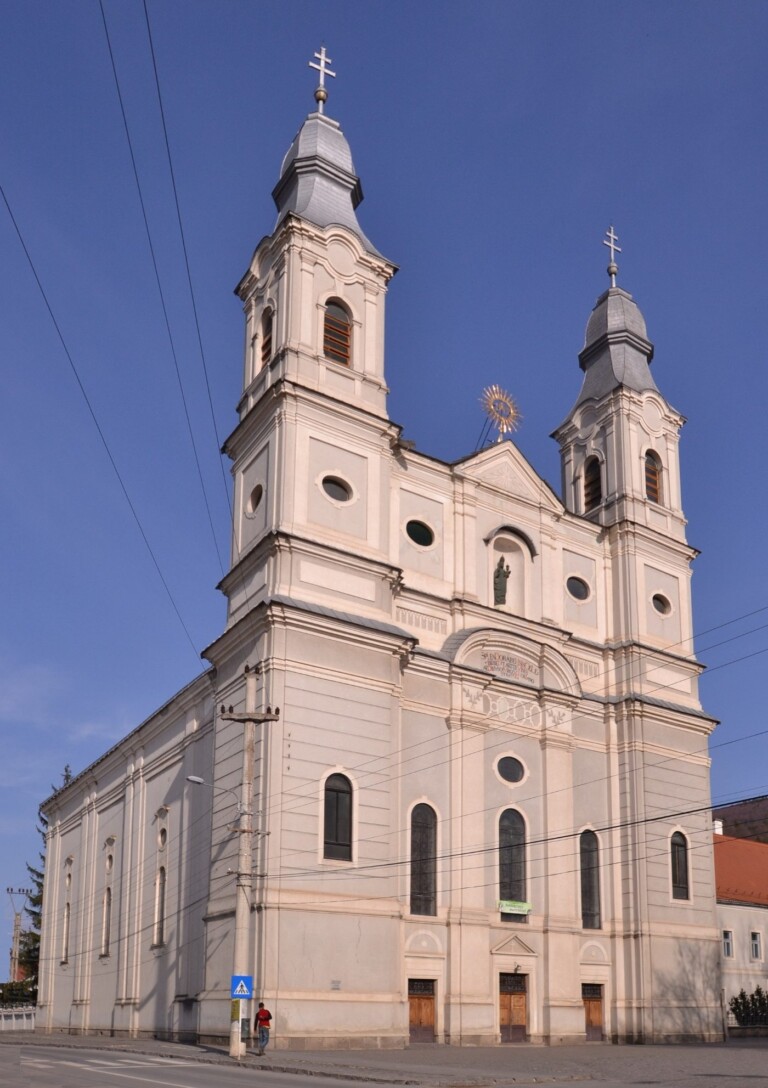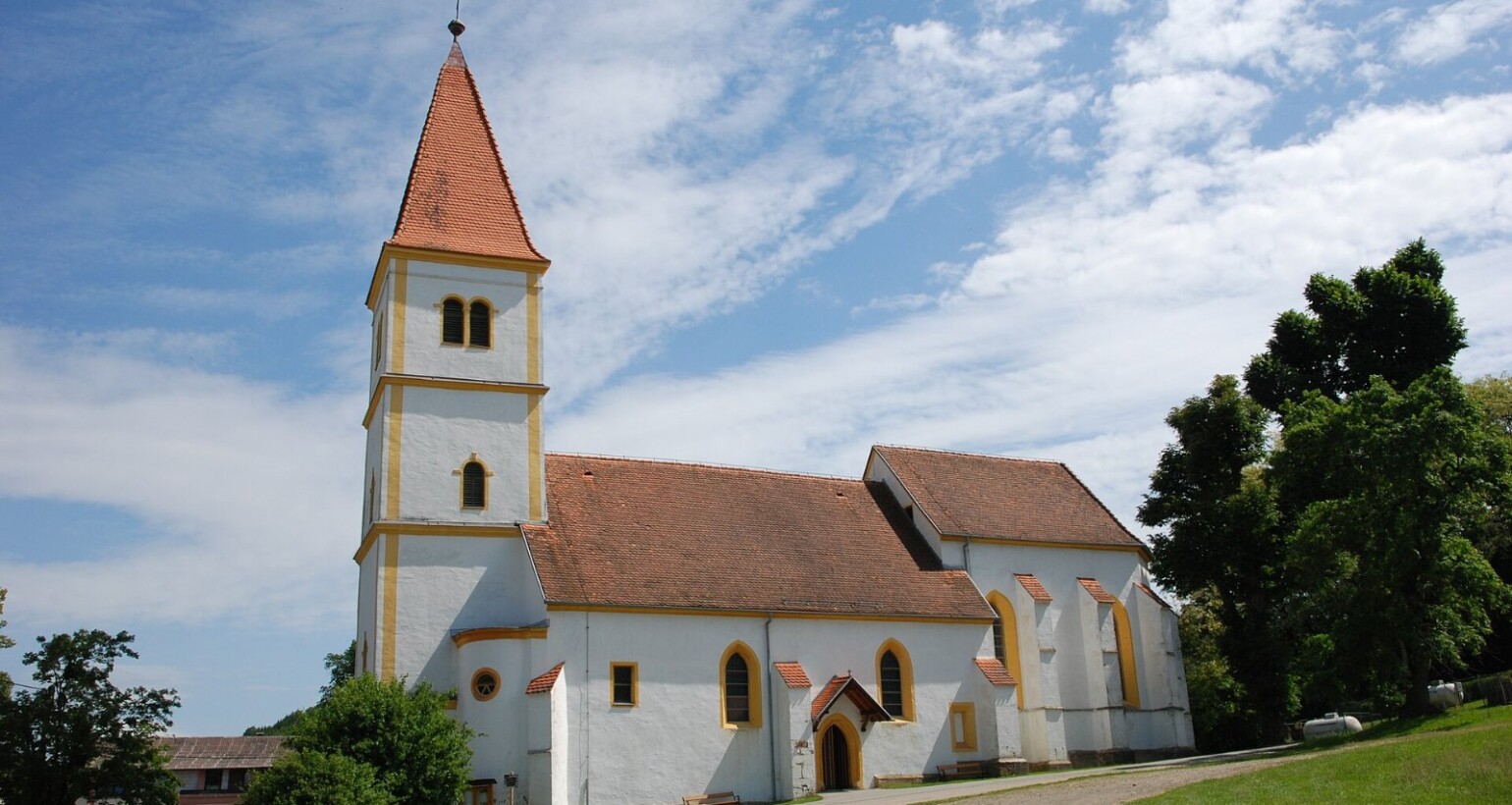
Church of the Assumption – Grad (Felsőlendva)
The Church of the Assumption in Grad (Felsőlendva) is one of the oldest church sites in Prekmurje: its parish is recorded as early as the beginning of the 13th century, and Romanesque, Gothic, Baroque and 20th-century layers meet within its walls. Standing at the foot of Slovenia's largest castle, the church is also a place of pilgrimage, with a statue of the Virgin carved around 1510 on its high altar.
The castle of Grad – formerly Gornja Lendava, Felsőlendva in Hungarian – appears in the sources in 1208, and by tradition a church of the Virgin already stood here then, as the centre of an extensive early parish. The oldest walls of the nave are dated to around 1275: the church was probably destroyed by the soldiers of King Ottokar II of Bohemia in the 1270s and its rebuilding may have begun then. In the 14th–15th centuries a spacious Gothic chancel reinforced with buttresses was added; the keystone of its vault bears the double-headed eagle of the Széchy family, the patrons, whose burial vault lies beneath the chancel and was rediscovered in 1980 during heating works.
The Széchys sided with the Reformation in the 16th century, so that between 1592 and 1672 the parish of Grad was entirely Lutheran; the Catholics reorganised their parish only in 1660. The flat ceiling of the nave was replaced by a vault in 1660, a wooden tower was built in 1690, and in 1729 the present 35-metre bell tower was completed. The church was thoroughly renewed in 1781.
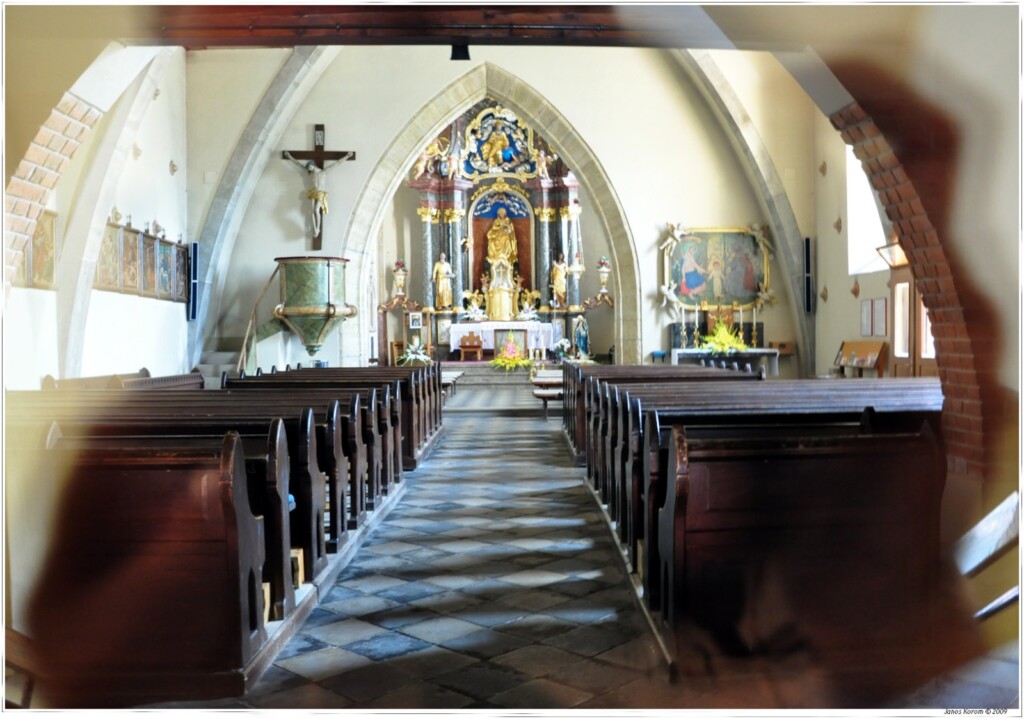
The Baroque high altar was made in 1778 in the workshop of the master Klein of Radkersburg (Regede); at its centre sits the enthroned Madonna and Child carved around 1510, a remnant of a late Gothic winged altarpiece whose painted and carved wings are now in the Hungarian National Gallery in Budapest. Gilded statues of St John the Baptist and St Joseph stand on either side. In the 20th century the interior was renewed to designs by Jože Plečnik: a new vault of ceramic tiles laid on timber supports, rising to the roof structure, was built over the nave, the floor level was raised, and a new gallery and wall lamps of local ceramics were made; the side altar was designed by Tone Bitenc after Plečnik's idea, and its painting of the Holy Family is by Stane Kregar.
Miklós Küzmics, a leading figure of 18th-century Catholic literature in the Slovene language, was baptised in this church, and the Croatian poet Šimun Čergić served here as parish priest. The village's other great sight is Grad Castle, remodelled in the 17th–18th centuries into a pentagonal Baroque residence and the largest castle building in Slovenia.
Pilgrimage feast: the church's titular feast is the Assumption of the Virgin Mary, 15 August.
Visiting: Grad lies about 20 km north-west of Murska Sobota, in the heart of the Goričko Nature Park; the church stands on the hill above the village next to the castle, and the two can be walked between in a few minutes. The castle now houses a museum and the park's visitor centre, so the church combines well with an excursion in the Goričko hills.
Sources: Wikipedia – Felsőlendva (Grad) · Wikipedia (Slovenian) – Cerkev Marijinega vnebovzetja, Grad · Wikipedia – Miklós Küzmics
Photo: Zeitblick / Wikimedia Commons, CC BY-SA 3.0 · Photo: János Korom Dr. from Wien, Austria / Wikimedia Commons, CC BY-SA 2.0
Town:
Grad (Felsőlendva)