Black Church – Brașov (Brassó)
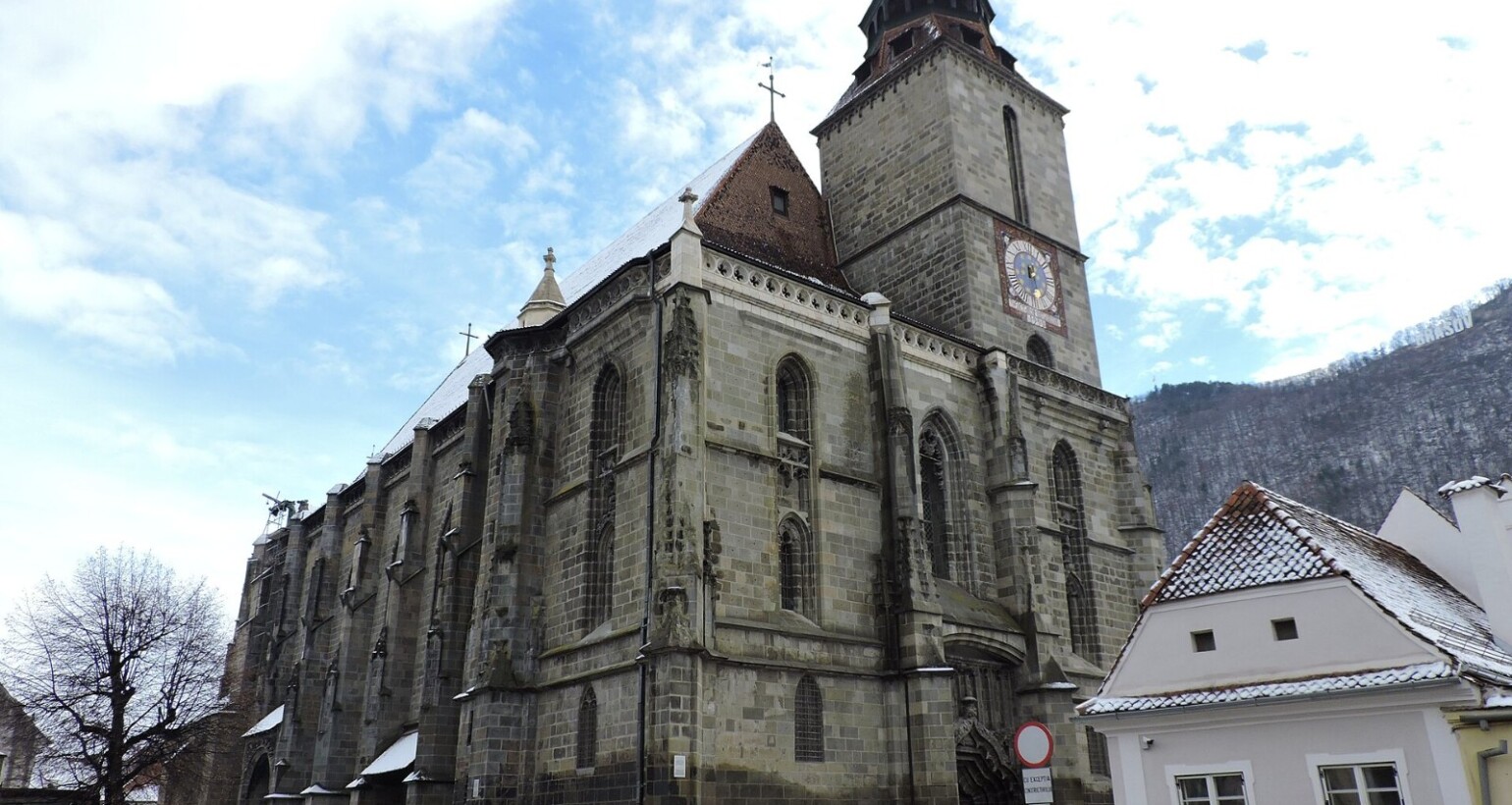
The Black Church in Brașov (Brassó) is the largest church in the region and the easternmost major work of European Gothic architecture. The main Lutheran church of the Transylvanian Saxons was one of the starting points of the Reformation in Transylvania, and today it is the best-known symbol of the city.
The parish church, dedicated to the Virgin Mary, was built on the site of St Catherine's Church, destroyed during the Mongol invasion; work began around 1383 and continued for almost a century. Construction was set back by an Ottoman attack in 1421. In 1444 John Hunyadi waived one of the town's taxes so that the money could be spent on the church – in gratitude, the Hunyadi coat of arms was placed on one of the pillars. The east portal, commissioned by King Matthias Corvinus, was completed in 1476. The church was designed with two towers, but only the west tower was built; it was consecrated in 1514.
In 1542, as the town embraced the Reformation, the church passed to the Lutherans: that same year it hosted the first Lutheran service in German in Transylvania, and in 1544 Johannes Honterus was elected its pastor. According to popular belief, the walls were blackened by soot from the great Brașov fire of 1689; recent studies, however, have found no traces of fire damage – the dark colour is due to pollution, and the name “Black Church” only came into use at the end of the 19th century. The present vaults were built between 1762 and 1772 by master builders from Danzig.
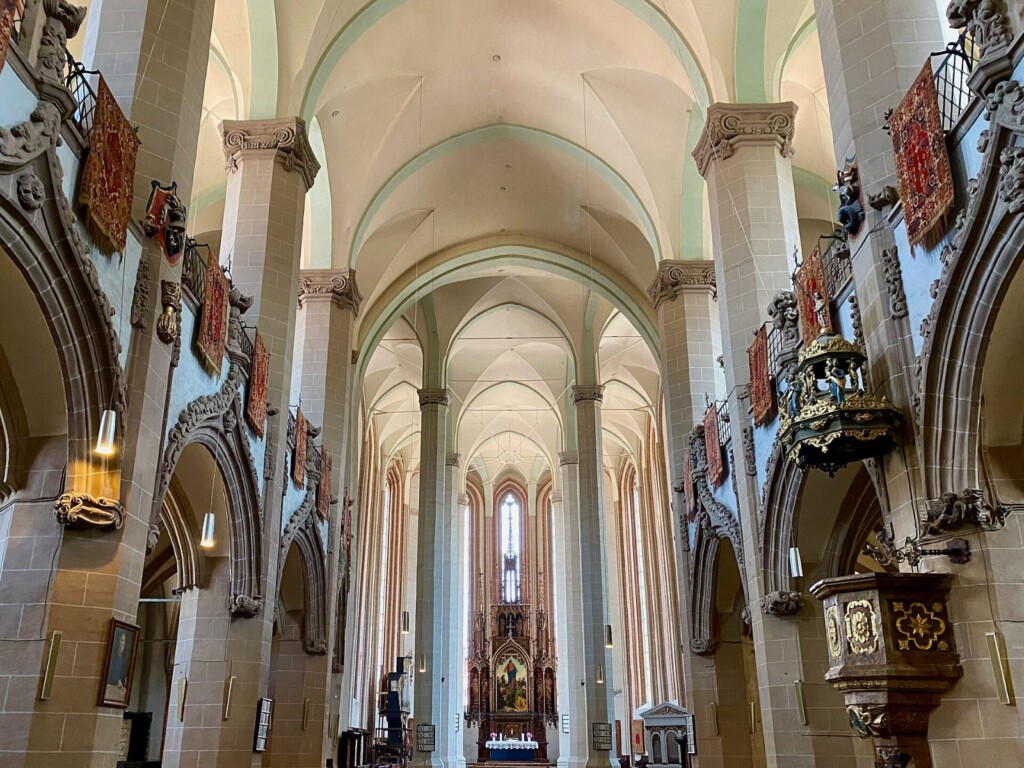
The three-aisled hall church is 89 metres long and 38 metres wide, and its tower rises to 65 metres. The interior is adorned with a collection of 16th–18th-century Anatolian carpets: the 119 pieces were bought by Saxon merchants trading in the Ottoman lands and donated to the parish – the largest such collection in Europe outside Turkey. The 1477 frescoes in the south porch include the coats of arms of King Matthias and Queen Beatrice. The organ built by Carl August Buchholz between 1836 and 1839, with almost four thousand pipes, is regarded as the largest in South-Eastern Europe, and the 7,300-kilogram great bell is the largest movable bell in Romania.
Visiting: the church stands in Brașov's historic centre, in Honterus Courtyard just south-west of the main square (Piața Sfatului); by its south side is the statue of Johannes Honterus, erected in 1898. It is a working Lutheran church and is also open to visitors as a museum, with an exhibition on its history beneath the tower.
Sources: Wikipedia · Wikipedia (English)
Photo: Dimitris Kamaras from Athens, Greece / Wikimedia Commons, CC BY 2.0 · Photo: Josep Renalias Lohen11 / Wikimedia Commons, CC BY 4.0
Town:
Brașov (Brassó)