Premonstratensian Abbey Church of St John the Baptist – Jasov (Jászó)
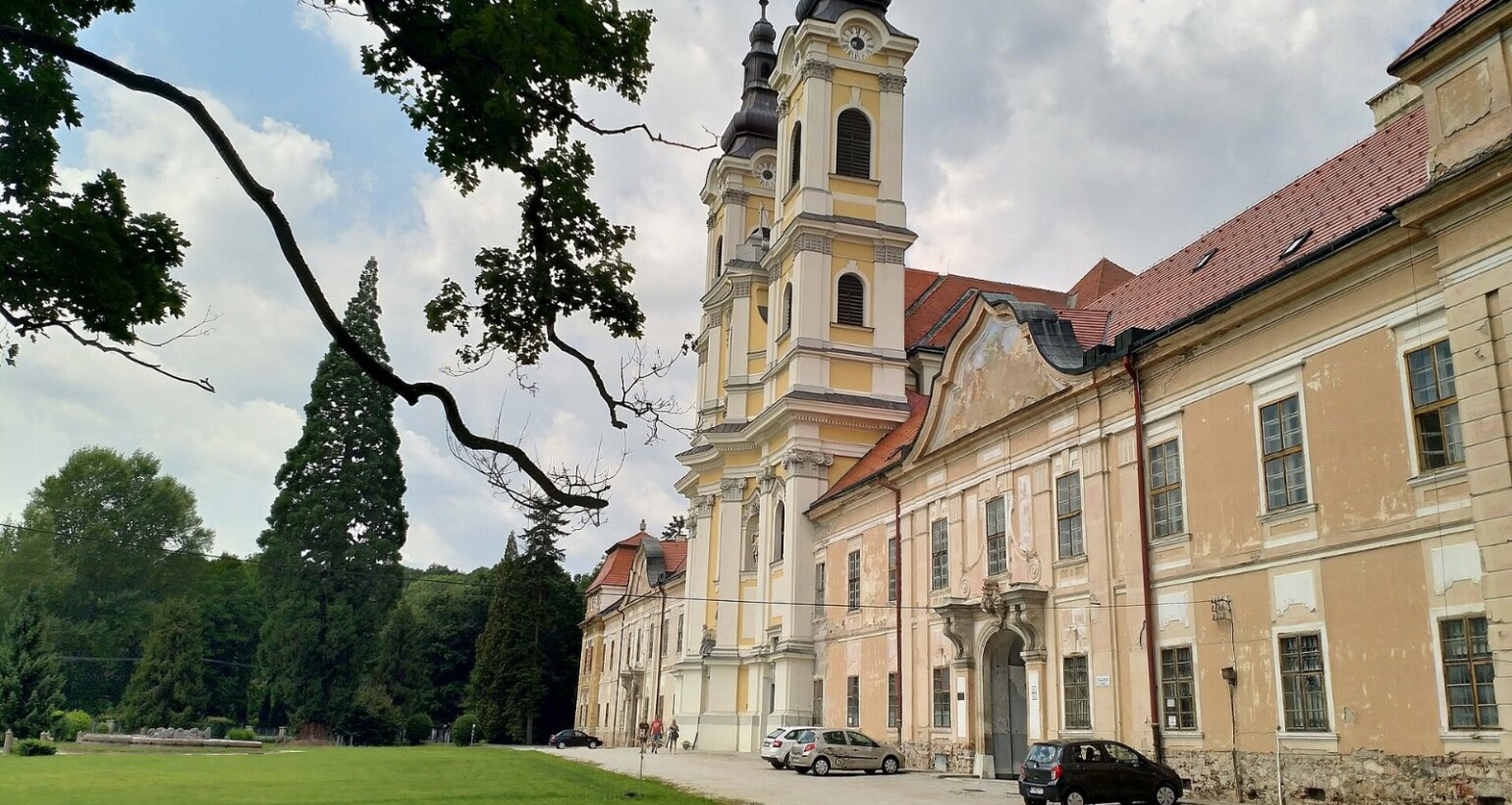
The Premonstratensian abbey of Jasov (Jászó) is the largest monastic complex in Slovakia and one of the most important late Baroque works in Central Europe: the church dedicated to St John the Baptist is flanked by the wings of the prelature and the convent, with a French garden behind. The monastery has been one of the intellectual centres of Upper Hungary since the 12th century, and its library holds some 80,000 volumes.
The Premonstratensians settled at Jasov at the end of the 12th century; tradition attributes the provostry's foundation to King Coloman, and it is first mentioned in writing in 1234. After a first wooden monastery, building in stone began around 1228, only to be interrupted by the Mongol invasion: the monks survived the devastation in a cave in the nearby cliff. The charter of Béla IV of 1255 – now regarded as the founding charter – confirmed the provostry's estates and privileges; from 1262 to 1874 the convent of Jasov served as a place of authentication, issuing deeds for the whole region. In 1436 Sigismund of Luxembourg ordered the monastery fortified: the fortress-monastery was henceforth called Jászóvár, yet the Hussites still captured it and held it until 1447.
After the battle of Mohács the provostry fell empty, and in 1685 Thököly's troops set it on fire. In 1700 it was acquired by the Premonstratensian abbey of Louka in Moravia, which in 1745 sent Andreas Sauberer to Jasov; during his time as provost the complex was built in its present form. The medieval walls were demolished and, from 1745, a new late Baroque complex rose to the designs of the Viennese architect Franz Anton Pilgram; after Pilgram's death in 1761 the master builder Anton Salzgeber completed the work. The church was consecrated on 1 October 1766. In 1770 Maria Theresa raised the provostry to an independent abbey.
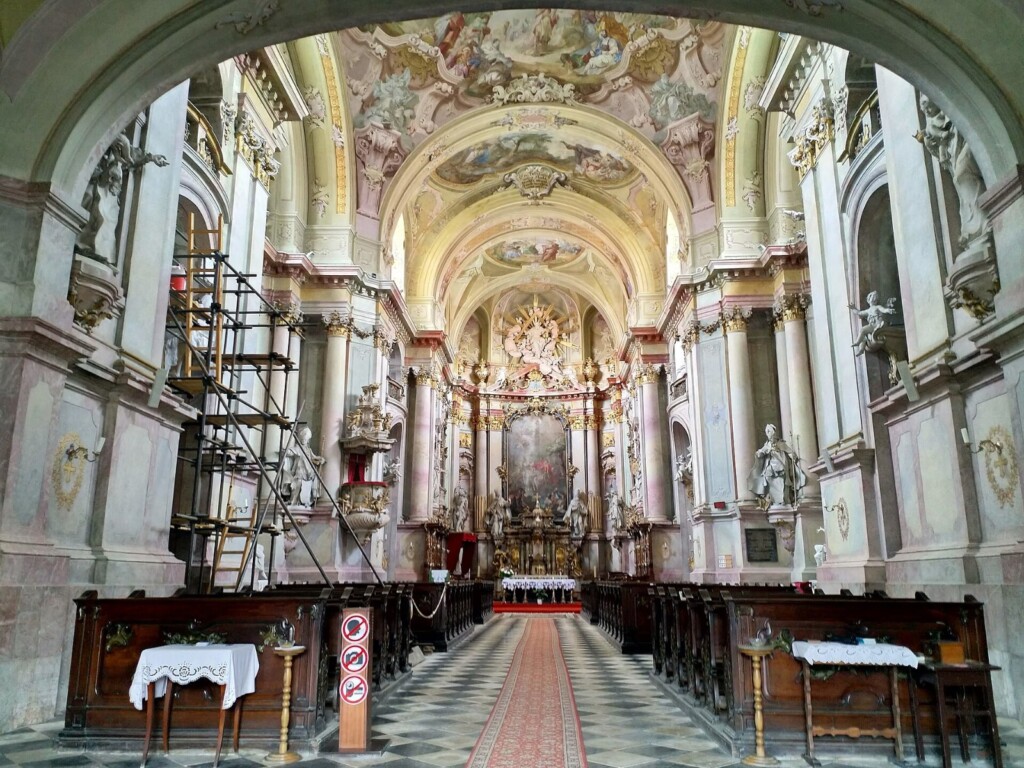
The decoration of the church and monastery is the work of three outstanding masters: Johann Lucas Kracker painted the frescoes and seven altarpieces, Johann Anton Krauss carved the sculptures and Johann Hennevogel made the stucco. The building's 365 windows, 12 chimneys and 4 gates evoke the days, months and seasons of the year. Joseph II dissolved the order in 1787, and the empty monastery burned down in 1792; the Premonstratensians were allowed to return in 1802 on condition that they ran grammar schools – in Košice, Levoča, Rožňava and Oradea – and the library hall was built at that time. In 1950 the Czechoslovak state dissolved the community, and the monastery also served as an internment camp; a fire in 1970 damaged the church frescoes, which were later restored. After the fall of communism the Premonstratensians returned, and the abbey is once again a living community.
Visiting: Jasov lies 22 kilometres west of Košice in the Bodva valley, on the edge of the Slovak Karst; the abbey stands in the southern part of the village on Podzámok street and can be reached by car or by bus from Košice. The church, library, ceremonial hall and monastery garden are open seasonally on guided tours, with an audio guide also available in Hungarian; tickets can be booked in advance on the abbey's website. A visit combines well with the nearby Jasov Cave, part of a UNESCO World Heritage Site.
Sources: Wikipedia · Wikipedia (Slovak) · Košice Region Tourism
Photo: Robert Jahoda / Wikimedia Commons, CC BY-SA 4.0 · Photo: Robert Jahoda / Wikimedia Commons, CC BY-SA 4.0
Town:
Jasov (Jászó)