Reformed Church – Karanac (Karancs)
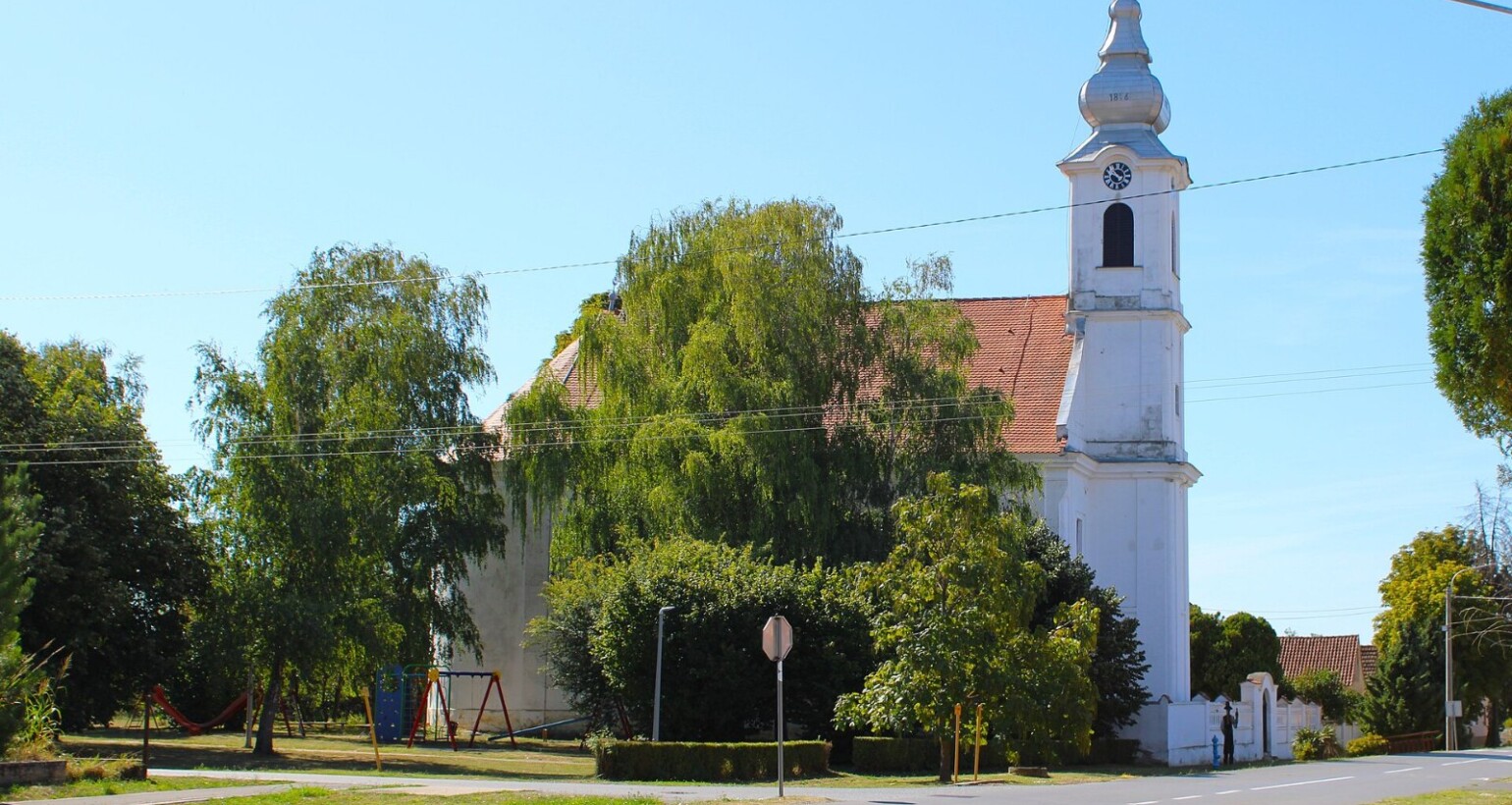
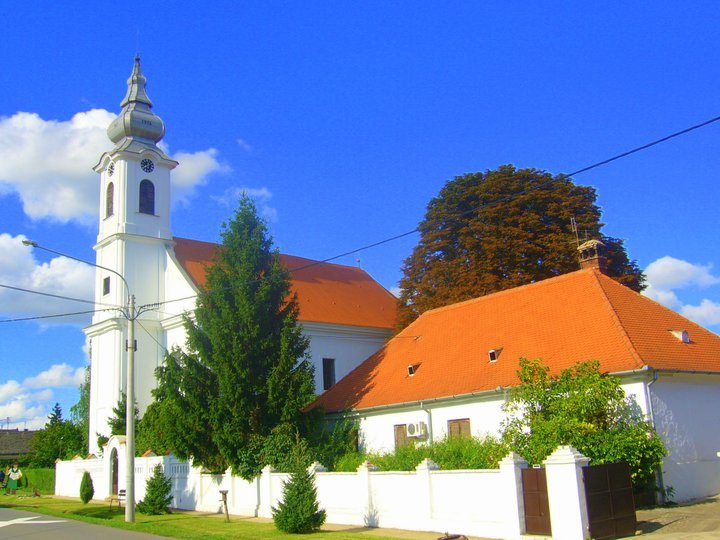
The Reformed church of Karanac (Karancs) serves the Hungarian congregation of a village in central Baranja, at the southern foot of the Bansko brdo ridge. Built in the early 19th century, with a semicircular apse and a slender tower, it is home to a community whose Reformed past reaches back to the 16th century and the Ottoman occupation.
Karanac is first mentioned in a charter of 1357 as 'Karanch'; by 1468 it was a market town, and at the end of the Middle Ages it belonged to the Kórógyi, Csupor and Pongrácz of Dengeleg families. The Ottomans occupied the region after the battle of Mohács in 1526; the names in the tax register of 1591 show that the village was inhabited by Hungarians. The Reformation spread here under Ottoman rule: according to the sources a Reformed congregation was already active in Karanac in 1576, and its first known pastor was István Karantsi. A telling story survives from that period: the pastor was fined for repairing the church's loose door without permission.
A Reformed church already stood on the present site in the late 17th or early 18th century, but by the early 19th century it had become too small for a congregation of 874 souls. It was replaced by the present single-nave, longitudinal church with a semicircular apse and a bell tower projecting from the façade; the sources date its construction to 1808 or 1816. In 1869 lightning struck the tower and caused severe damage – ever since, a lightning rod rather than a star has topped the spire. The parsonage on the south side of the church was built in 1861.
The organ was built in 1862 by the organ builder Lajos Moser; most of its pipes were taken during the First World War, and the instrument was fully restored in 2006. The building was repaired in 1983, 1998 and 2004. Karanac today lives with the churches of three denominations: the Catholic church of St Donatus was built in 1830 at the expense of Kázmér Esterházy, and the Serbian Orthodox church of St Stefan Štiljanović was completed in 2002. The village changed its population several times in the 20th century – settlers from Dalmatia and Herzegovina took the place of the Germans – but the Hungarian Reformed community remained.
In recent decades Karanac has become one of Baranja's centres of rural tourism: known as an 'ethno-village' for its traditional farmhouses, cellar row and wine road, it is one of the gateways to the Baranja wine region. The Reformed church stands on the village main street.
Visiting: Karanac lies about 29 km north of Osijek by road, between Beli Manastir and Kneževi Vinogradi, beside road D212; it belongs to the municipality of Kneževi Vinogradi, 3 km away. The church can be viewed from outside at any time; to see the interior it is advisable to contact the congregation or the Reformed Christian Calvinist Church in Croatia in advance. Together with the Reformed churches of nearby Kamenac (Kő) and Kotlina (Sepse) and the monuments of Kneževi Vinogradi it fits into a tour of Baranja.
Sources: Wikipedia – Karancs (Karanac) · Wikipedia (English) – Reformed Church, Karanac · Wikipedia (Croatian) – Karanac
Photo: Roland Puskaric / Wikimedia Commons, CC0 · Photo: Бранко Д. Тодоровић / Wikimedia Commons, CC BY 3.0 rs
Town:
Karanac (Karancs)