Church of the Assumption (former Benedictine abbey church) – Diakovce (Deáki)
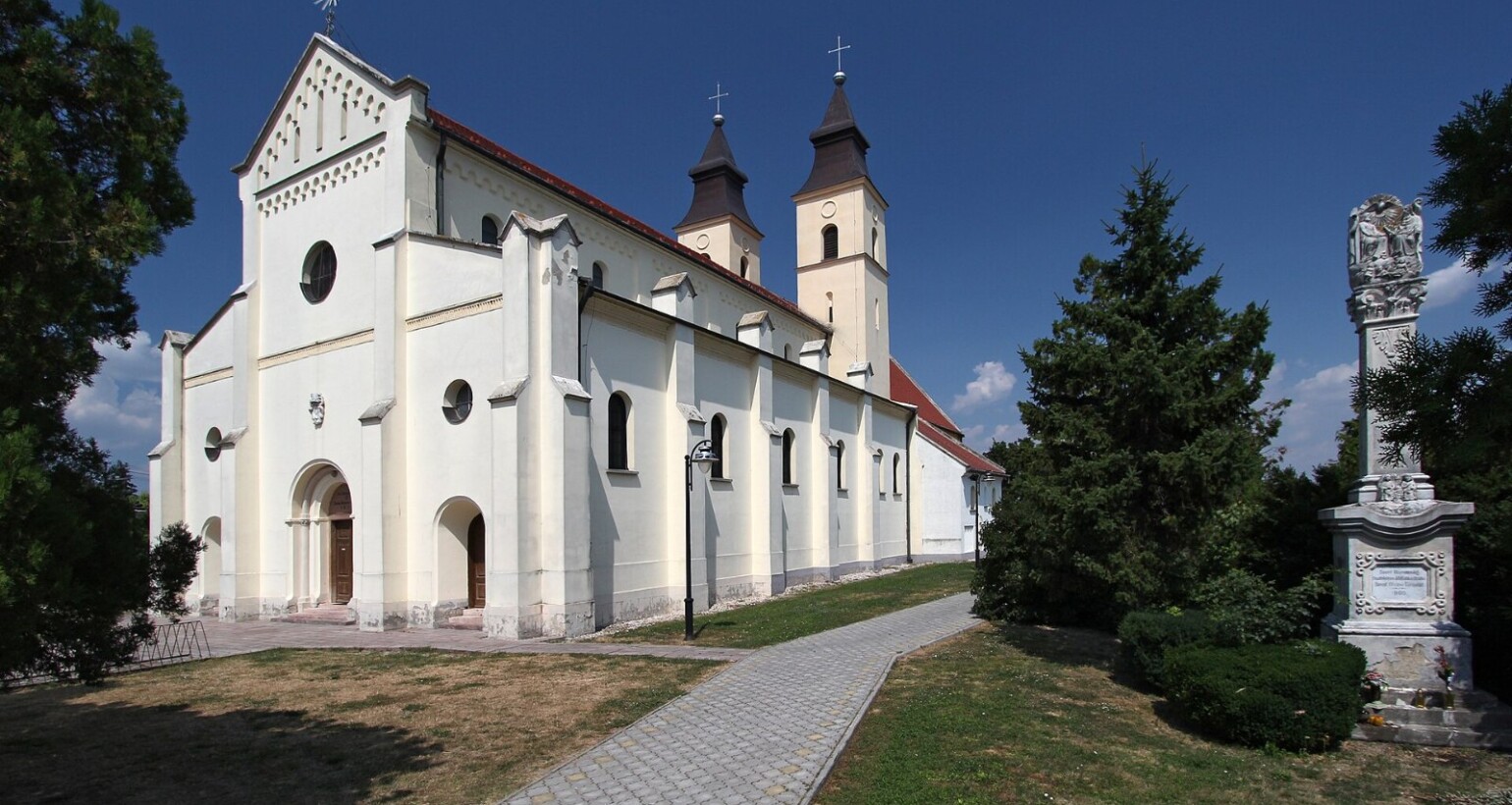
The Church of the Assumption in Diakovce (Deáki) is one of the most precious Romanesque monuments of the Carpathian Basin: the twin-towered, two-storey brick church of a former Benedictine abbey, consecrated in 1228. The Benedictines who lived here used the Pray Codex, which contains the oldest continuous text in Hungarian, the Funeral Sermon – which is why Diakovce is called one of the cradles of the Hungarian language.
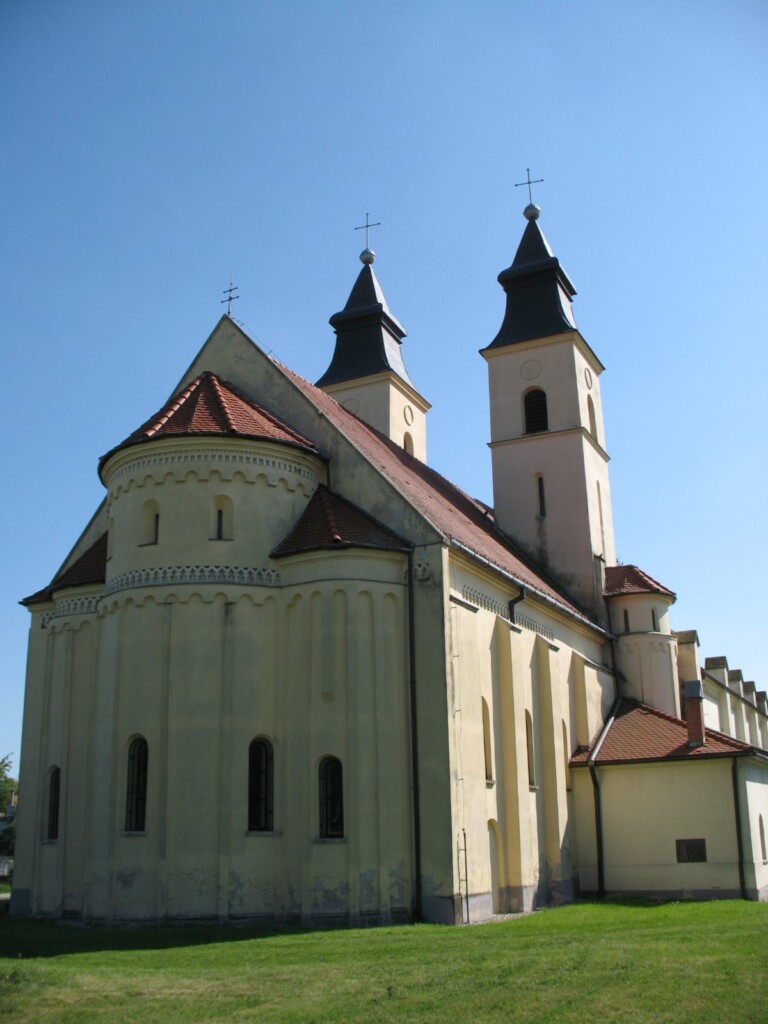
King St Stephen settled Benedictines on this estate by the River Váh in 1001; it appears under the name Wag in the founding charter of Pannonhalma of 1002 and again in a charter of St Ladislaus of 1090. The oldest part of the present complex is St Stephen's Chapel, nestling against the south side of the church, mentioned in a charter of Pope Paschal II of 1103. The abbey church of the Benedictines – probably built under Abbot Uros of Pannonhalma – was consecrated in 1228: a three-aisled, twin-towered hall church on two levels, built of brick in a region poor in stone, whose three semicircular apses still show their medieval form. The purpose of the lower and upper churches is still debated; according to Arnold Ipolyi, the central nave may have been the monks' oratory and the side aisles their dormitories.
The Pray Codex, written at the end of the 12th century and the most important source for the history of the Hungarian liturgy, was used by the monks of Diakovce in the 13th century; it also records the consecration of the church in 1228. The book became a cornerstone of Hungarian cultural history thanks to the Funeral Sermon and Prayer it contains. By the 19th century the small medieval church had become too small: on the commission of Archabbot Krizosztom Kruesz of Pannonhalma and to the designs of Frigyes Schulek, a neo-Romanesque three-aisled hall for some three thousand people was built in front of the west façade between 1872 and 1875, while the towers had already been raised to 31.5 metres in the Baroque period.
Two 13th-century fragments of wall painting – Christ in blessing and God the Father – survive between the windows of the main apse. The present interior dates largely from the renovation of 1941 initiated by Cardinal Primate Jusztinián Serédi, a native of Diakovce: Béla Kontuly painted the frescoes with scenes from the life of St Stephen, and the apse painting of the Coronation of the Virgin is by Ernő Jeges. The stained glass windows of 1875 from Würzburg tell the life of the Virgin Mary; the organ was built in the Angster workshop in Pécs, and the 549-kilogram great bell was cast in Trnava in 1923. At the end of a restoration lasting from 1993 to 2001, Bishop Domonkos Tóth reconsecrated the church on 10 November 2001; since then it has also housed László Kolozsváry's painting “The Funeral Sermon”.
Visiting: Diakovce lies in the Mátyusföld region, 2 kilometres from Šaľa and 12 from Galanta, easily reached from the Bratislava–Nové Zámky railway and main road. The church stands in the centre of the village; the Romanesque east end, apses and towers are best appreciated by walking around the outside, and for the interior and the upper church it is advisable to enquire at the parish. The village thermal baths make a pleasant addition to the visit.
Sources: Wikipedia · Hunektár – Hungarian heritage register of Upper Hungary · Wikipedia (English)
Photo: Marek Šeregi / Wikimedia Commons, CC BY-SA 3.0 · Photo: Taz666 / Wikimedia Commons, CC BY-SA 3.0
Town:
Diakovce (Deáki)